- Neighborhood
- Hobby Airport
- Year built
- 1940
- Style
- Art Deco / Streamline Moderne
- Era
- Interwar
- Architect
- Joseph Finger
- Designations
- National Register of Historic Places · City of Houston Landmark
Significance
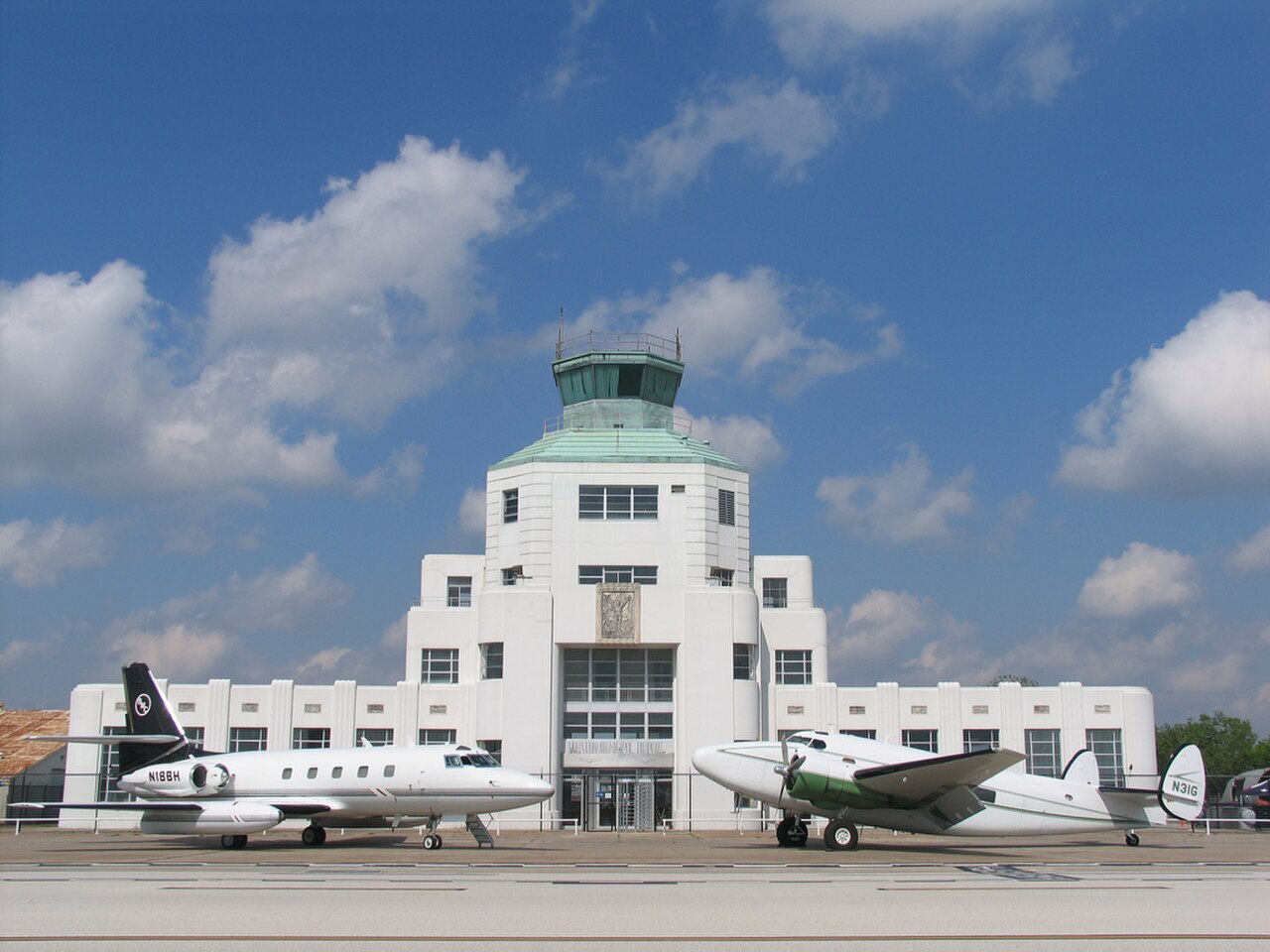
Opened in 1940 as Houston's original municipal air terminal, this Art Deco and Streamline Moderne building designed by Joseph Finger served as the city's primary commercial aviation gateway before the site evolved into what is now William P. Hobby Airport. Its streamlined curves, terrazzo floors, and control tower reflect the optimistic, forward-looking design language associated with the golden age of commercial air travel just before World War II. The terminal handled passenger flights for decades until larger jet aircraft outgrew its facilities, leading to the construction of newer terminals nearby, but rather than being demolished the historic building was preserved and converted into the 1940 Air Terminal Museum. Today it offers visitors a rare, intact glimpse into early commercial aviation architecture and Houston's rise as a regional air transportation hub.
Climate risks tracked
Located at Hobby Airport near low lying land close to the Houston Ship Channel and Galveston Bay, the terminal faces significant hurricane wind and storm surge exposure, since the airport's flat, low elevation site is vulnerable to storm driven water intrusion during major hurricanes. Urban flooding from intense rainfall, such as during Hurricane Harvey, has affected the surrounding airport grounds and access roads, threatening the historic building's terrazzo floors and structural systems. The terminal's original 1940s materials, including its stucco exterior and steel windows, require careful maintenance to withstand repeated wind and water exposure from the region's frequent tropical storm activity.
Use the preservation assistant to talk through retrofit strategies for these specific threats.
Location
Preservation Assistant
Grounded in 1940 Air Terminal Museum