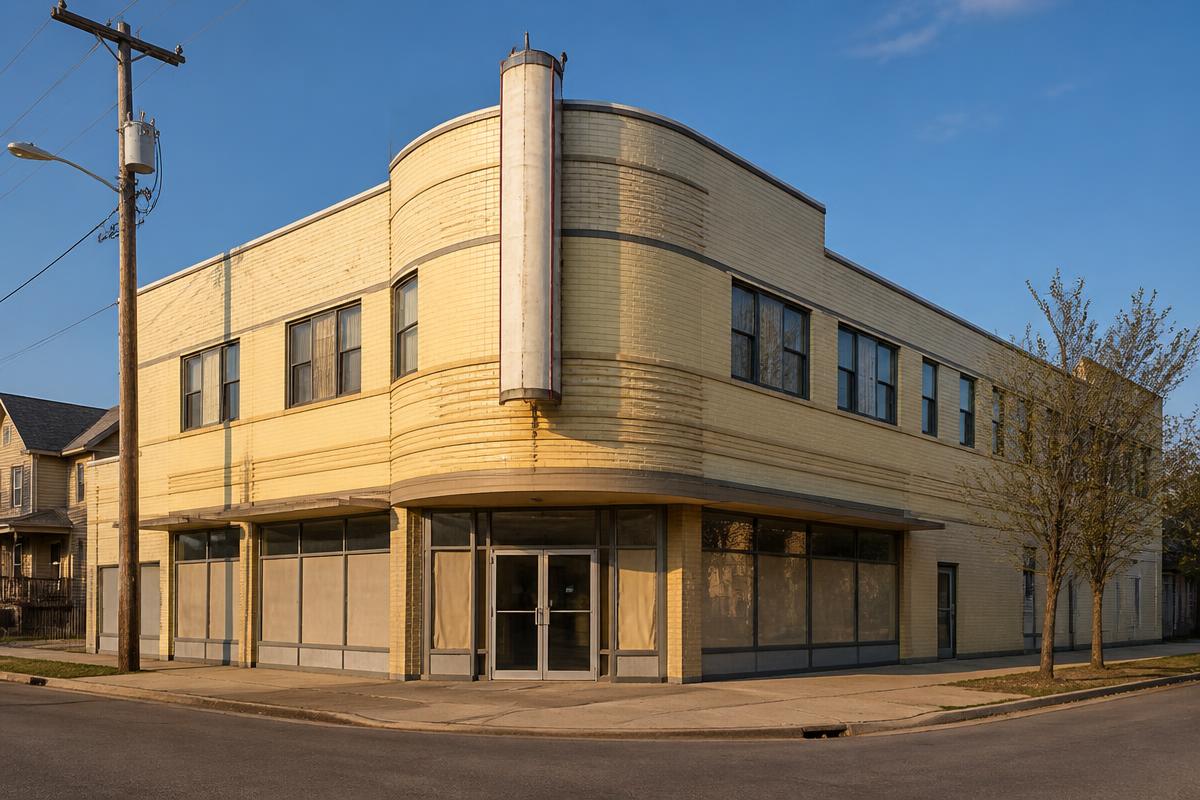
- Neighborhood
- Third Ward
- Year built
- 1939
- Style
- Streamline Moderne
- Era
- Interwar
- Architect
- Lenard Gabert
- Designations
- City of Houston Landmark
Significance
Opened in 1939 and designed by architect Lenard Gabert in the Streamline Moderne style, the Eldorado Ballroom in Houston's Third Ward became known as the home of happy feet, serving as the premier Black entertainment venue in segregated Houston. Its stage hosted legendary performers including Duke Ellington, B.B. King, Etta James, and Ray Charles, making it a central hub of the Chitlin Circuit that gave Black musicians performance opportunities during the era of Jim Crow segregation. The ballroom fell into disuse and disrepair for decades following the decline of the surrounding commercial district, but it was rescued and restored in 2003 by Project Row Houses, the acclaimed community arts organization founded in the same Third Ward neighborhood. Its restoration preserved a vital piece of Houston's African American cultural and musical heritage.
Climate risks tracked
Click a risk to see what it means for this building.
The Eldorado Ballroom's Streamline Moderne masonry construction is vulnerable to urban flooding, since the Third Ward neighborhood has experienced significant street and property flooding during intense storms including Hurricane Harvey in 2017. Houston's high humidity combined with decades of prior disrepair before the building's 2003 restoration left lingering concerns about mold growth within wall cavities and original interior finishes. Hurricane force winds also threaten the building's aging roof and window systems, particularly given the structure's age and the modest scale of ongoing maintenance resources typically available to community-run historic sites like the ballroom.
Use the preservation assistant to talk through retrofit strategies for these specific threats.
Location
Nearby landmarks
Preservation Assistant
Grounded in Eldorado Ballroom
Suggested questions
Or ask your own question about Eldorado Ballroom below. I can cover its history, architecture, and climate-resilient retrofits.