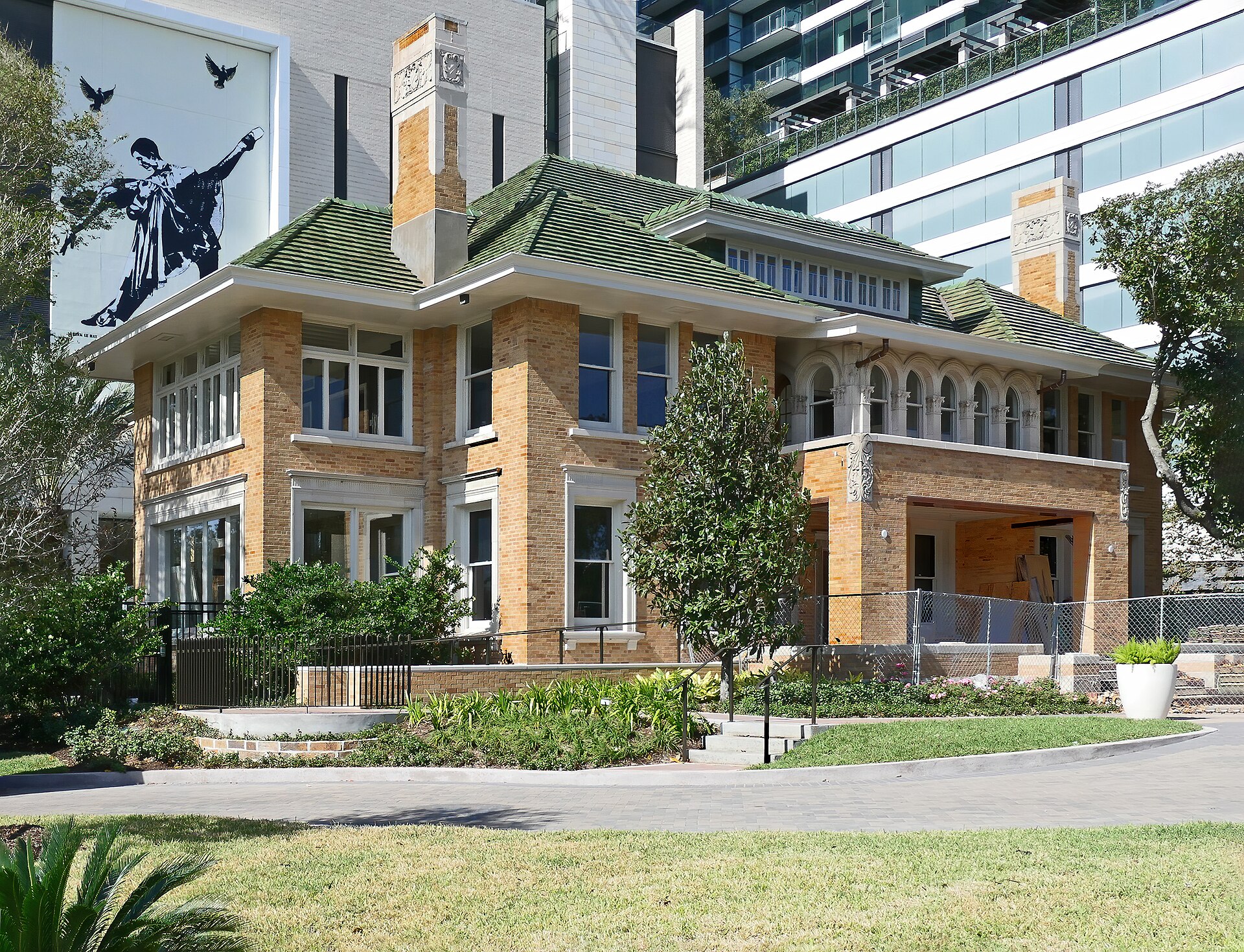
Fondren Mansion (La Colombe d'Or)
3410 Montrose Blvd, Houston, TX
- Recorded Texas Historic Landmark
- Neighborhood
- Montrose
- Year built
- 1923
- Style
- Classical Revival
- Era
- Interwar
- Architect
- Alfred C. Finn
- Designations
- Recorded Texas Historic Landmark
Significance
The Fondren Mansion was built in 1923 for Walter W. Fondren, a founder of Humble Oil, and his wife Ella. Designed by Houston architect Alfred C. Finn, the red brick Classical Revival house with its monumental two story portico is one of the grandest surviving residences of Houston's oil era elite. Since 1979 the mansion has operated as La Colombe d'Or, a small luxury hotel, preserving the house and its gardens while giving the public access to the interior. The estate is a Recorded Texas Historic Landmark and remains a landmark along Montrose Boulevard, one of the few great houses to survive the street's transformation from a residential boulevard to a commercial corridor.
Climate risks tracked
Click a risk to see what it means for this building.
The monumental portico columns, cornice and balustrades are exposed to hurricane winds, and the mature trees surrounding the house can become hazards in storms; regular tree care and anchoring of rooftop ornament are the key wind measures. The historic windows should be protected with interior storm panels rather than replaced. As an operating hotel with fine interior finishes, the mansion needs tight humidity control; discreetly placed modern mechanical systems and vapor aware insulation keep plaster and woodwork stable. Montrose sits on high ground by Houston standards, but intense rain can still overwhelm local drainage, so maintained gutters, downspouts and site grading protect the brick foundations.
Use the preservation assistant to talk through retrofit strategies for these specific threats.
Location
Nearby landmarks
Preservation Assistant
Grounded in Fondren Mansion (La Colombe d'Or)
Suggested questions
Or ask your own question about Fondren Mansion (La Colombe d'Or) below. I can cover its history, architecture, and climate-resilient retrofits.