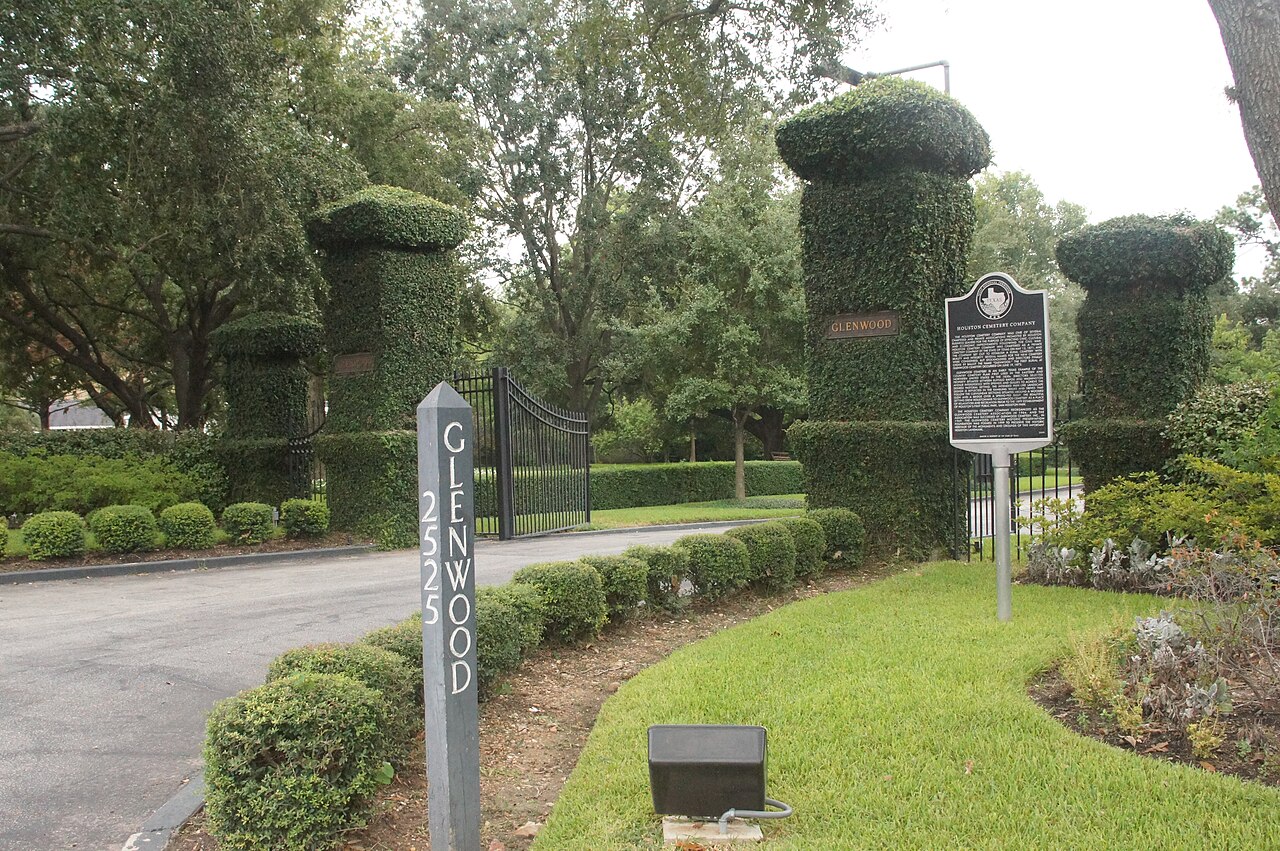
- Neighborhood
- Washington Corridor
- Year built
- 1871
- Style
- Rural / Victorian garden cemetery
- Era
- 19th Century
- Architect
- Alfred Whitaker (landscape)
- Designations
- National Register of Historic Places
Significance
Established in 1871 with landscape design attributed to Alfred Whitaker, Glenwood Cemetery was Houston's first professionally landscaped rural garden cemetery, spanning 84 rolling acres overlooking Buffalo Bayou in a design style popular across nineteenth century America that emphasized picturesque, park-like burial grounds. The cemetery is the final resting place of numerous prominent Houstonians and Texans, including aviation and business magnate Howard Hughes and several Texas governors, making it a significant repository of the state's political and business history. Its winding roads, mature tree canopy, and elaborate Victorian era monuments reflect the aesthetic sensibilities of the Rural Cemetery Movement, and it remains an active cemetery as well as a popular site for historical tours and quiet recreation along the bayou.
Climate risks tracked
Click a risk to see what it means for this building.
Glenwood Cemetery's location directly overlooking Buffalo Bayou exposes its lower lying sections to urban and bayou flooding risk, conditions that intensified significantly during Hurricane Harvey in 2017 when the bayou's rising waters affected portions of the historic grounds. Hurricane force winds pose ongoing risk to the cemetery's mature tree canopy, with large limbs and uprooted trees historically damaging monuments and pathways during major storms such as Ike. The cemetery's nineteenth century masonry monuments and mausoleums are also vulnerable to moisture related deterioration given Houston's persistently humid climate.
Use the preservation assistant to talk through retrofit strategies for these specific threats.
Location
Preservation Assistant
Grounded in Glenwood Cemetery
Suggested questions
Or ask your own question about Glenwood Cemetery below. I can cover its history, architecture, and climate-resilient retrofits.