- Neighborhood
- Rice Village / Museum District
- Year built
- 1912
- Style
- Byzantine-Mediterranean 'Rice style'
- Era
- Early 20th Century
- Architect
- Cram, Goodhue & Ferguson
- Designations
- National Register of Historic Places
Significance
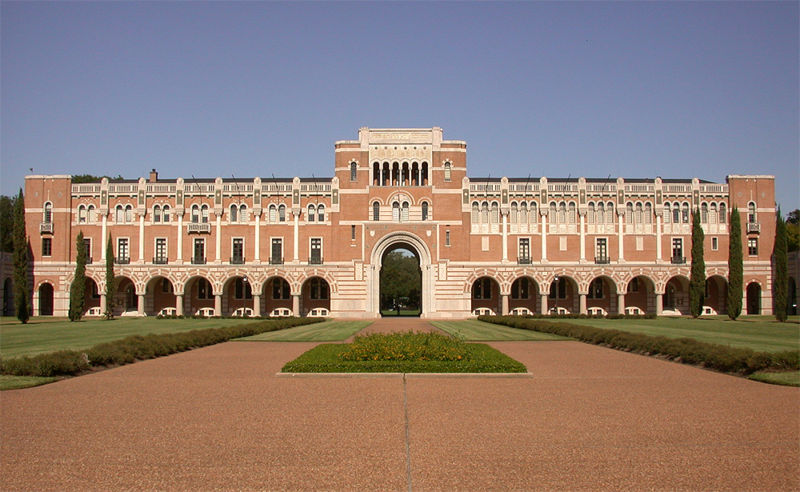
Completed in 1912, Lovett Hall was the first building constructed on the campus of Rice University, then known as the Rice Institute, and was designed by the firm Cram, Goodhue and Ferguson in a distinctive Byzantine-Mediterranean style that architectural historians often call the Rice style. Its rose and cream striped brickwork, marble columned arcades, and central Sallyport tower established an architectural template that has guided campus design at Rice for more than a century, ensuring visual cohesion even as the university expanded dramatically. The building originally housed nearly all of the fledgling institute's academic functions, including classrooms, offices, and a gymnasium, before later campus growth allowed it to be dedicated to administrative use and named for Rice's second president, Edgar Odell Lovett. It remains the ceremonial and symbolic heart of the Rice University campus.
Climate risks tracked
Click a risk to see what it means for this building.
Lovett Hall's masonry construction, with extensive marble detailing and decorative brickwork, faces hurricane wind risk that can dislodge ornamental elements and stress older roof structures during major storms like Ike. The Rice University campus, though slightly elevated compared to some low lying parts of Houston, has still experienced urban flooding during extreme rainfall events such as Hurricane Harvey, when surrounding streets and parking areas took on significant water. Houston's high humidity combined with the building's original 1912 construction materials creates ongoing risk of moisture infiltration and mold growth within interior spaces, particularly around window and roof seams.
Use the preservation assistant to talk through retrofit strategies for these specific threats.
Location
Preservation Assistant
Grounded in Lovett Hall, Rice University
Suggested questions
Or ask your own question about Lovett Hall, Rice University below. I can cover its history, architecture, and climate-resilient retrofits.