Midtown Sanctuaries & Second Lives
Midtown
Visit Midtown's historic churches and civic buildings, from Fire Station No. 7 and DePelchin Faith Home to Trinity Episcopal, the Light Guard Armory, Isabella Court and the Ion.
8 stops · 1.3 mi
Live location (optional)
Walking the route? Turn this on for step by step directions to the next stop. Your location stays on your device.
- 1
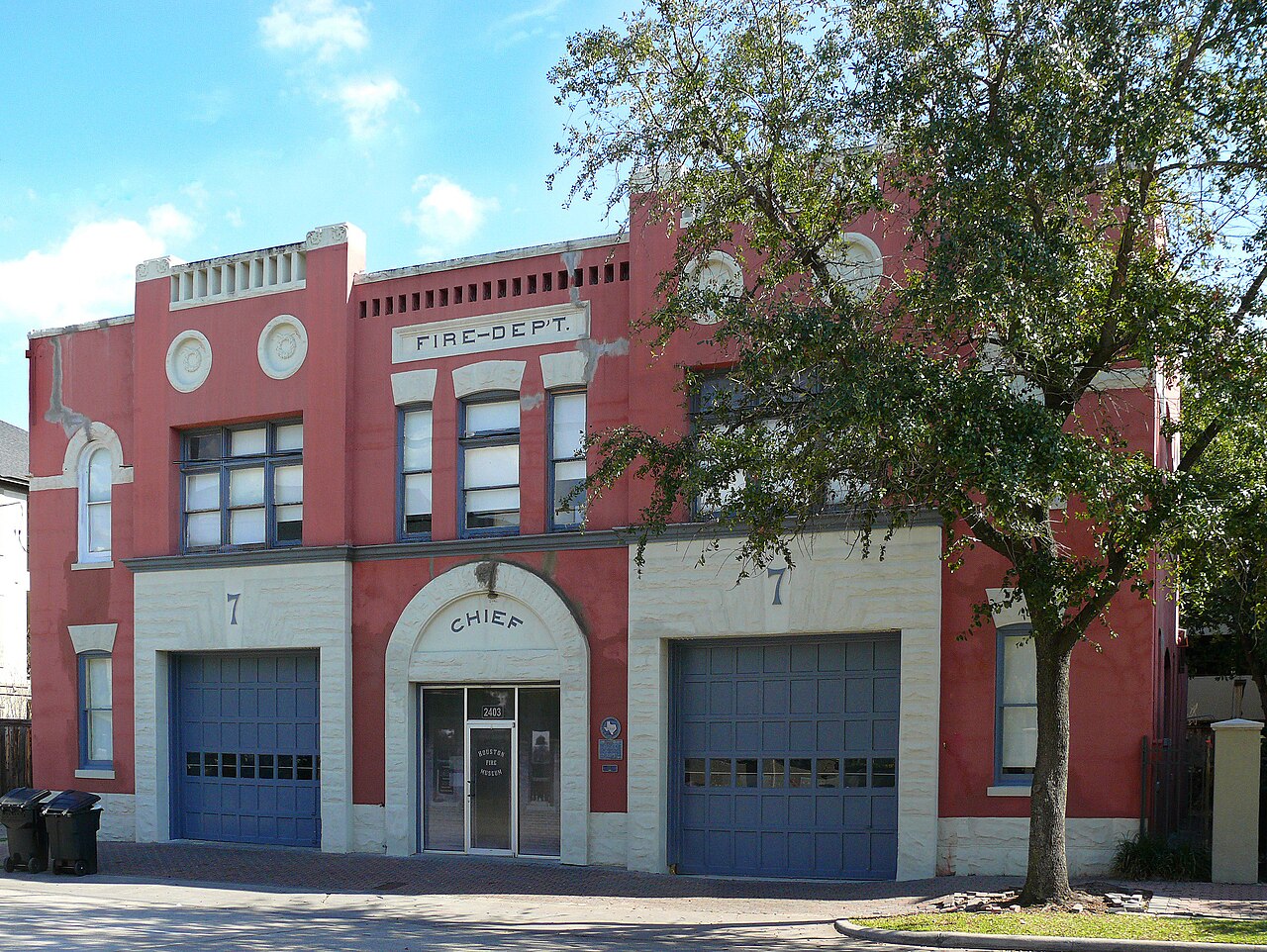
1899 · Romanesque Revival
Fire Station No. 7
- Protected
Built in 1899 in the Romanesque Revival style, Fire Station No. 7 is one of the oldest surviving fire stations in Houston, distinguished by its arched carriage doors and pressed brick facade that reflect the municipal architecture typical of the late nineteenth century. The station served an active firefighting role for the surrounding neighborhood during a period when Houston's fire department was transitioning from volunteer companies to a professional municipal service, reflecting the city's growing infrastructure needs as its population expanded. Its survival into the present day, largely unaltered on its exterior, offers a valuable record of how public safety buildings were designed and built in Houston before the widespread use of poured concrete and steel frame construction became standard for municipal facilities in the twentieth century.
Open profile & chat → - 2
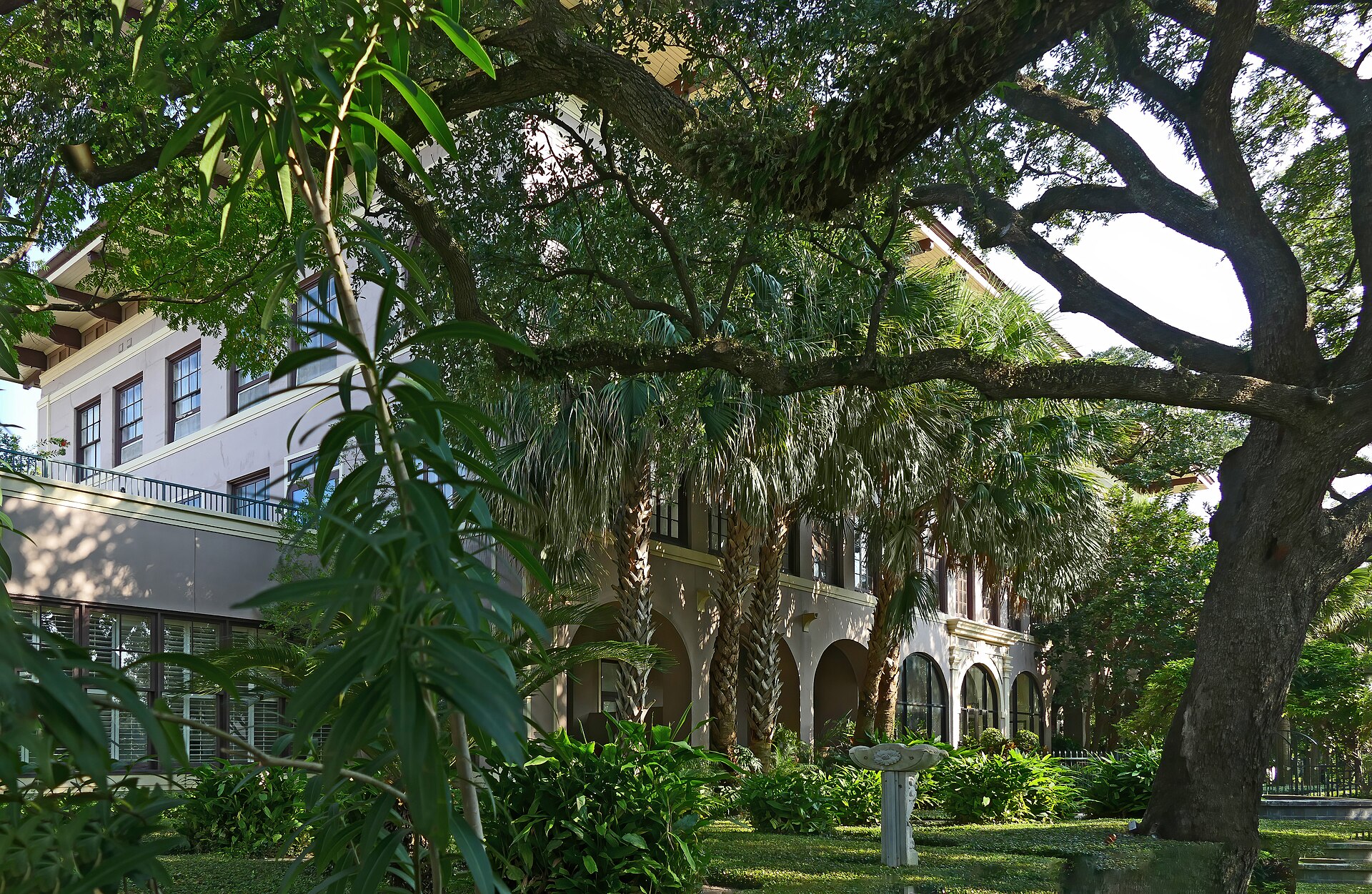
1913 · Colonial Revival
DePelchin Faith Home
- NRHP
- City Landmark
- Recorded Texas Historic Landmark
The DePelchin Faith Home was built in 1913 as the home of the orphanage founded in 1892 by Kezia Payne DePelchin, a Houston nurse, teacher and social reformer who cared for yellow fever patients and orphaned children. DePelchin began by sheltering three orphans and built the institution into one of the city's most important charities. The organization, now DePelchin Children's Center, grew into one of the largest child welfare agencies in Texas. The 1913 building on Albany Street survives as a reminder of Houston's early social welfare history and of the woman whose name it carries. It is listed on the National Register of Historic Places, is a Recorded Texas Historic Landmark, and is a City of Houston Landmark.
Open profile & chat → - 3
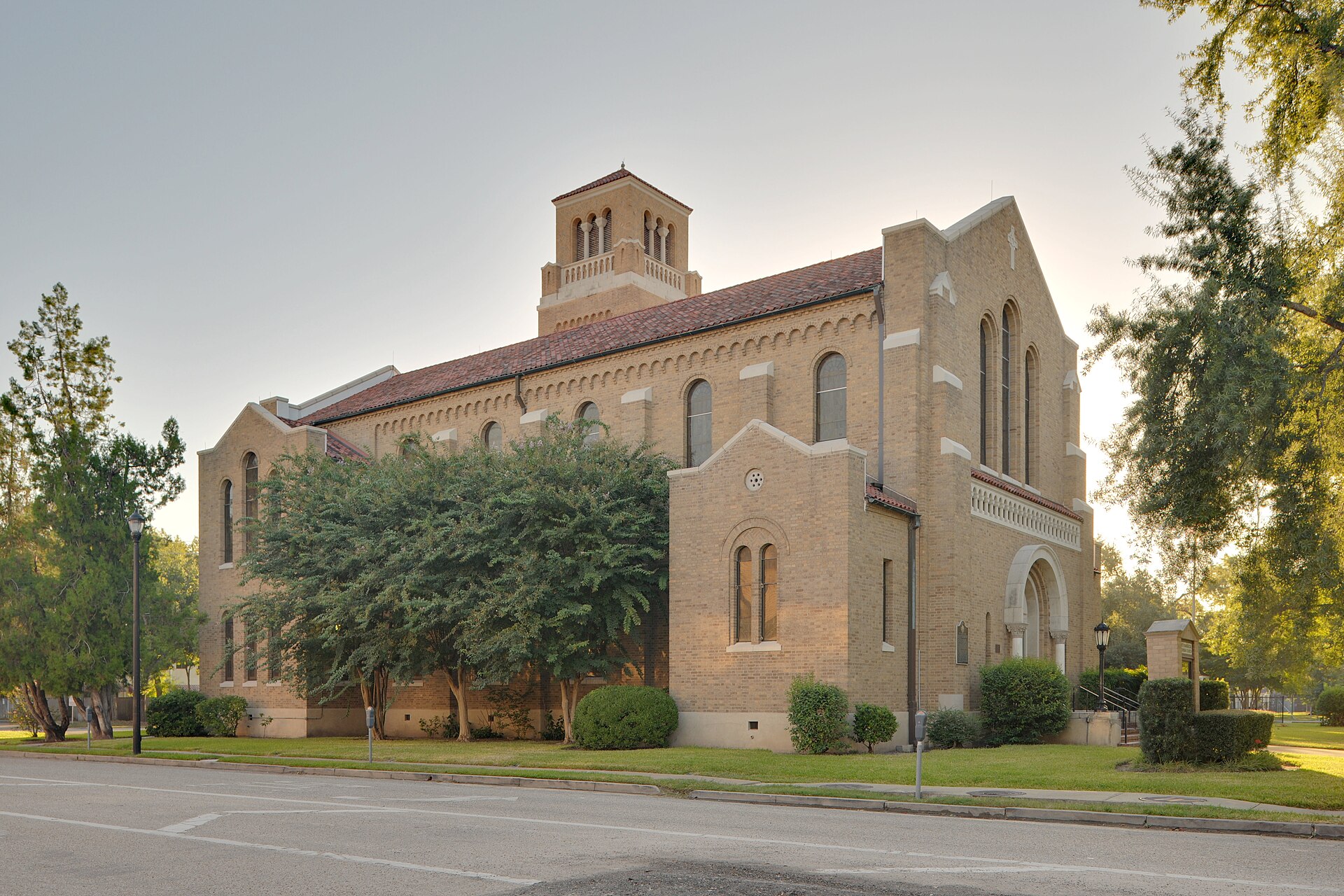
1927 · Lombard Romanesque
First Evangelical Church (First Lutheran Church)
- NRHP
- Protected
- Recorded Texas Historic Landmark
The congregation was founded on July 1, 1851, by German Lutherans under Pastor Caspar Messon Braun, reflecting the large German community of early Houston. After worshipping downtown in 1851 and 1901 buildings, the congregation, then known as First Evangelical Church, hired Joseph W. Northrop Jr. in 1926 to design a new sanctuary and campus on Holman Street. Northrop had come to Houston to oversee construction of the original Rice Institute, and his Lombard Romanesque design, with brick walls, round arches, and a square bell tower, echoes that campus's Mediterranean influences. Completed in 1927, the church has returned to the First Lutheran name. It is a Recorded Texas Historic Landmark, is listed on the National Register, and is a City of Houston Protected Landmark.
Open profile & chat → - 4
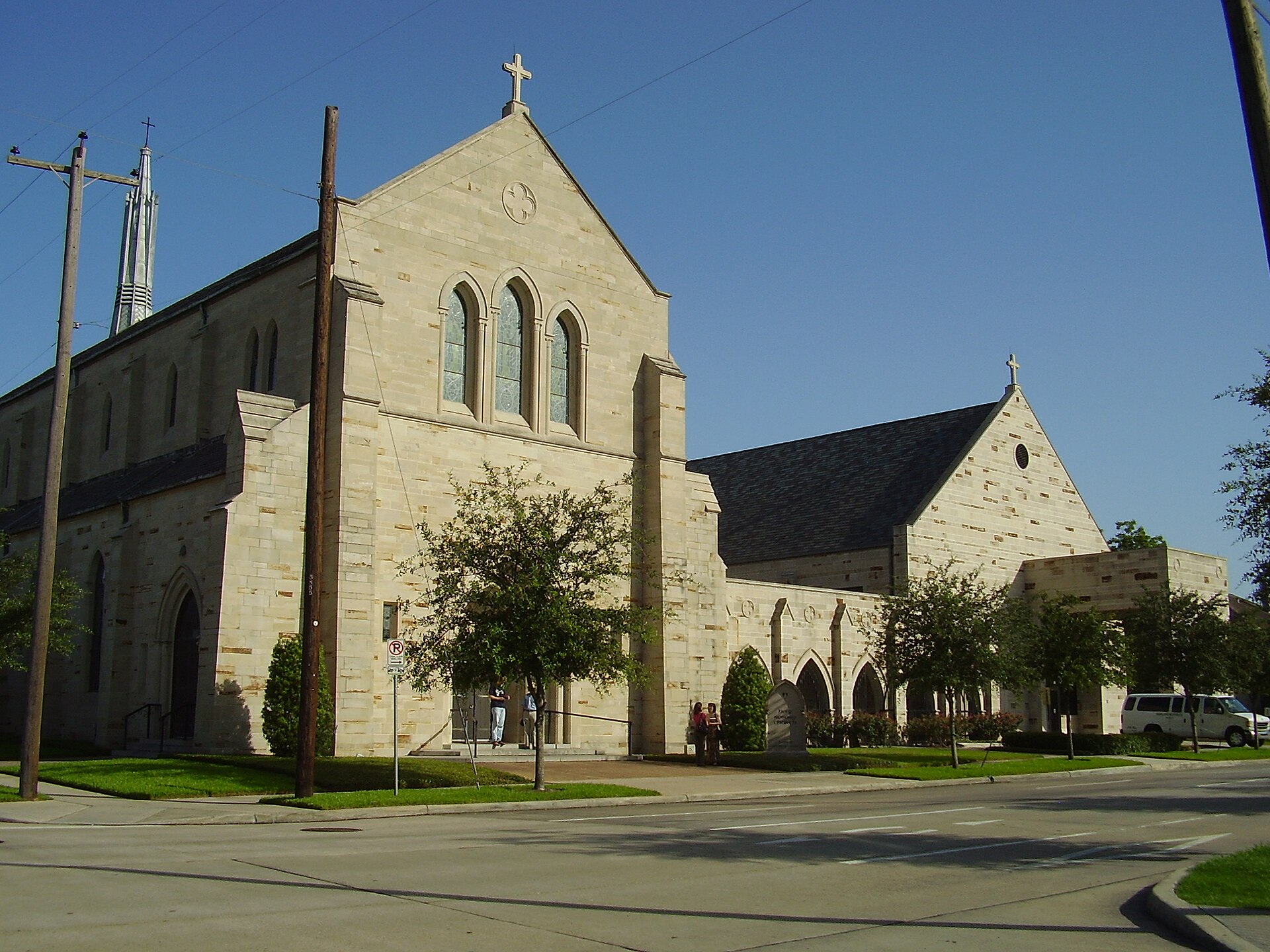
1933 · Romanesque Revival
Holy Rosary Catholic Church
- No Designation
Holy Rosary Catholic Church in Midtown was built in 1933 for a parish founded in 1913 to serve the neighborhood's growing Catholic population. The Romanesque Revival church, with its round arched openings, brick construction and prominent tower, was completed during the depths of the Great Depression, a testament to the parish community's commitment. The church has long served as a neighborhood anchor in what was once a dense residential district south of downtown. As Midtown has redeveloped around it, Holy Rosary remains one of the area's oldest surviving institutional buildings and continues as an active parish.
Open profile & chat → - 5
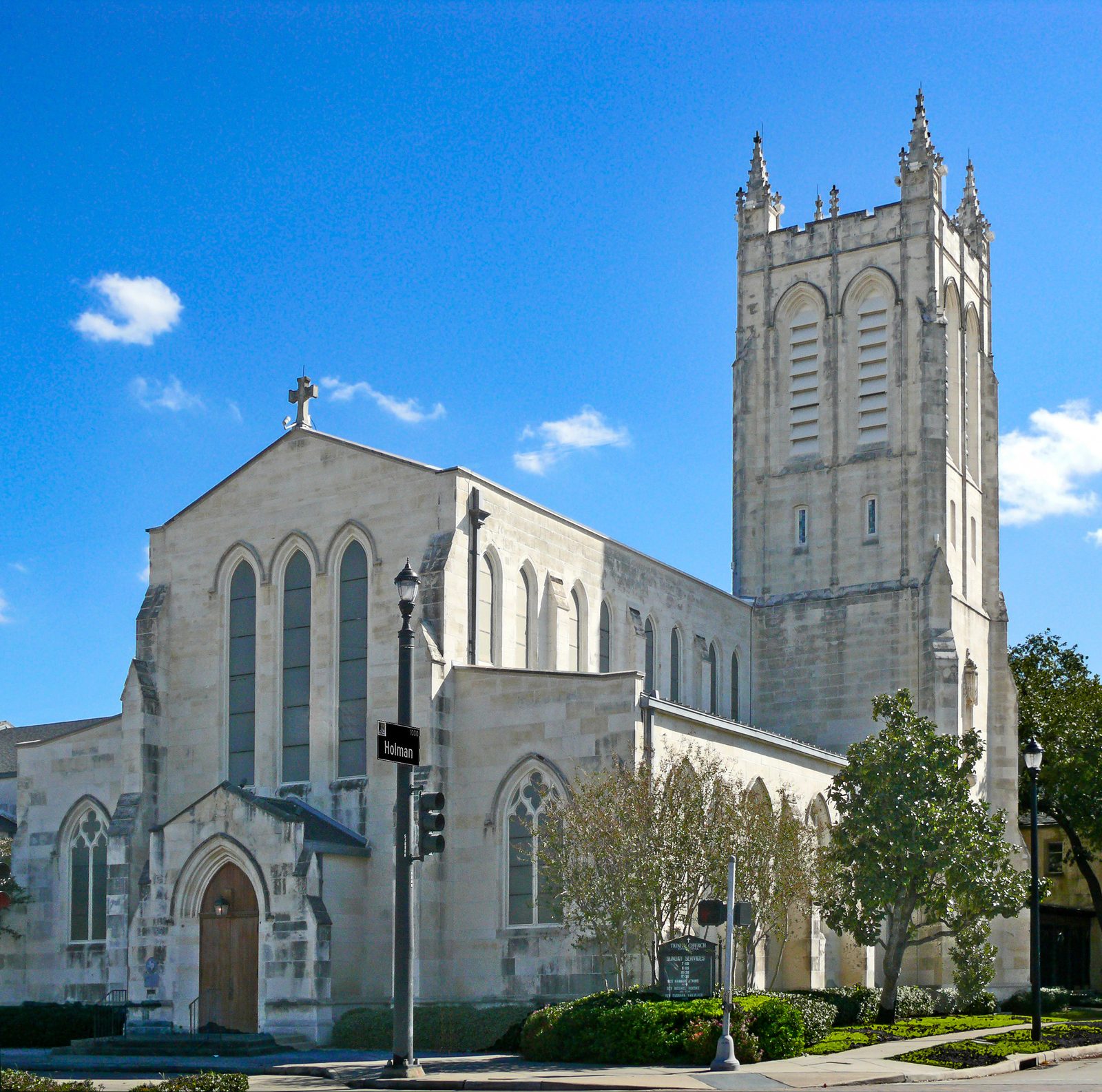
1919 · Gothic Revival
Trinity Episcopal Church
- NRHP
- Recorded Texas Historic Landmark
Trinity Church was founded in 1893 as a mission of Christ Church in what was then called the Fairground Addition, now Midtown, and is the second oldest Episcopal parish in Houston. The present Gothic Revival church dates from 1919 and was designed by Cram and Ferguson, the Boston firm whose Houston work also includes the Julia Ideson Building and buildings at Rice University. At one time Trinity was among the largest parishes in the Episcopal Church, with members including Walter Cronkite and Denton Cooley, before membership declined as residents moved to the suburbs in the 1950s and 1960s. In 1990 the parish founded Lord of the Streets, a ministry to Houstonians experiencing homelessness. Its Morrow Chapel was renovated in 2002 with stained glass and artwork by artists including Kermit Oliver. The church was listed on the National Register in 1983 and designated a Recorded Texas Historic Landmark in 1986.
Open profile & chat → - 6
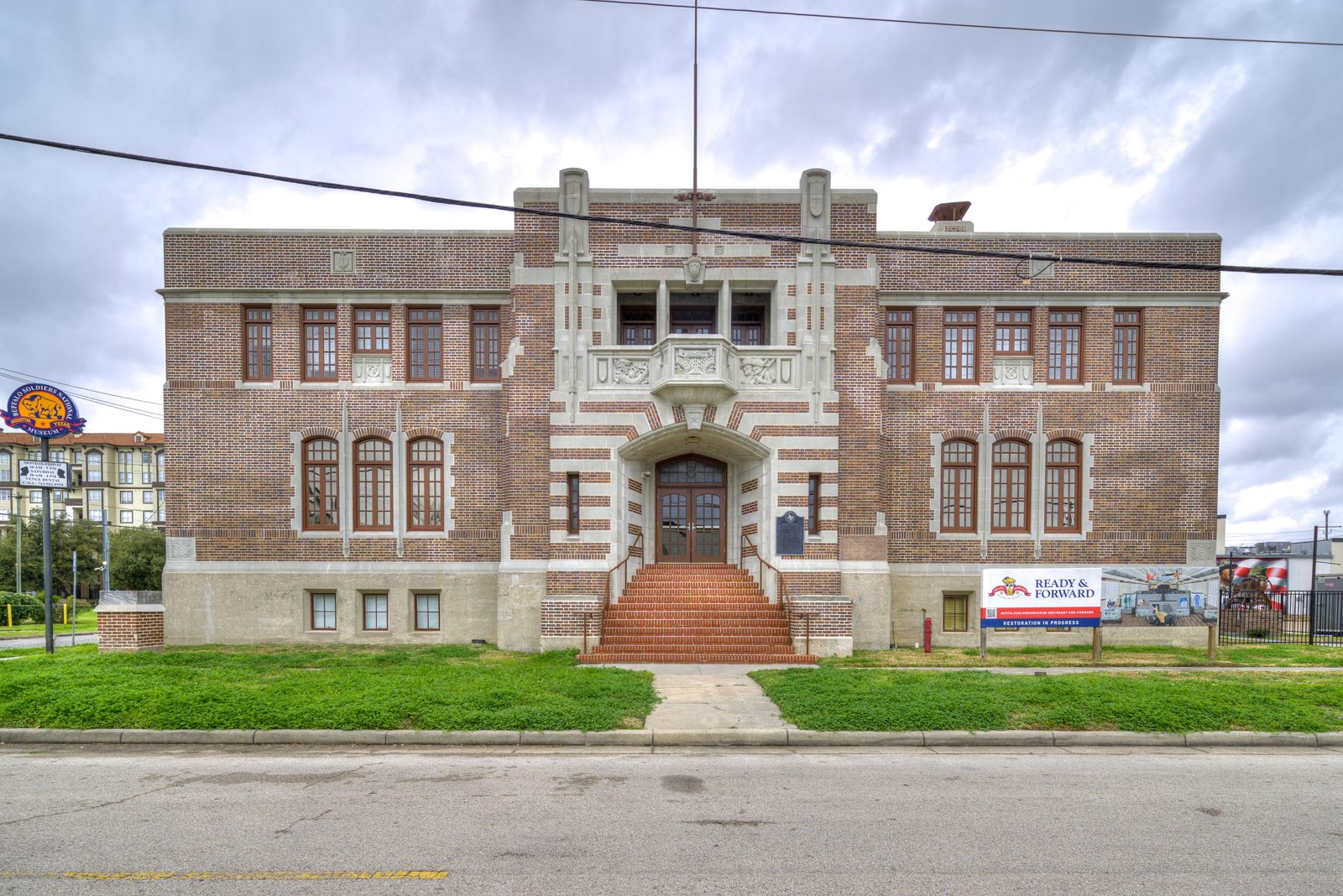
1925 · Neo-Gothic
Houston Light Guard Armory
- NRHP
- Protected
The Houston Light Guard, founded in 1873, was one of the oldest militia companies in Texas and later served as Company G of the 143rd Infantry Regiment in both World Wars. Its first armory, designed by George Dickey, was built in 1893 using cash prizes the company won in national drill competitions. In 1925 that building was sold and the proceeds were used to build this new armory on Caroline Street, designed by Houston architect Alfred C. Finn. After years of disuse and a failed plan to renovate it, the city purchased the property in 2000, but the armory continued to decay. Beginning in 2008, the Buffalo Soldiers National Museum, which honors the service of African American soldiers, worked to acquire and restore the building, which is now its home. The armory was listed on the National Register of Historic Places on January 4, 2024.
Open profile & chat → - 7
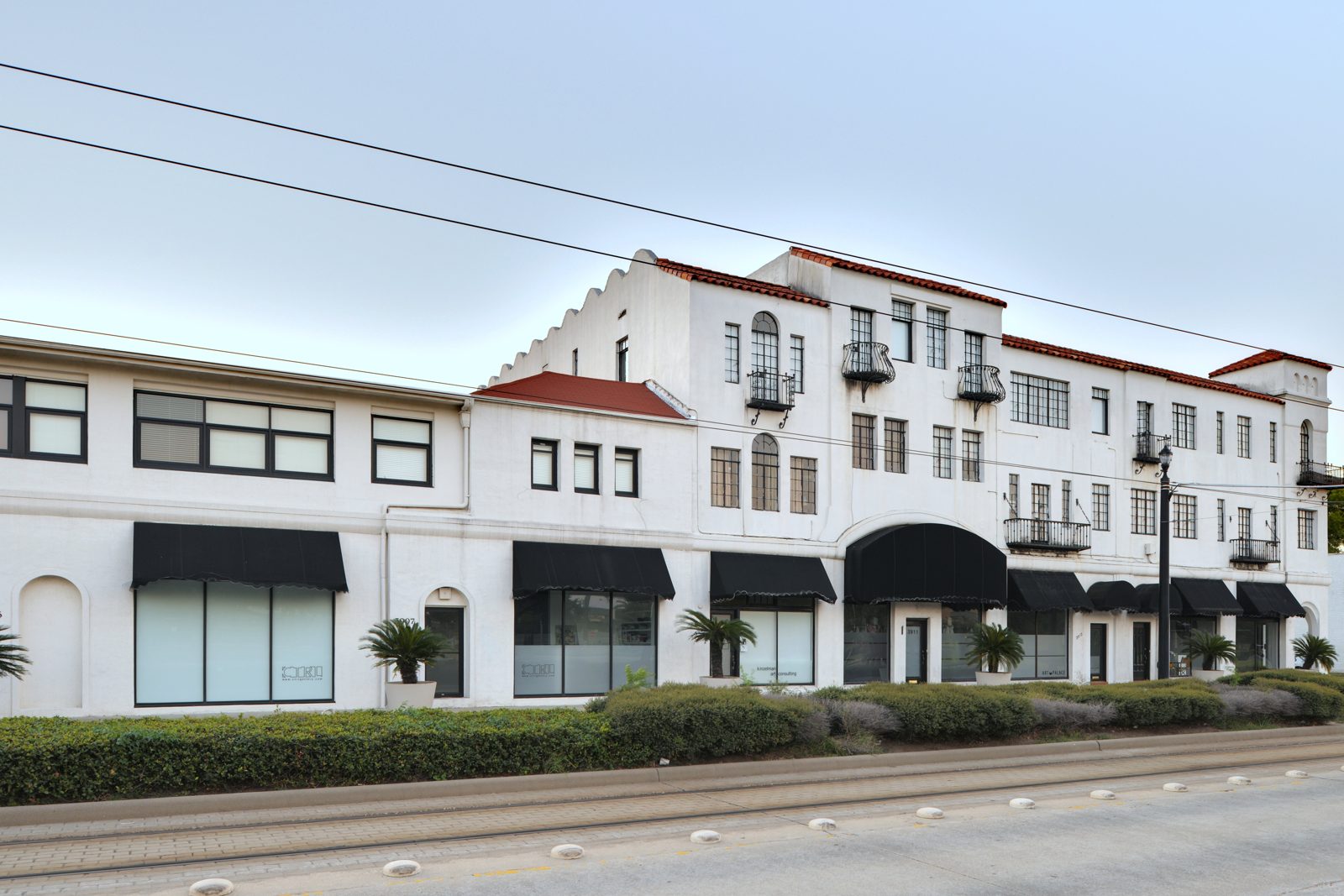
1929 · Spanish Colonial Revival
Isabella Court
- NRHP
Designed by architect William Bordeaux and built in 1928 and 1929, Isabella Court opened in 1929 as a mixed-use complex with shops on the ground floor and apartments on the two floors above. Its stuccoed walls, red tile roof and interior courtyard make it one of the most intact examples of Spanish Colonial Revival design on South Main Street, and an early Houston example of combining living and retail space in a single building. Architect Charles W. Moore once described it as charming but suffering from a serious case of deferred maintenance. After Trudy Hutchings bought the complex in 1991, it was restored and listed on the National Register of Historic Places on June 24, 1994. Its apartments and storefronts have since been home largely to artists and creative businesses, giving it a lasting role in Midtown's cultural life.
Open profile & chat → - 8
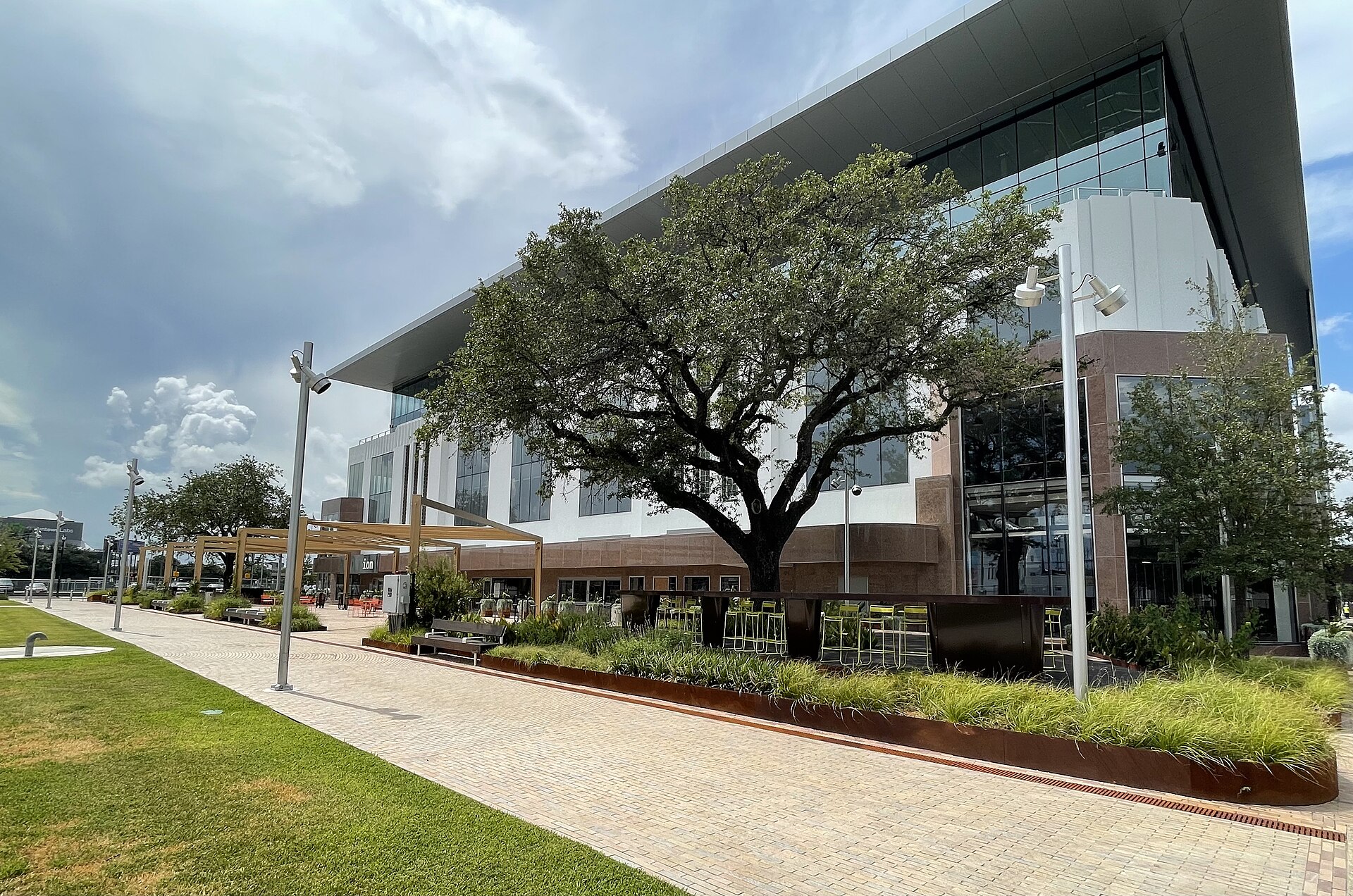
1939 · Art Deco department store, adapted with a modern addition
The Ion (former Midtown Sears)
- No Designation
The Sears, Roebuck and Co. store at 4201 Main Street opened in 1939 as the first major retail building in Houston located outside downtown. The three-story concrete building with a basement originally had an Art Deco exterior, which was largely covered with corrugated metal paneling in the 1960s. The store remained open until January 2018. Rice University's endowment company, which owns the property, bought out the remaining years of Sears' 99-year lease in 2017. The building was then redeveloped as the Ion, a hub for innovation, startups, and education that opened in 2021. The project kept the original concrete structure, added two new floors with a glass curtain wall and vertical sunshades, and cut a light-filled atrium through the middle of the building. It anchors the surrounding Ion District.
Open profile & chat →