- Neighborhood
- Downtown
- Year built
- 1911
- Style
- Beaux-Arts
- Era
- Early 20th Century
- Architect
- Alonzo C. Pigg
- Designations
- National Register of Historic Places (listed March 29, 1983) · City of Houston Landmark (designated January 8, 1997)
Significance
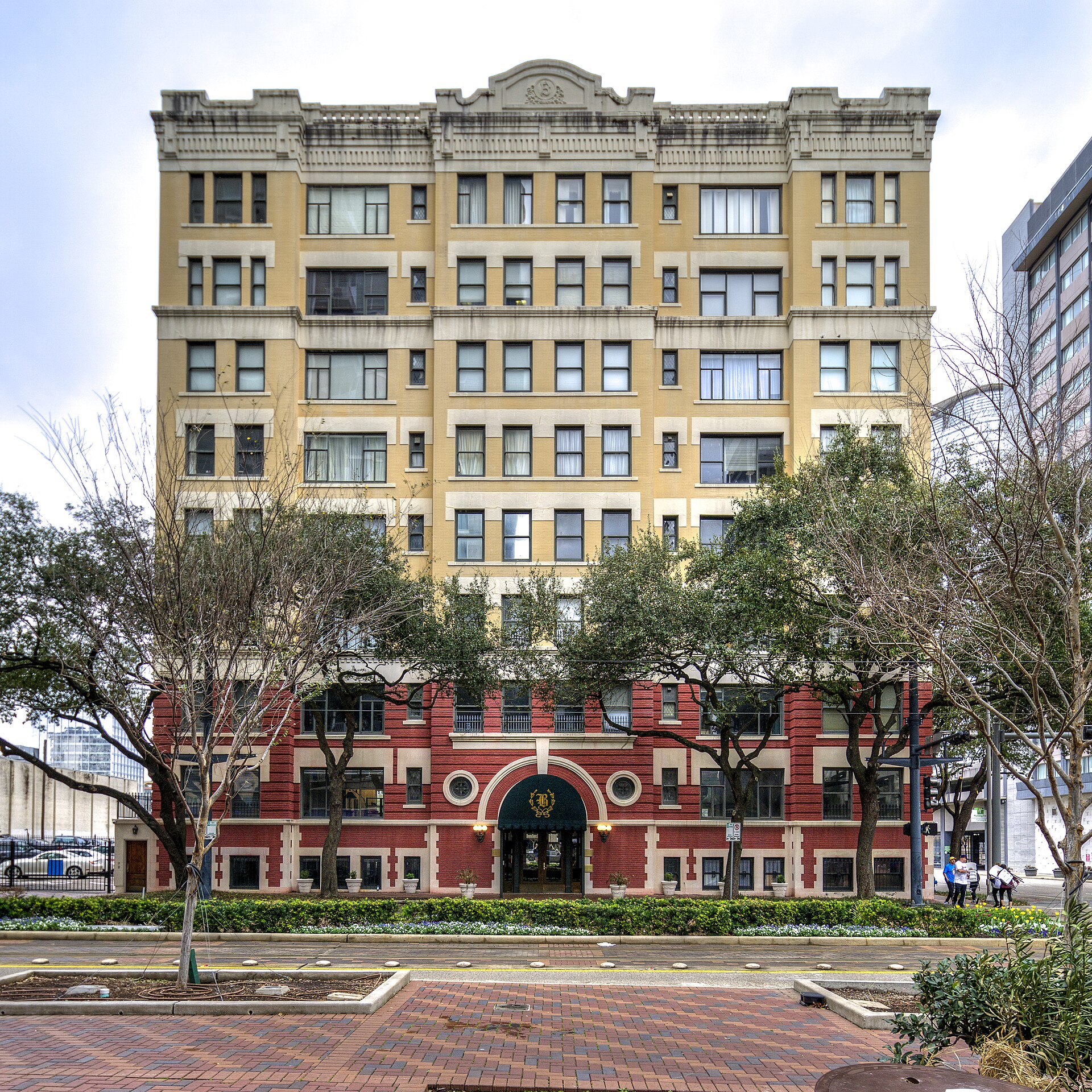
The Beaconsfield was designed as a luxury apartment building by Houston architect Alonzo C. Pigg. Lamb-Field Company began construction in December 1910 and completed it in 1911 at Main and Pease, on the southern edge of downtown. The eight story building held just sixteen apartments, each with six large rooms, fireplaces, and two screened balconies, along with elevators, servants' quarters, back stairways, and parking. It shows how Houston's well to do began to accept apartment living in the early 20th century, well before high rise residential buildings became common. It is listed on the National Register and designated a City of Houston Landmark.
Climate risks tracked
Click a risk to see what it means for this building.
Main Street south of downtown is prone to street flooding in heavy storms, so the priorities for this residential building are protecting the ground floor, basement, and building systems with raised equipment and entry barriers. The decorative upper cornice and balconies are the parts most exposed to hurricane winds and should be inspected and anchored on a regular cycle. The original building was designed for Houston's climate before air conditioning, with screened balconies and cross ventilation; keeping those features working helps residents stay cooler during power outages after storms. Brick and terra cotta need sound mortar and paint on metal elements to resist humidity.
Use the preservation assistant to talk through retrofit strategies for these specific threats.
Location
Nearby landmarks
Preservation Assistant
Grounded in The Beaconsfield
Suggested questions
Or ask your own question about The Beaconsfield below. I can cover its history, architecture, and climate-resilient retrofits.