- Neighborhood
- Downtown
- Year built
- 1929
- Style
- Art Deco
- Era
- Interwar
- Architect
- Alfred C. Finn; Kenneth Franzheim; J.E.R. Carpenter
- Designations
- National Register of Historic Places · City of Houston Landmark
Significance
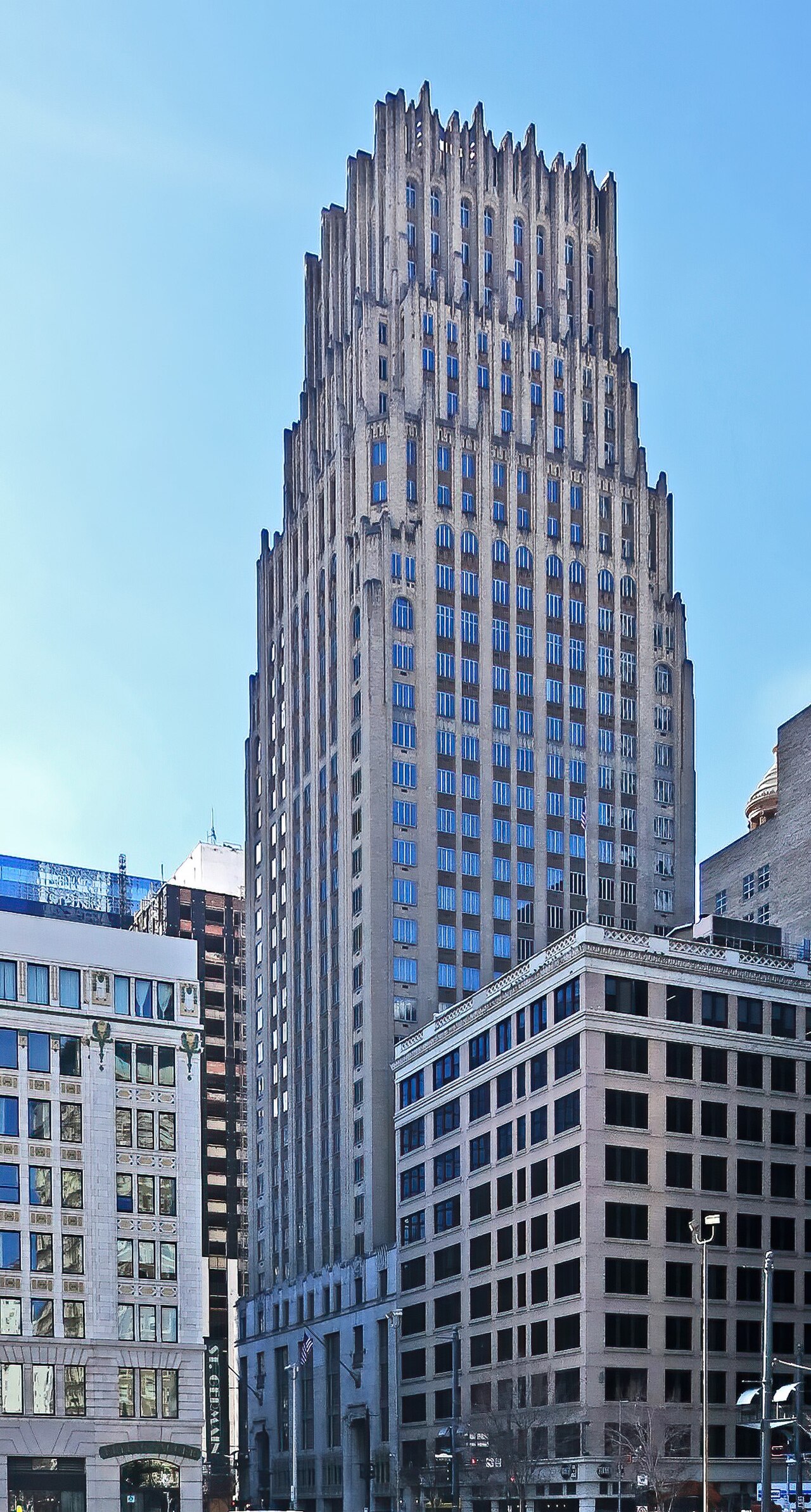
Completed in 1929, the 428-foot Gulf Building was designed by Alfred C. Finn with Kenneth Franzheim and J.E.R. Carpenter in the Art Deco style, drawing inspiration from Eliel Saarinen's celebrated entry in the 1922 Chicago Tribune Tower competition. Built for the Gulf Oil Corporation, it served as Houston's tallest skyscraper for more than three decades, symbolizing the city's rapid growth as an oil and finance capital during the late 1920s boom. Its ornate lobby features murals by artist Vincent Maragliotti depicting the history of transportation and commerce, along with elaborate metalwork and marble detailing typical of high style Art Deco skyscraper design. The tower later became a Chase Bank headquarters and remains one of downtown Houston's most architecturally significant early skyscrapers, listed on the National Register of Historic Places.
Climate risks tracked
Click a risk to see what it means for this building.
As a steel frame skyscraper, the Gulf Building's structural system is generally resilient, but its extensive decorative stonework, ornamental metal spandrels, and upper floor windows are vulnerable to sustained hurricane force winds, which historically have caused broken glass and dislodged cladding on downtown towers, as seen during Hurricane Ike in 2008. Ground floor lobby spaces and below grade mechanical areas face urban flooding risk during intense rainfall events like Hurricane Harvey, when downtown drainage systems become overwhelmed. Wind driven rain during hurricanes can also infiltrate aging window seals at height, threatening the historic Maragliotti murals and marble finishes in the lobby below.
Use the preservation assistant to talk through retrofit strategies for these specific threats.
Location
Nearby landmarks
Preservation Assistant
Grounded in Gulf Building
Suggested questions
Or ask your own question about Gulf Building below. I can cover its history, architecture, and climate-resilient retrofits.