- Neighborhood
- Downtown
- Year built
- 1939
- Style
- Art Moderne / PWA
- Era
- Interwar
- Architect
- Joseph Finger
- Designations
- National Register of Historic Places
Significance
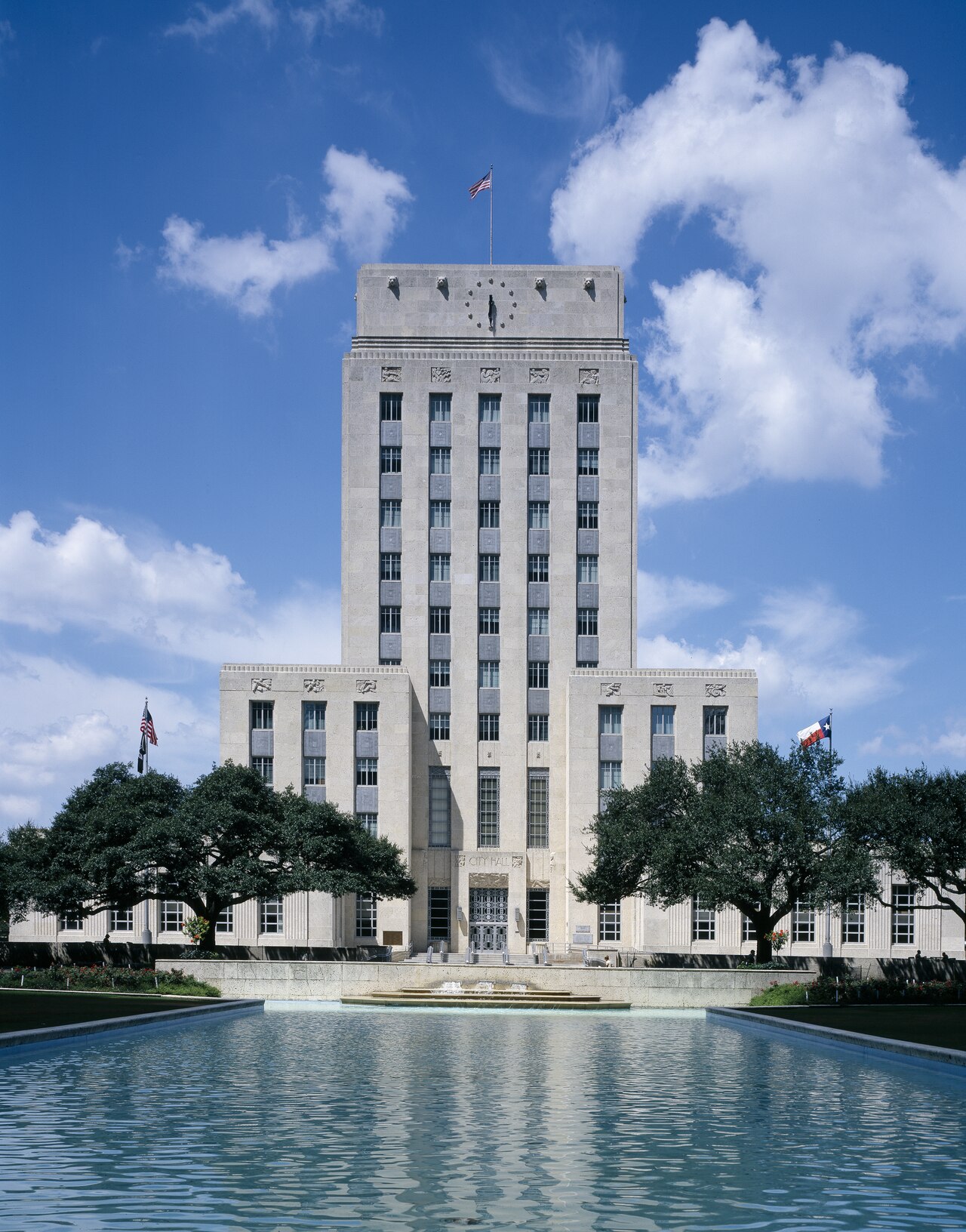
Completed in 1939 with Public Works Administration funding during the New Deal era, Houston City Hall was designed by architect Joseph Finger in the Art Moderne style, combining streamlined limestone massing with bronze entrance doors that depict scenes from Texas history. The building replaced an earlier city hall and became the seat of Houston municipal government, housing the mayor's office and city council chambers for generations of civic decisions. It faces Hermann Square and its reflecting pool, one of downtown's oldest public gathering spaces, which has hosted rallies, holiday displays, and public demonstrations throughout the twentieth and twenty first centuries. The building's restrained Depression era civic architecture stands in contrast to the ornate commercial towers built during Houston's earlier 1920s oil boom, marking a distinct chapter in the city's architectural evolution.
Climate risks tracked
Click a risk to see what it means for this building.
City Hall's limestone cladding and low rise massing sit adjacent to Hermann Square's reflecting pool in a part of downtown known to flood during major rain events, making the building and its surrounding plaza vulnerable to urban flooding, as occurred during Hurricane Harvey in 2017 when downtown streets and municipal facilities took on water. Its broad limestone facades and bronze doors can be scoured by wind driven debris during hurricanes such as Ike, while extreme heat and Houston's urban heat island intensify cooling demands on the building's aging mechanical systems, straining operations during the same summer months when tropical storms are most likely to strike.
Use the preservation assistant to talk through retrofit strategies for these specific threats.
Location
Nearby landmarks
Preservation Assistant
Grounded in Houston City Hall
Suggested questions
Or ask your own question about Houston City Hall below. I can cover its history, architecture, and climate-resilient retrofits.