- Neighborhood
- Downtown
- Year built
- 1907
- Style
- Renaissance Revival
- Era
- Early 20th Century
- Designations
- National Register of Historic Places
Significance
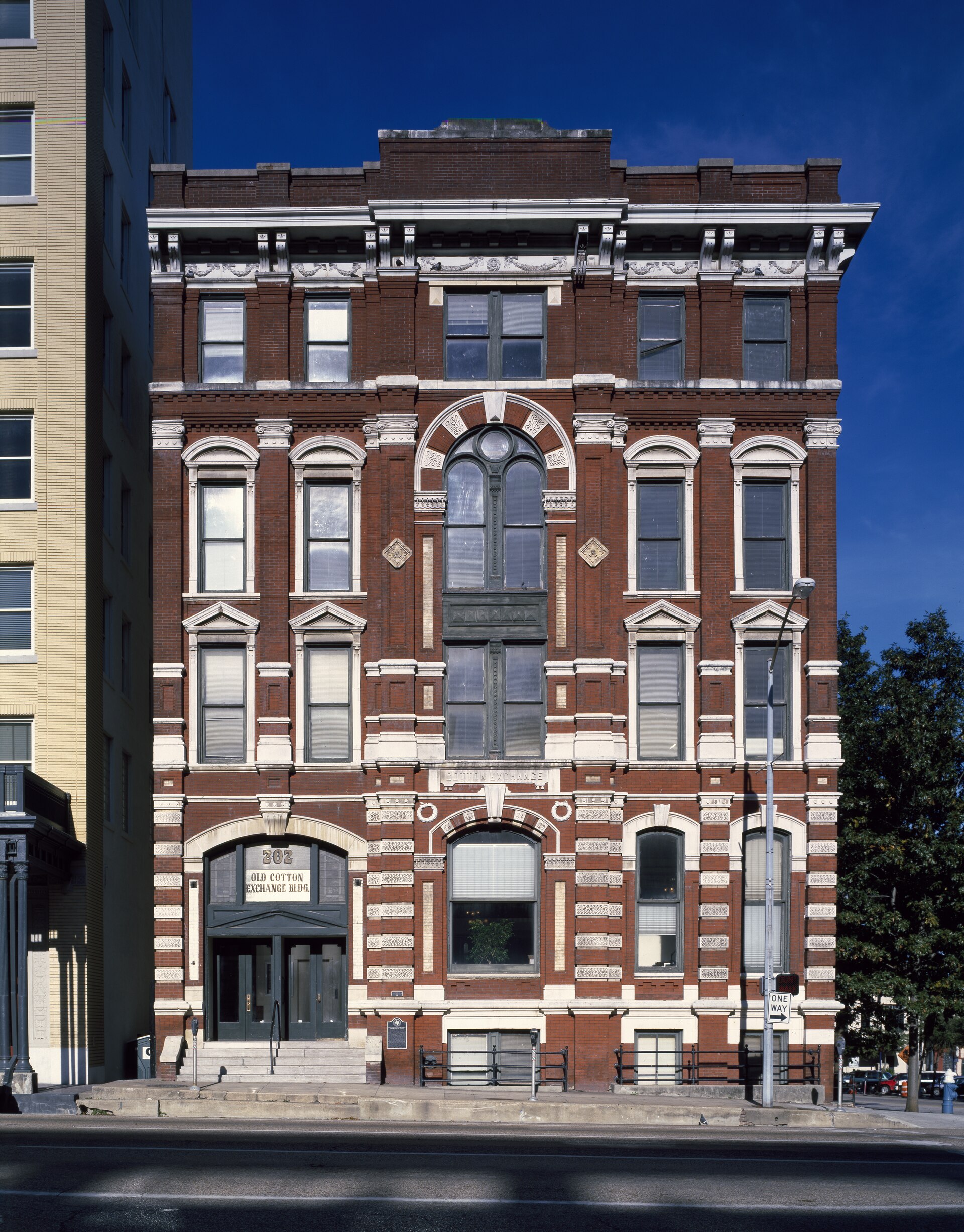
Built in 1907 in the Renaissance Revival style, the Cotton Exchange Annex was constructed to expand the trading capacity of the adjacent 1884 Houston Cotton Exchange building as Houston solidified its position as the world's largest spot cotton market in the early twentieth century. The annex provided additional office and trading space to accommodate the growing number of cotton brokers, merchants, and shipping agents whose business depended on the exchange's price setting and grading functions. Its construction reflects the continued importance of the cotton trade to Houston's economy even as the city began diversifying into oil and other industries during the same period. Together with the original Exchange building, the annex forms part of a small but significant cluster of surviving structures documenting Houston's role as an agricultural commodities hub before the rise of the oil economy.
Climate risks tracked
Click a risk to see what it means for this building.
The annex's early twentieth century masonry construction faces urban and bayou flooding risk due to its proximity to the historically flood prone streets near Buffalo Bayou and the broader downtown drainage basin, conditions that intensified dramatically during Hurricane Harvey in 2017. Its brick walls and window openings are vulnerable to wind driven rain infiltration during hurricanes, which can compromise interior finishes and promote humidity and mold problems in ground floor and basement spaces. Ongoing maintenance is required to prevent water intrusion at roof and window joints given the building's age and masonry construction.
Use the preservation assistant to talk through retrofit strategies for these specific threats.
Location
Nearby landmarks
Preservation Assistant
Grounded in Cotton Exchange Annex
Suggested questions
Or ask your own question about Cotton Exchange Annex below. I can cover its history, architecture, and climate-resilient retrofits.