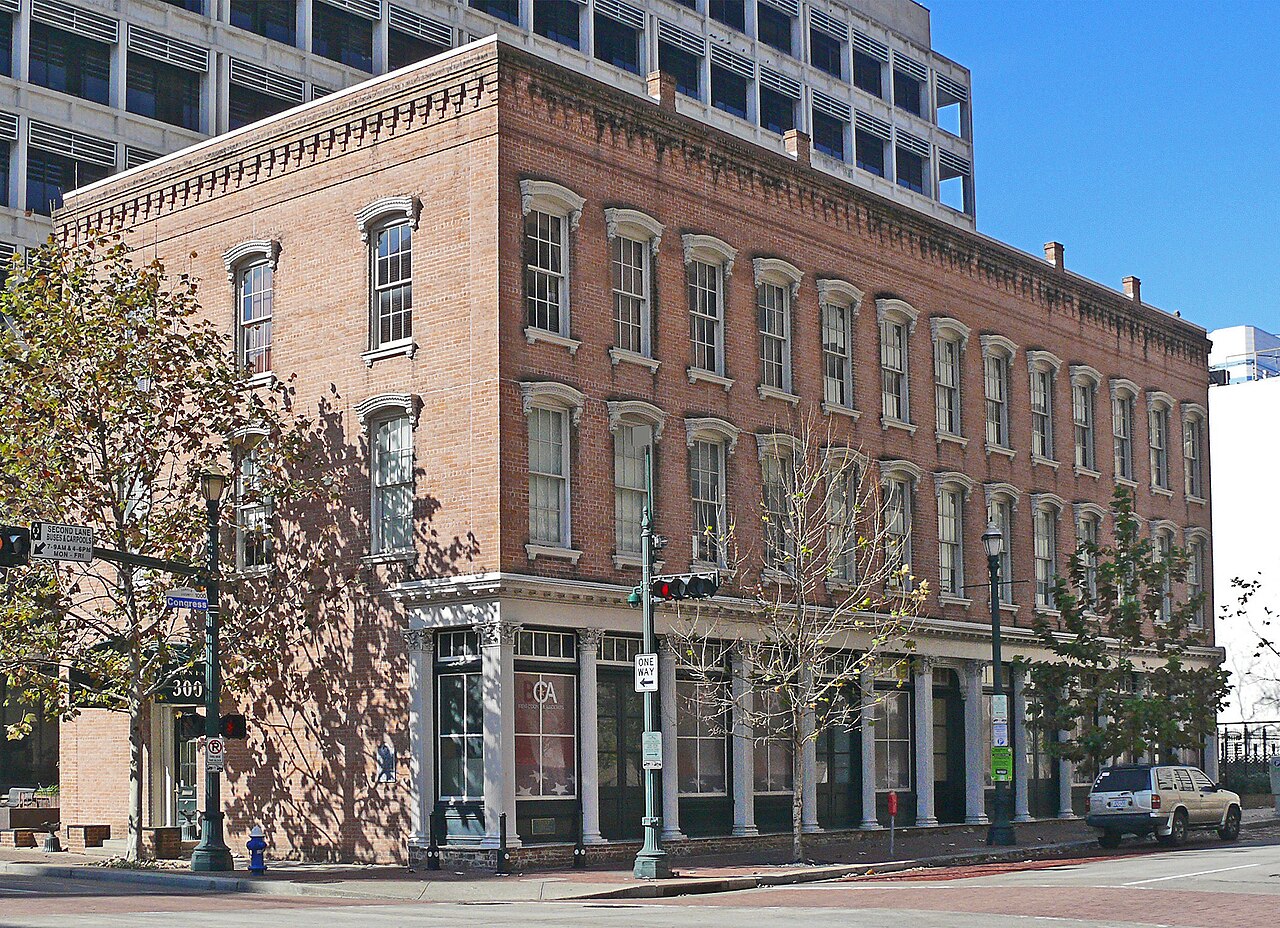
- Neighborhood
- Downtown
- Year built
- 1858
- Style
- Italianate / Victorian Commercial
- Era
- 19th Century
- Architect
- Eugene T. Heiner (later modifications)
- Designations
- National Register of Historic Places
Significance
Constructed in 1858 and later modified with additions by architect Eugene T. Heiner, the Pillot Building is one of the oldest surviving commercial buildings in downtown Houston, built for merchant Eugene Pillot to house his mercantile business near the bustling commercial district around Market Square. The building is notable for having the first cast iron gallery installed in Texas, an architectural innovation that allowed for expanded upper floor space while showcasing the decorative ironwork fashionable in mid-nineteenth century commercial architecture. Its survival through more than a century and a half of downtown redevelopment, fires, and changing commercial fortunes makes it an invaluable physical record of Houston's antebellum and Civil War era commercial architecture, an era from which very few buildings remain standing in the city today.
Climate risks tracked
Click a risk to see what it means for this building.
The Pillot Building's nineteenth century masonry construction and cast iron gallery are vulnerable to hurricane wind damage, which can stress the decorative ironwork's connections to the building's facade during major storms. Its proximity to Market Square and Buffalo Bayou places it within a zone prone to urban flooding, as demonstrated during Hurricane Harvey in 2017 when downtown's historic commercial core experienced significant water intrusion. Houston's high humidity combined with the building's aging brick and iron construction creates ongoing risk of both mold growth in interior spaces and corrosion of the historic cast iron gallery.
Use the preservation assistant to talk through retrofit strategies for these specific threats.
Location
Nearby landmarks
Preservation Assistant
Grounded in Pillot Building
Suggested questions
Or ask your own question about Pillot Building below. I can cover its history, architecture, and climate-resilient retrofits.