- Neighborhood
- Downtown
- Year built
- 1915
- Style
- Renaissance Revival
- Era
- Early 20th Century
- Architect
- Warren & Wetmore
- Designations
- National Register of Historic Places
Significance
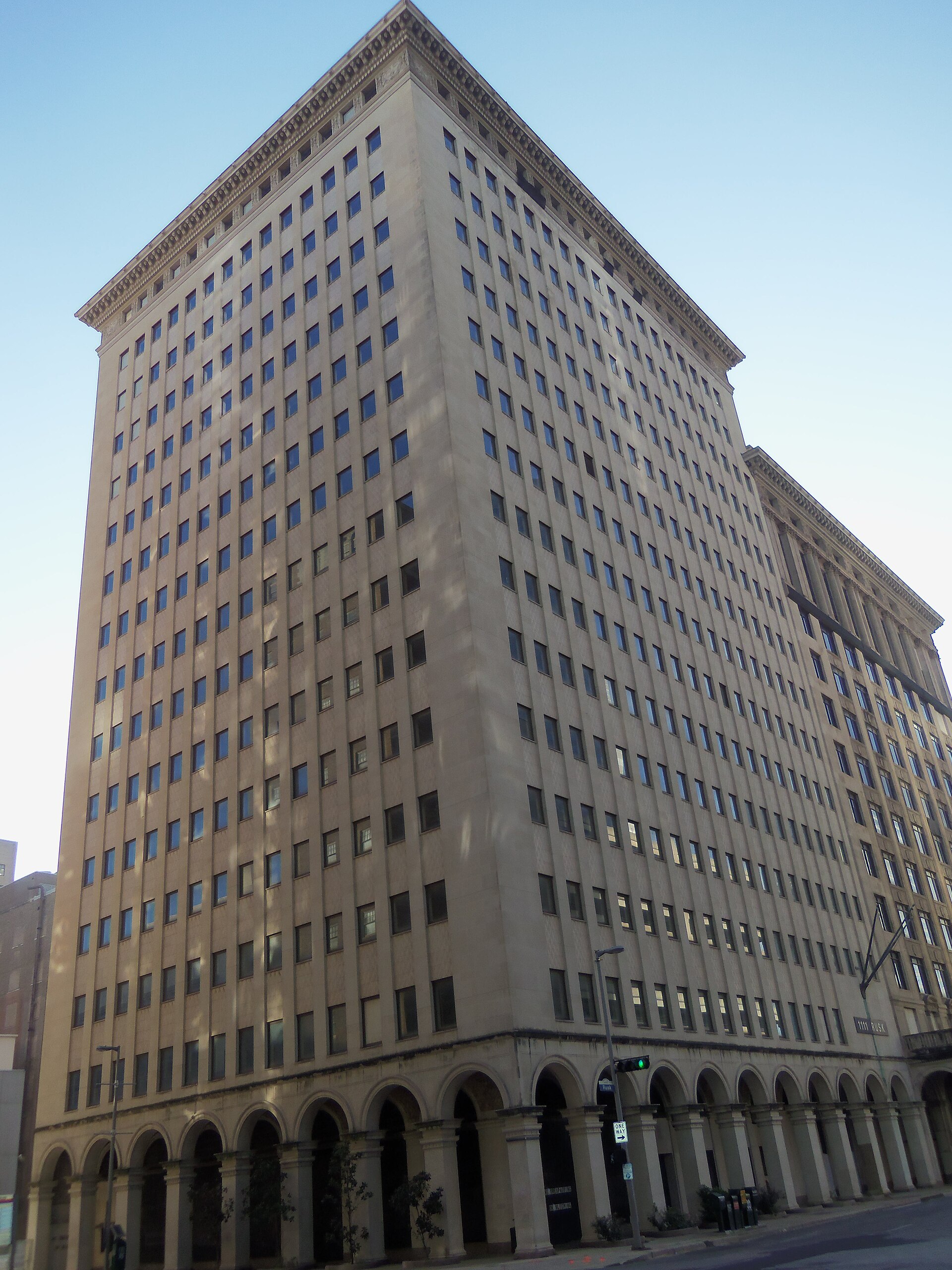
Built in 1915 as the Houston headquarters of The Texas Company, later known worldwide as Texaco, this thirteen story building was designed by Warren & Wetmore, the New York firm behind Grand Central Terminal. Its construction marked the arrival of the oil industry as a dominant force in Houston's economy, a decade and a half after the Spindletop gusher launched the Texas oil boom. The Renaissance Revival design is faced in brick and terra cotta, with an ornate crown added when the building was expanded in the 1920s. Texaco occupied it until 1958. Long vacant and threatened, the building was restored and converted into apartments, reopening as The Star. It is listed on the National Register of Historic Places.
Climate risks tracked
Click a risk to see what it means for this building.
The ornate terra cotta crown and cornice added in the 1920s expansion are the most exposed elements in a hurricane; anchoring and periodic condition surveys prevent falling units. Historic window openings need wind resistant replacements that respect the Renaissance Revival design. The building stands on downtown's east side, where Tropical Storm Allison caused deep street flooding in 2001; the residential conversion wisely placed critical systems above flood level, and continued maintenance of entrance flood protection is important. The masonry walls absorb Houston's summer heat, so efficient mechanical systems and reflective roofing reduce cooling demand without touching the historic exterior.
Use the preservation assistant to talk through retrofit strategies for these specific threats.
Location
Nearby landmarks
Preservation Assistant
Grounded in Texas Company Building (Texaco)
Suggested questions
Or ask your own question about Texas Company Building (Texaco) below. I can cover its history, architecture, and climate-resilient retrofits.