- Neighborhood
- Downtown
- Year built
- 1929
- Style
- Art Deco / Renaissance Revival
- Era
- Interwar
- Architect
- Joseph Finger
- Designations
- National Register of Historic Places · City of Houston Landmark (designated March 5, 1997)
Significance
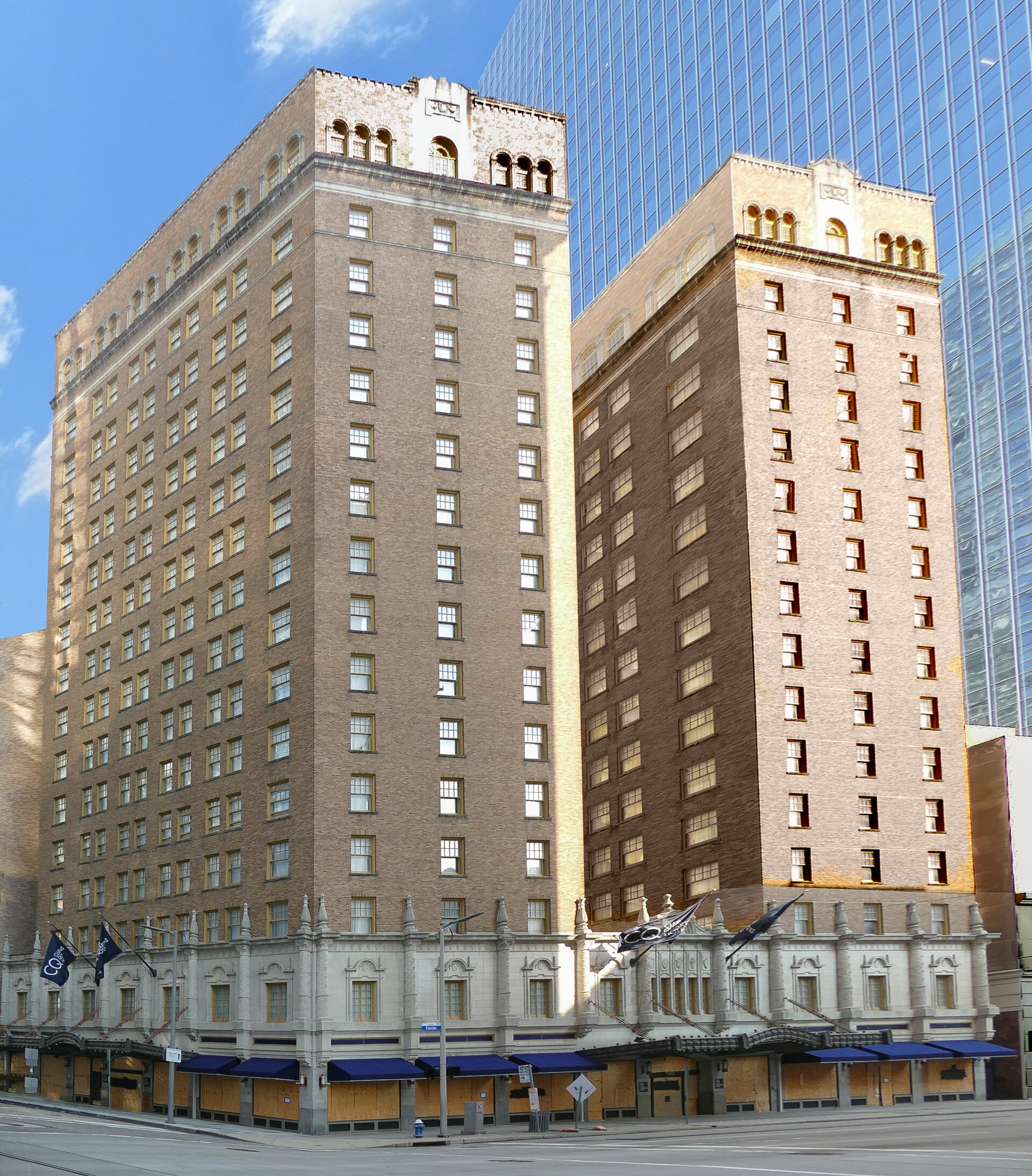
The Texas State Hotel opened in 1929 on Fannin Street, designed by Joseph Finger, the Austrian born Houston architect who would later design Houston City Hall. The sixteen story hotel was one of several built downtown in the booming late 1920s to serve the city's growing business and rail traffic. The building combines Renaissance Revival massing with Art Deco detailing and retains its ornate two story base. After years as a hotel and later offices, it was renovated and now operates as a Club Quarters hotel. It is listed on the National Register of Historic Places as part of downtown Houston's surviving group of 1920s hotels.
Climate risks tracked
Click a risk to see what it means for this building.
The hotel sits a few blocks from Buffalo Bayou in an area that flooded during Tropical Storm Allison; the ornate ground floor with its historic entrances needs deployable flood protection rather than permanent barriers that would alter the facade. Basement mechanical and electrical systems should be floodproofed or relocated upward. The decorative terra cotta and cast stone at the upper stories and parapet are exposed to hurricane winds and need periodic inspection and anchoring. Houston's humidity and driving rains penetrate aging masonry joints, so repointing with compatible mortar and maintaining roof drainage are the most cost effective preservation measures.
Use the preservation assistant to talk through retrofit strategies for these specific threats.
Location
Nearby landmarks
Preservation Assistant
Grounded in Texas State Hotel
Suggested questions
Or ask your own question about Texas State Hotel below. I can cover its history, architecture, and climate-resilient retrofits.