Main Street to Union Station
Downtown
Trace the eastern side of downtown, from Main Street banks and the Pillot Building to Christ Church Cathedral, the U.S. Customhouse, the Petroleum Building, Union Station and Annunciation.
12 stops · 1.3 mi
Live location (optional)
Walking the route? Turn this on for step by step directions to the next stop. Your location stays on your device.
- 1
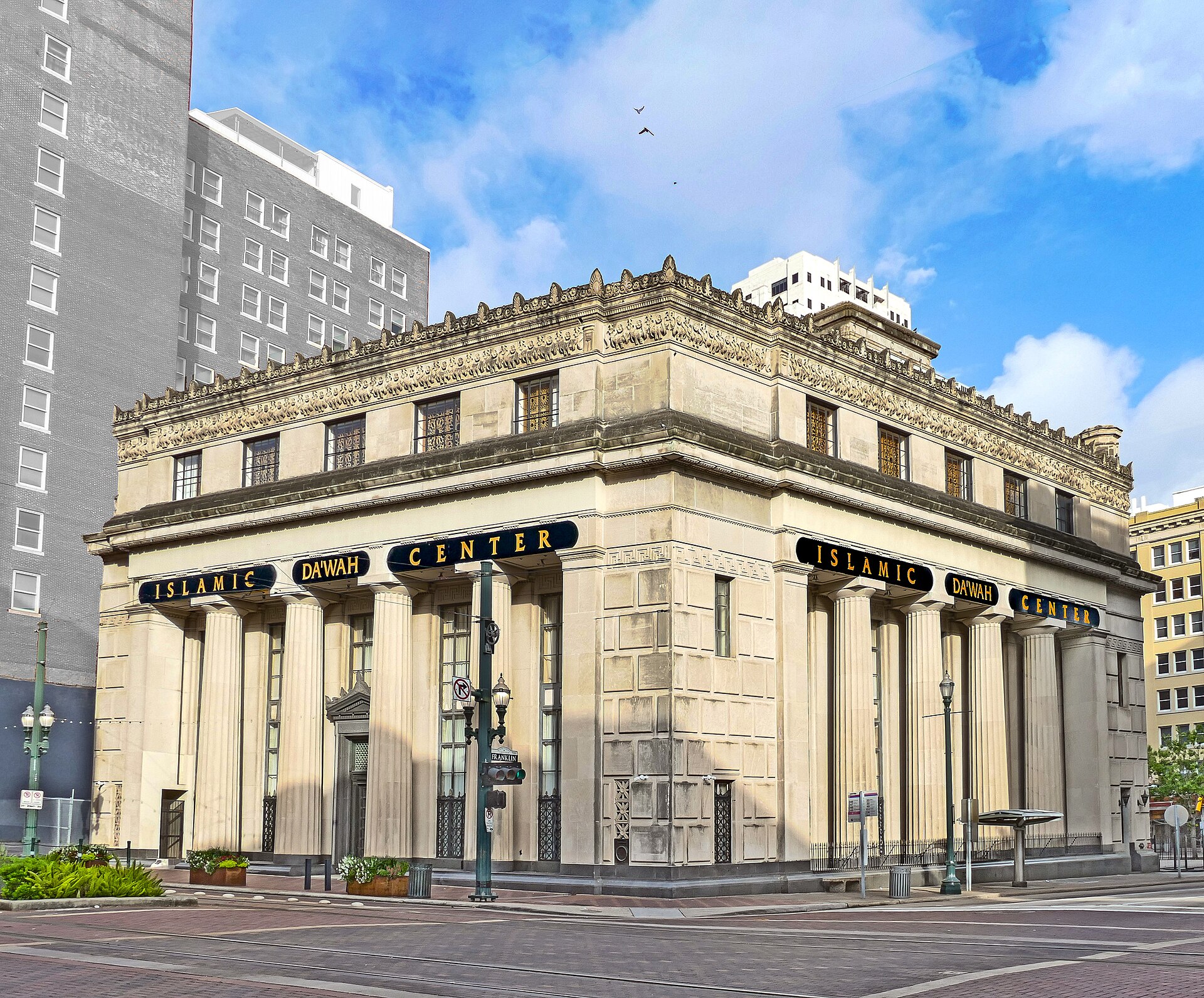
1928 · Neoclassical
Old Houston National Bank Building (Islamic Da'wah Center)
- NRHP
- City Landmark
Built in 1928 for the Houston National Bank and designed by the Fort Worth firm Hedrick & Gottlieb, this Neoclassical bank building at Main and Franklin is one of downtown's most imposing temple fronted commercial buildings. Its colossal columns and richly detailed stone facade announced the confidence of Houston banking on the eve of the Great Depression. After decades of bank use, the building was acquired by the Islamic Da'wah Center, which held its first prayers there in 2002, an act of preservation by a faith community that kept the landmark in active use. It was listed on the National Register of Historic Places in 1975 and designated a City of Houston Landmark in 2008.
Open profile & chat → - 2
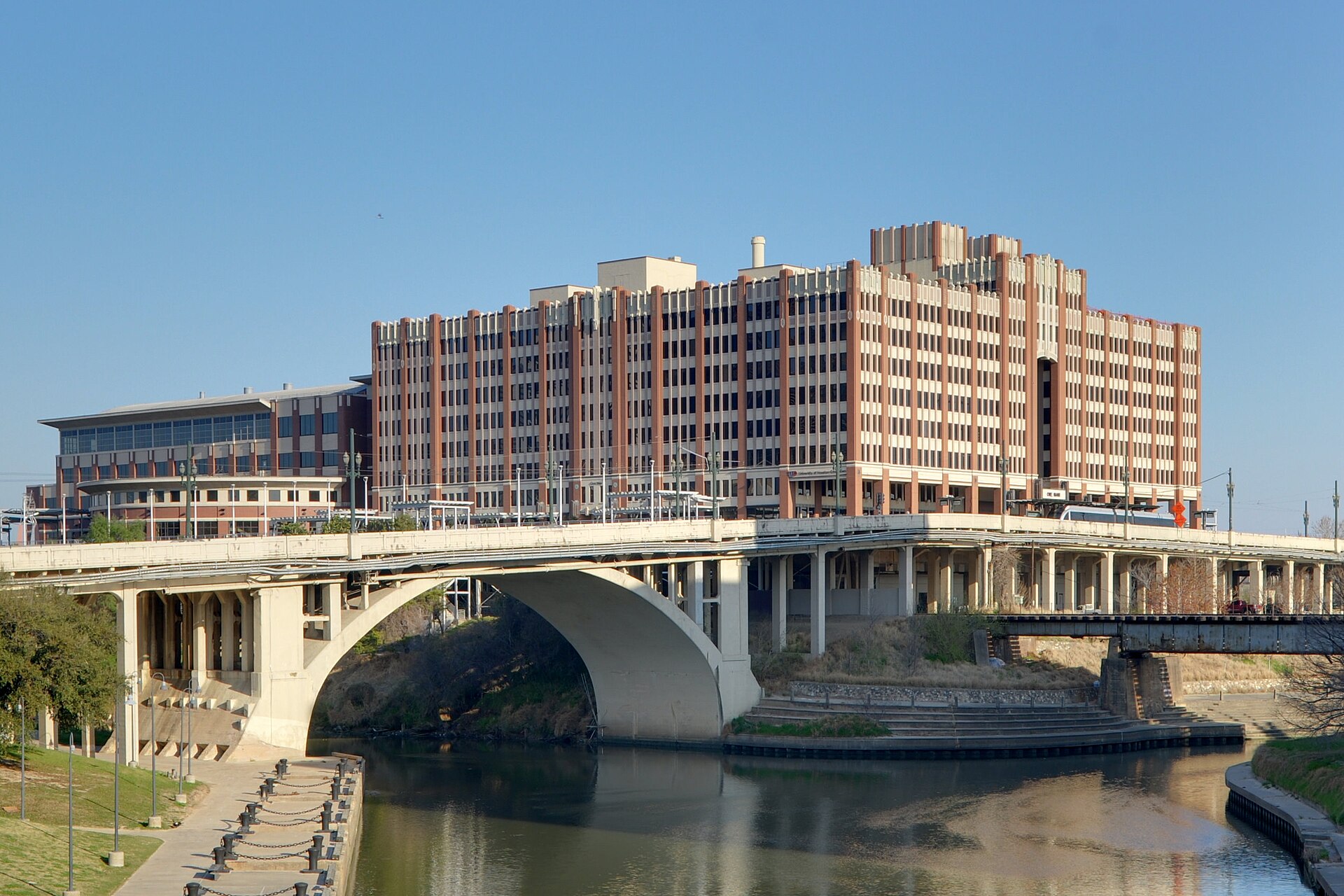
1930 · Art Deco
Merchants and Manufacturers Building (One Main Building)
- NRHP
- Recorded Texas Historic Landmark
The Merchants and Manufacturers Building, known as the M&M Building, was completed in 1930 above Allen's Landing, where John Kirby Allen and Augustus Chapman Allen founded Houston in 1836. It was the largest building in the city when it opened, a vast commercial showroom designed to bring wholesalers and buyers under one roof. The Great Depression undercut those ambitions, but the building found a second life in education. South Texas Junior College bought it in the 1960s, and it became the home of the University of Houston-Downtown, which renamed it the One Main Building. It remains the university's largest facility, and it is listed on the National Register, designated a Recorded Texas Historic Landmark, and counted as a contributing building in the Main Street/Market Square Historic District.
Open profile & chat → - 3
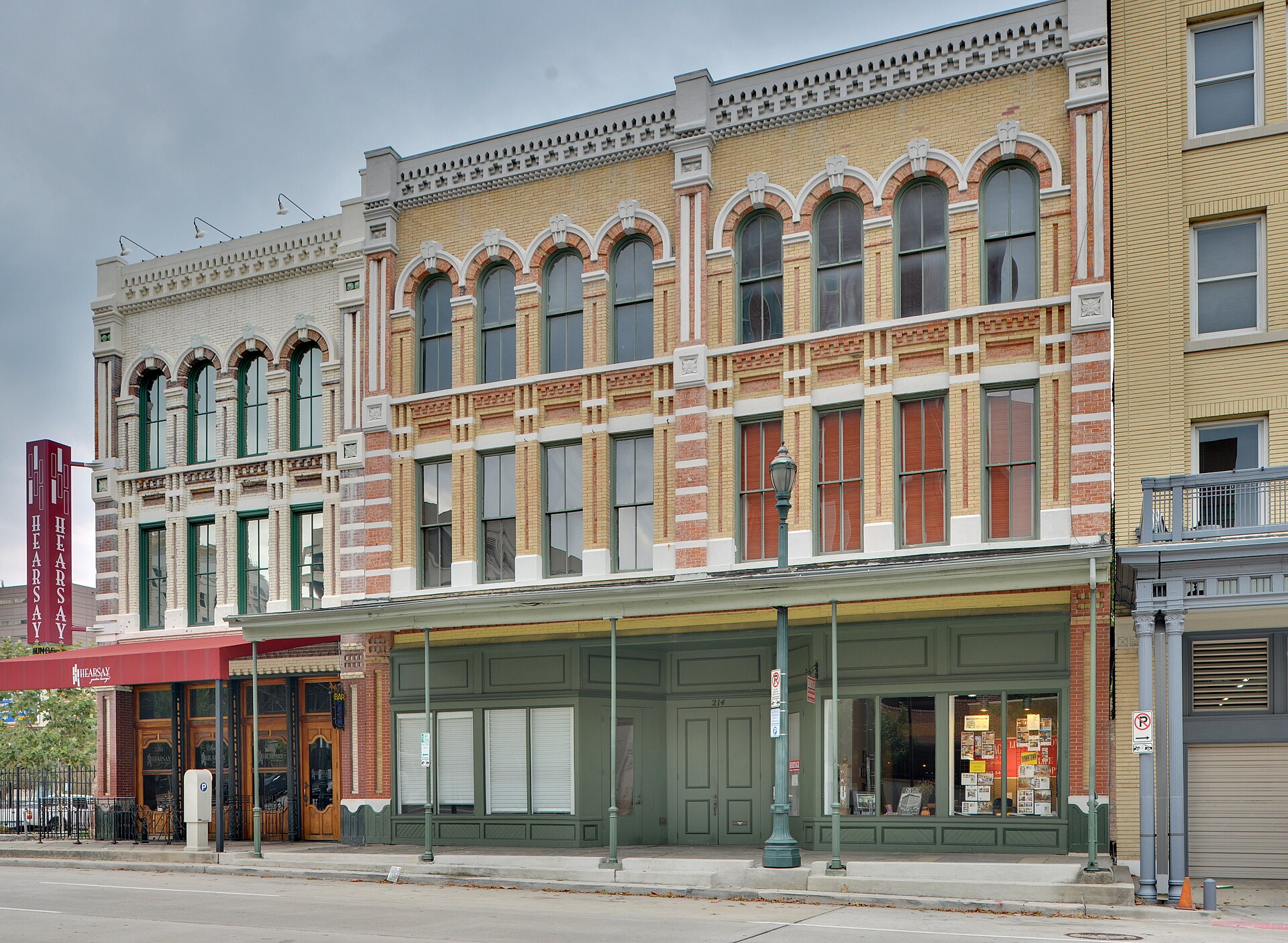
1860 · Italianate
W. L. Foley Building
- NRHP
- City Landmark
The W. L. Foley Building traces its origins to 1860, making it one of the oldest commercial structures in Houston. After a fire, it was rebuilt in 1889 to designs by Eugene T. Heiner, the prolific architect behind many of the Market Square area's Victorian commercial blocks. The building burned again in 1989 and stood as a shell until it was reconstructed in 1994 by Lee Benner, who restored its Italianate facade. Listed on the National Register of Historic Places in 1978, it anchors a block of Market Square that holds some of the finest surviving 19th century commercial architecture in Texas.
Open profile & chat → - 4
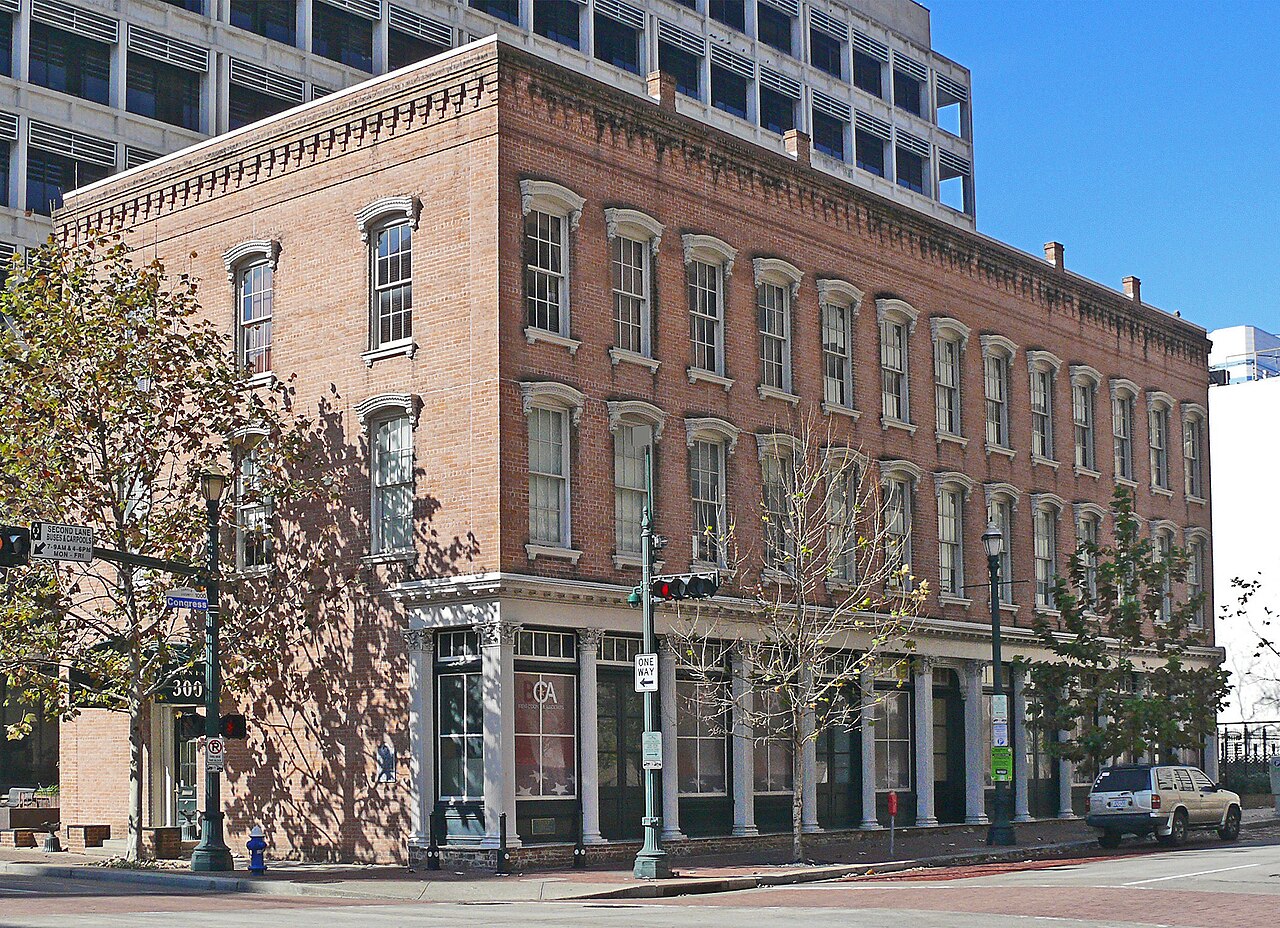
1858 · Italianate / Victorian Commercial
Pillot Building
- NRHP
Constructed in 1858 and later modified with additions by architect Eugene T. Heiner, the Pillot Building is one of the oldest surviving commercial buildings in downtown Houston, built for merchant Eugene Pillot to house his mercantile business near the bustling commercial district around Market Square. The building is notable for having the first cast iron gallery installed in Texas, an architectural innovation that allowed for expanded upper floor space while showcasing the decorative ironwork fashionable in mid-nineteenth century commercial architecture. Its survival through more than a century and a half of downtown redevelopment, fires, and changing commercial fortunes makes it an invaluable physical record of Houston's antebellum and Civil War era commercial architecture, an era from which very few buildings remain standing in the city today.
Open profile & chat → - 5
1893 · Gothic Revival
Christ Church Cathedral
- NRHP
- City Landmark
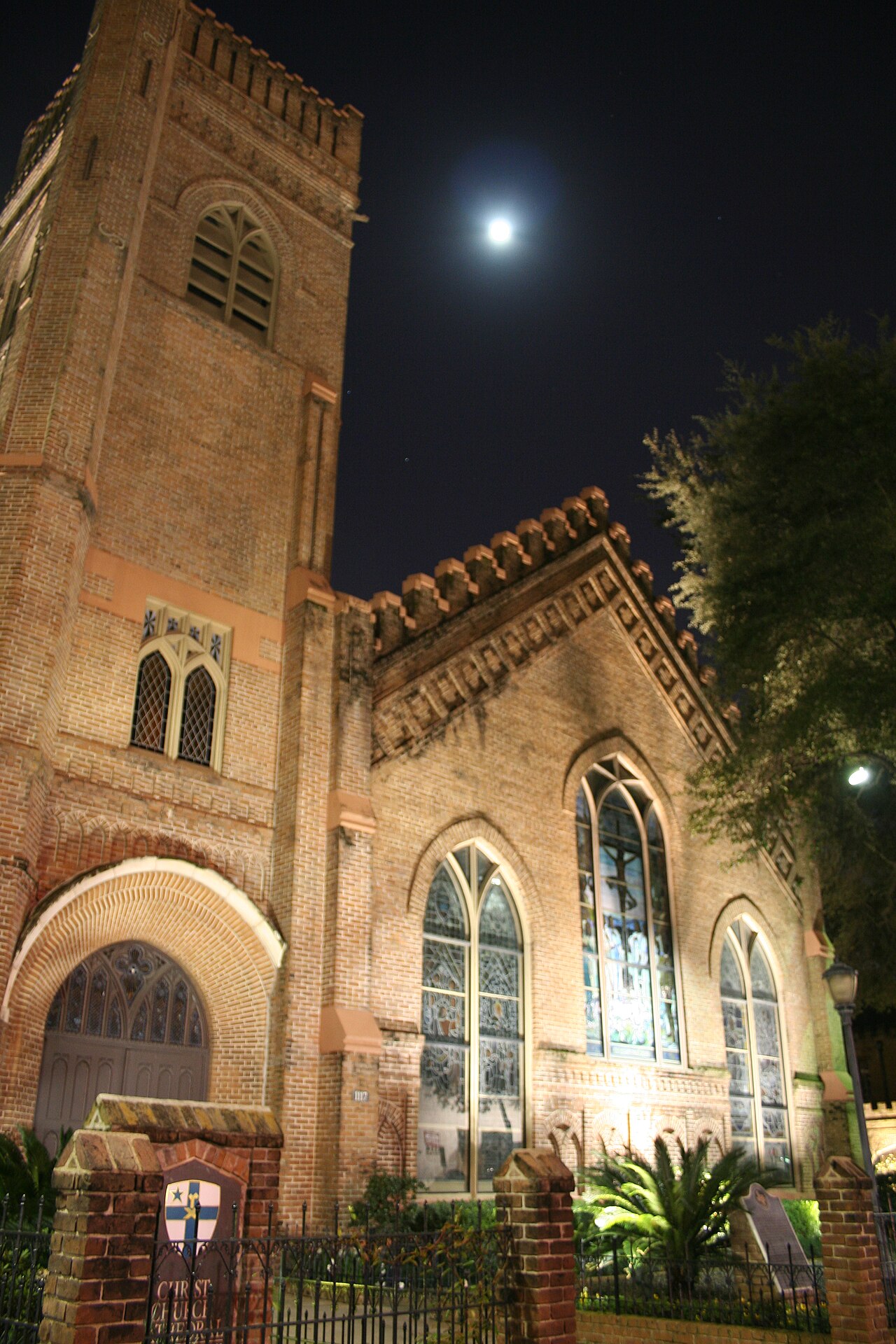
Consecrated in stages beginning in the 1890s, Christ Church Cathedral is the oldest continuously used religious structure in Houston and serves as the mother church, or seat, of the Episcopal Diocese of Texas. Designed by architect Silas McBee in the Gothic Revival style, it is built of sandstone and features stained glass windows by Tiffany Studios among its notable interior elements. The congregation itself dates to 1839, making it one of the earliest established churches in the Republic of Texas era city, and its full city block, known as the Cathedral Close, preserves an unusually intact ecclesiastical campus amid downtown's modern towers. The cathedral has hosted state funerals and civic memorial services throughout Houston's history and remains an active parish serving downtown residents and workers.
Open profile & chat → - 6
1924 · Commercial / Chicago School
Sam Houston Hotel
- NRHP
- City Landmark
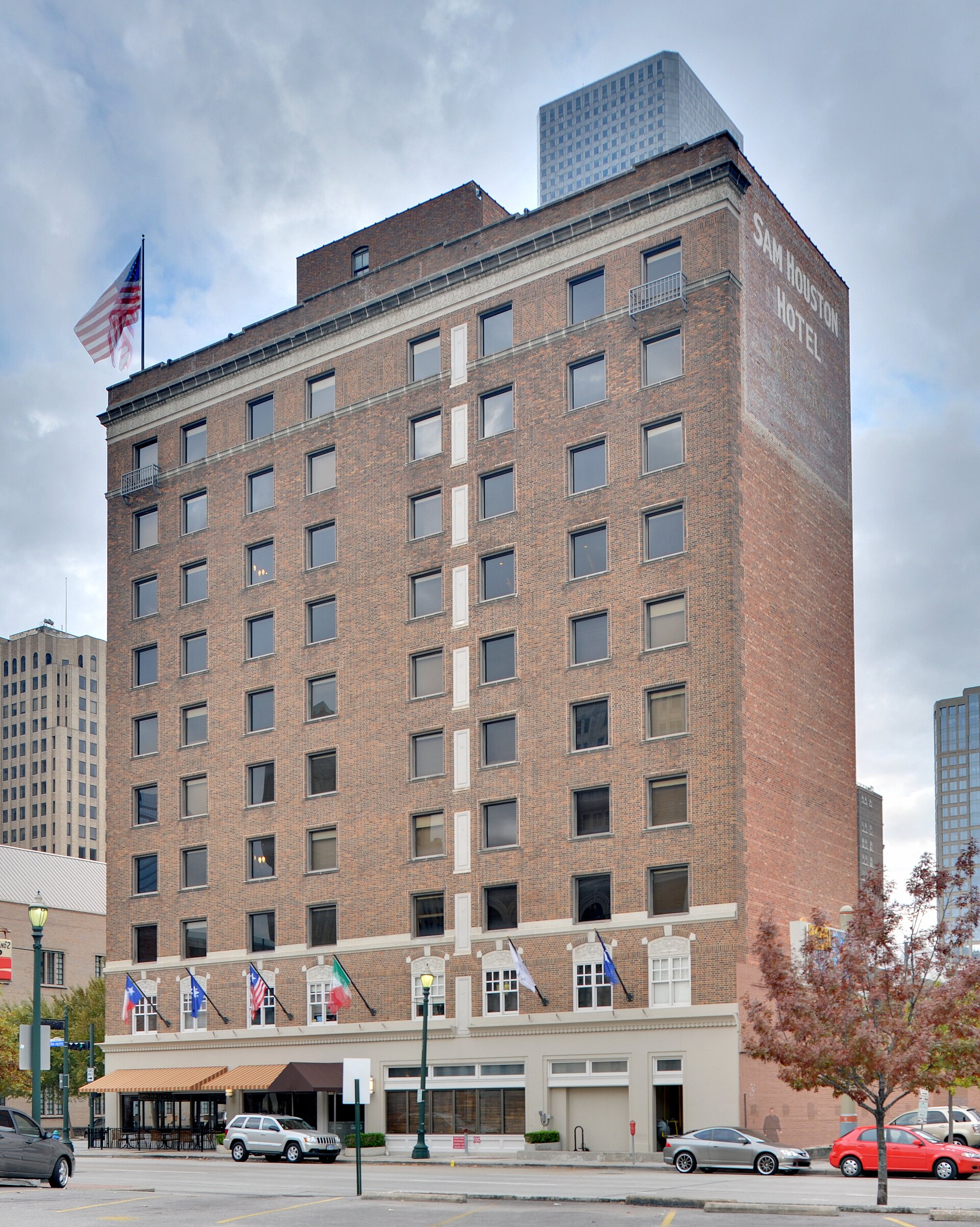
Built in 1924 as a Commercial and Chicago School style hotel, the Sam Houston Hotel is one of the few surviving early 20th century commercial hotels remaining in downtown Houston from the city's pre-Depression boom era. Its pressed brick facade and terracotta detailing reflect the material palette favored by downtown developers during the 1910s and 1920s, when Houston's population and commercial district expanded rapidly alongside the growth of the port and oil industries. The building fell into disuse for a period before undergoing a boutique hotel restoration in the early 2000s that preserved its historic exterior while modernizing guest room interiors. Today it serves as a functioning downtown hotel and stands as physical evidence of an era of Houston hospitality architecture largely lost to later demolition and redevelopment.
Open profile & chat → - 7
1926 · Classical Revival skyscraper
Magnolia Hotel (Houston Post-Dispatch Building)
- NRHP
- City Landmark
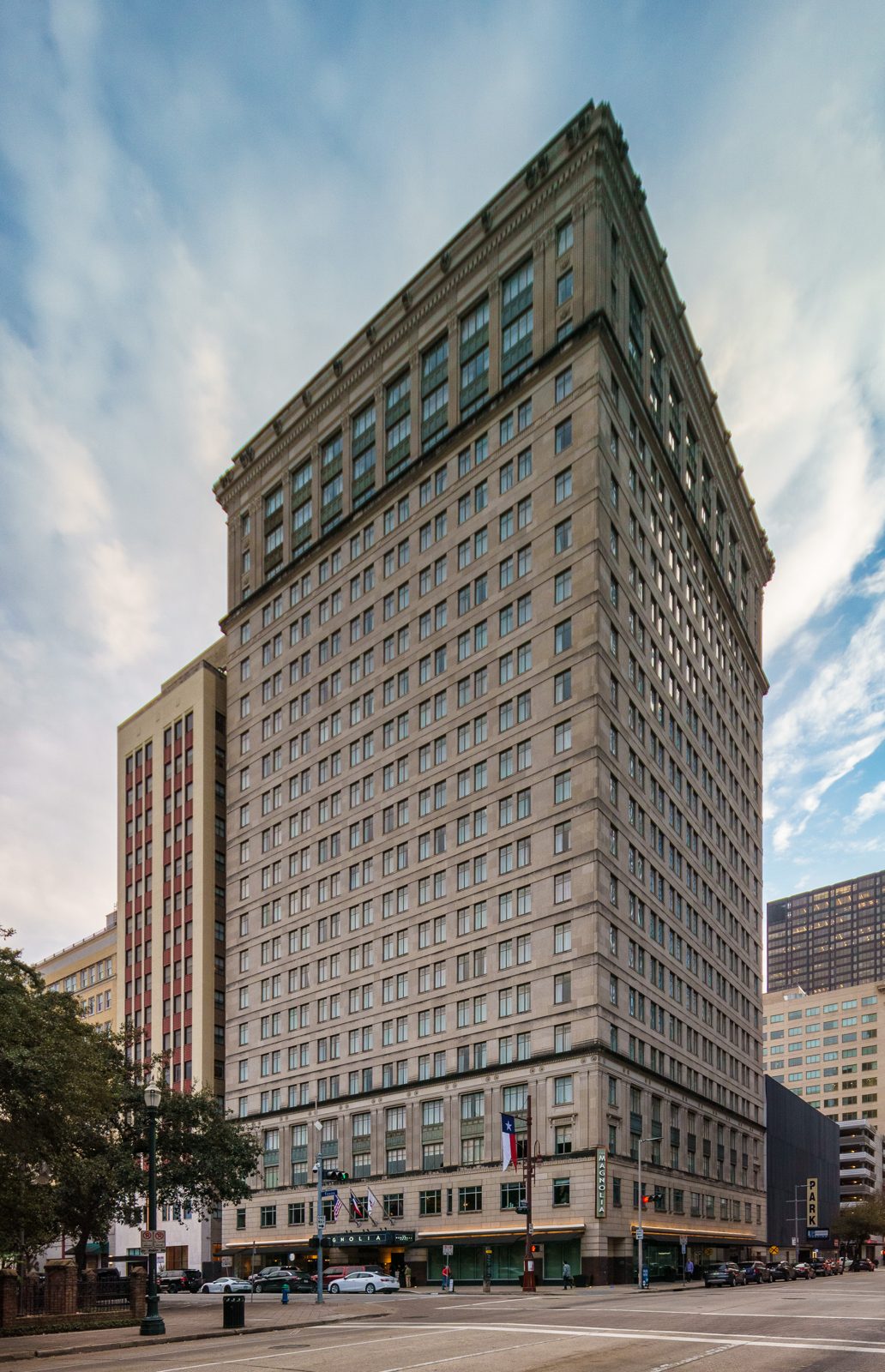
Built in 1926 as the Houston Post-Dispatch Building, headquarters of the Houston Post-Dispatch newspaper, this 22 story tower was the tallest building in Houston until the following year, when the Niels Esperson Building surpassed it. It was designed by the Texas firm Sanguinet, Staats, Hedrick & Gottlieb, which also designed many early skyscrapers across the state. In 1932 it was renamed the Shell Building when it became a regional operations headquarters for the Shell Petroleum Corporation, a predecessor of Shell Oil Company, reflecting Houston's rise as an oil capital. After decades as offices, the building was converted into the Magnolia Hotel, which opened in 2003. Its reuse is an example of how downtown's early 20th century office towers have found new life as hotels and residences.
Open profile & chat → - 8
1911 · Second Renaissance Revival
U.S. Customhouse
- NRHP
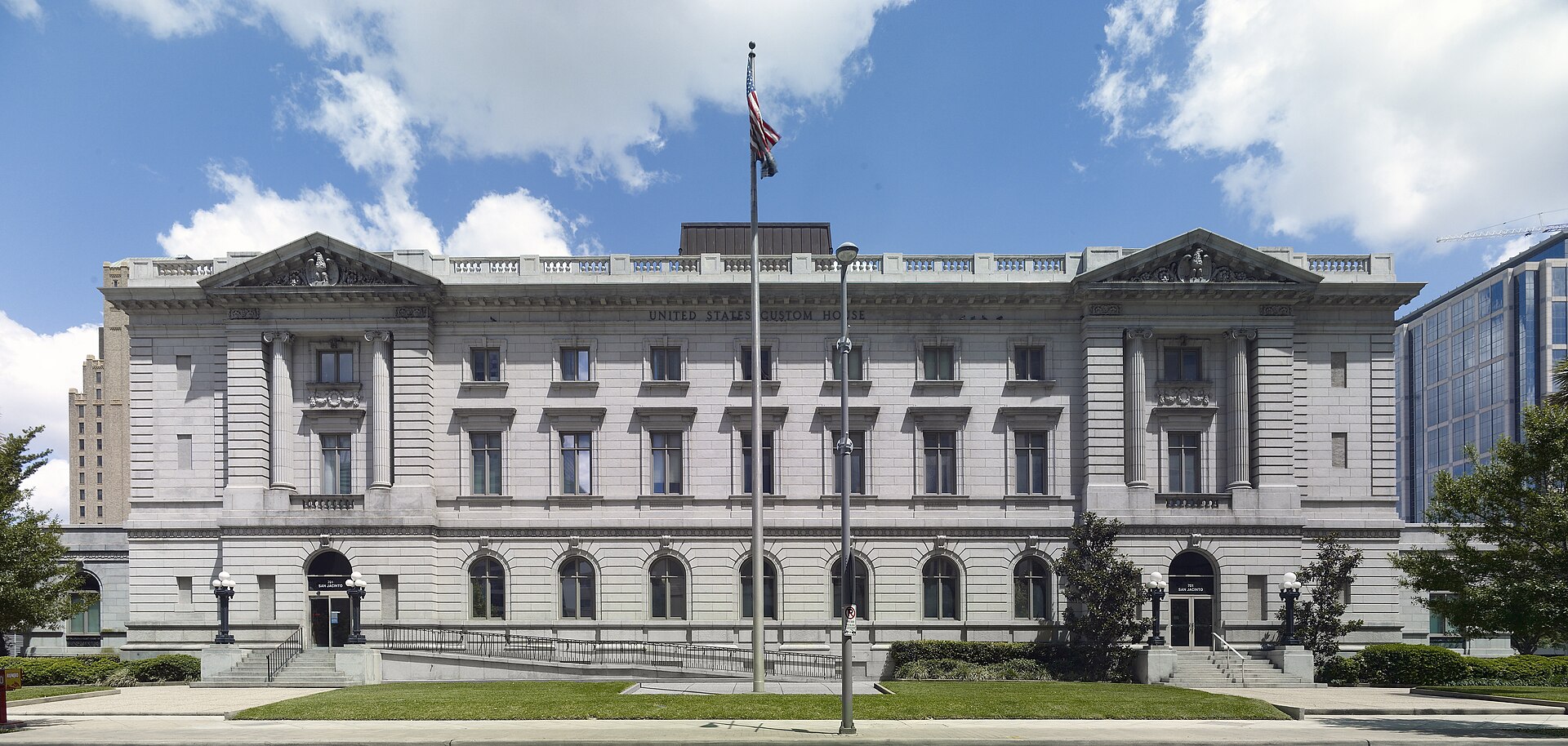
Built between 1907 and 1911 as Houston's federal post office and courthouse, the U.S. Customhouse fills an entire downtown block. It was designed under James Knox Taylor, Supervising Architect of the Treasury, who believed federal buildings should be dignified, pleasant to look at, and practical inside. Thousands of Houstonians toured it at its grand opening on December 1, 1911. The building reflects the moment Houston overtook Galveston. After the 1900 hurricane devastated the island city, shipping and business moved inland to Houston's sheltered port, and federal services had to grow to match. A 1931 addition expanded the building, the federal court stayed until 1962, and it later became the custom house. When it opened it was the only monumental Second Renaissance Revival building in Houston, and it was listed on the National Register in 1974.
Open profile & chat → - 9
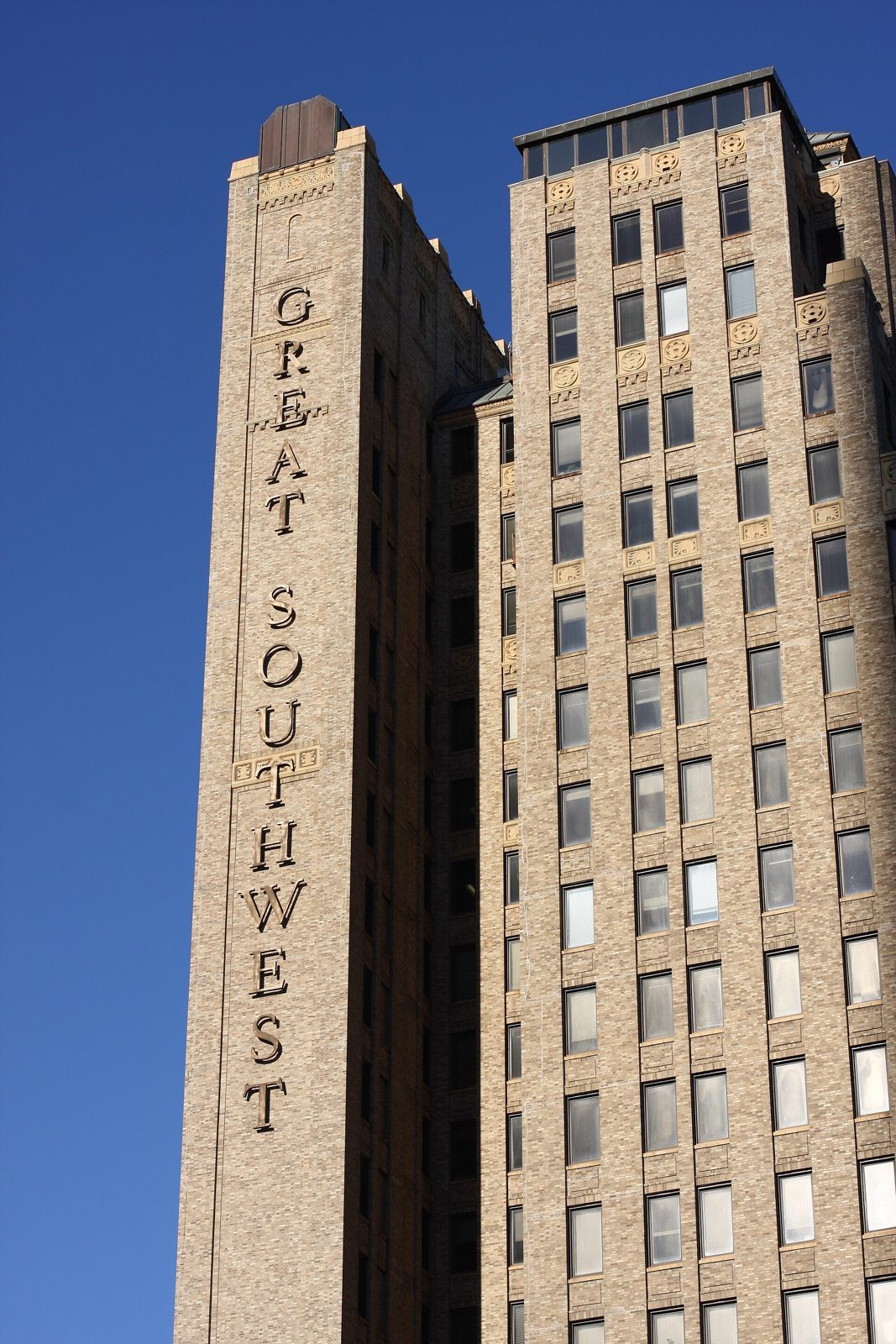
1927 · Art Deco (Mayan Revival)
Petroleum Building (Great Southwest Building)
- NRHP
- City Landmark
The Petroleum Building was conceived by Houston oilman Joseph S. Cullinan, a founder of the Texas Company, to bring many oil companies together under one roof. Built around 1927, it was designed by New York architect Alfred C. Bossom with Maurice J. Sullivan and the firm Briscoe & Dixon. On completion it housed upward of twenty oil companies under the American Republics Corporation, along with tenants such as Houston Natural Gas and Halliburton, and its twenty first floor was home to the Tejas Club. Bossom, an English born architect, argued that the stepped pyramids of the Maya should be a model for American skyscrapers. The 22 story building has the limestone base and brown brick shaft typical of 1920s Houston towers, but adds Mayan relief figures above the arched second floor windows and pre Columbian decoration at its three setbacks. Later known as the Great Southwest Building, it was designated a City of Houston Landmark in 2017 and individually listed on the National Register for its commerce and architecture.
Open profile & chat → - 10
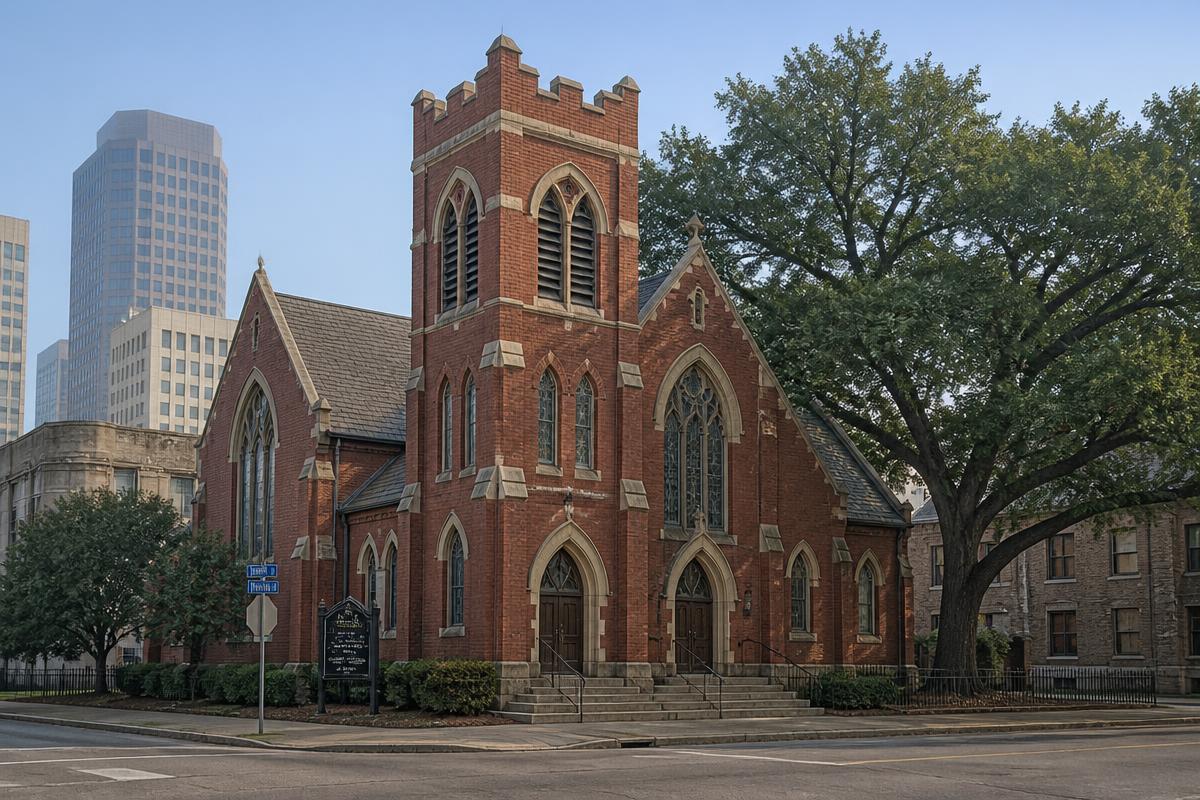 AI illustration
1904 · Gothic Revival
St. John's United Methodist Church
- City Landmark
Built in 1904, St. John's United Methodist Church is a historically Black Methodist congregation whose brick Gothic Revival sanctuary anchors the eastern edge of downtown Houston, serving a community that has worshipped there for well over a century. The congregation played an active role in Houston's civil rights history, serving as a meeting place for organizing and community discussions during the 1960s civil rights movement, when Black churches across the South frequently served as essential gathering spaces for activism given the exclusion of Black communities from other public venues. The church has remained an active congregation through decades of surrounding neighborhood change, including the encroachment of downtown development and highway construction that displaced much of the historically Black community that once surrounded it, making its survival a significant marker of continuity in Houston's African American religious and civic history.
Open profile & chat → - 11
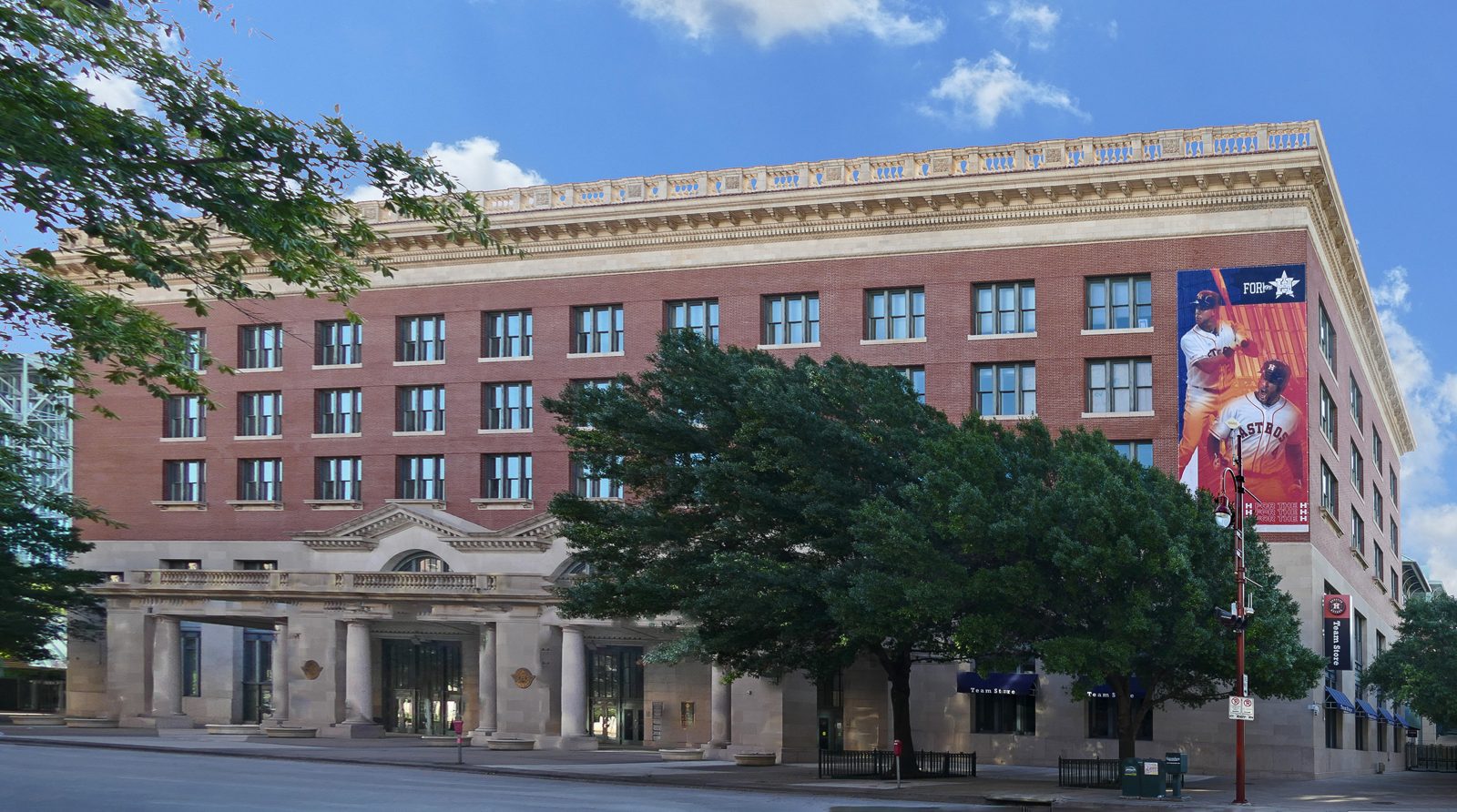
1911 · Beaux-Arts
Union Station
- NRHP
- State Antiquities Landmark
Commissioned in 1909 by the Houston Belt and Terminal Railway Company, Union Station was designed by Warren and Wetmore, the New York firm that later designed Grand Central Terminal. It opened on March 1, 1911 and was dedicated on March 2, 1911. Built with exterior walls of granite, limestone and terra cotta and an interior finished in marble, it cost roughly five times its original estimate of one million dollars. At the time, Houston was served by seventeen railways and was considered the main rail hub of the South. Construction required clearing notable sites, including the residence of Horace Baldwin Rice and the synagogue of Adath Yeshurun Congregation. After passenger rail declined and service moved elsewhere, the station was preserved as the front entrance and cornerstone of the downtown ballpark that opened in 2000, now called Daikin Park. It is listed on the National Register of Historic Places and is a State Antiquities Landmark.
Open profile & chat → - 12
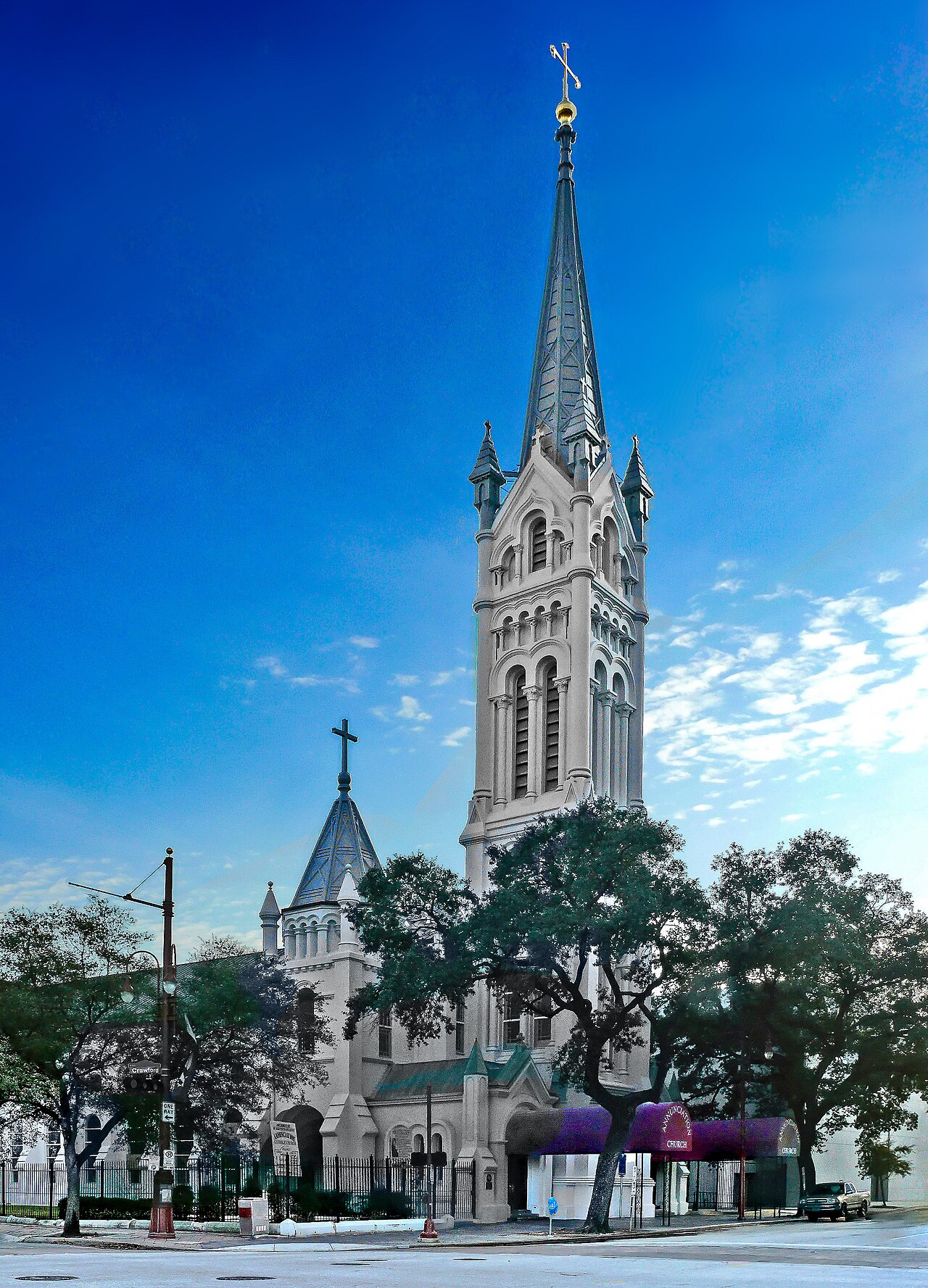
1871 · Gothic Revival / Romanesque
Annunciation Catholic Church
- NRHP
- City Landmark
Founded in 1866 with the current church building completed in 1871, Annunciation Catholic Church is the oldest surviving Catholic church in Houston, built to serve the city's growing Catholic population during the Reconstruction era. Its Gothic Revival and Romanesque sanctuary was later enhanced with a 190 foot bell tower designed by celebrated Galveston architect Nicholas J. Clayton, one of the most prolific ecclesiastical architects working in nineteenth century Texas. The church's masonry construction and soaring tower made it a prominent landmark on the downtown skyline for decades before the rise of Houston's modern high rises, and it remains an active parish continuing to serve worshippers in the heart of downtown. As one of the very few pre-1900 masonry religious buildings surviving in central Houston, it provides a rare architectural link to the city's nineteenth century urban fabric.
Open profile & chat →