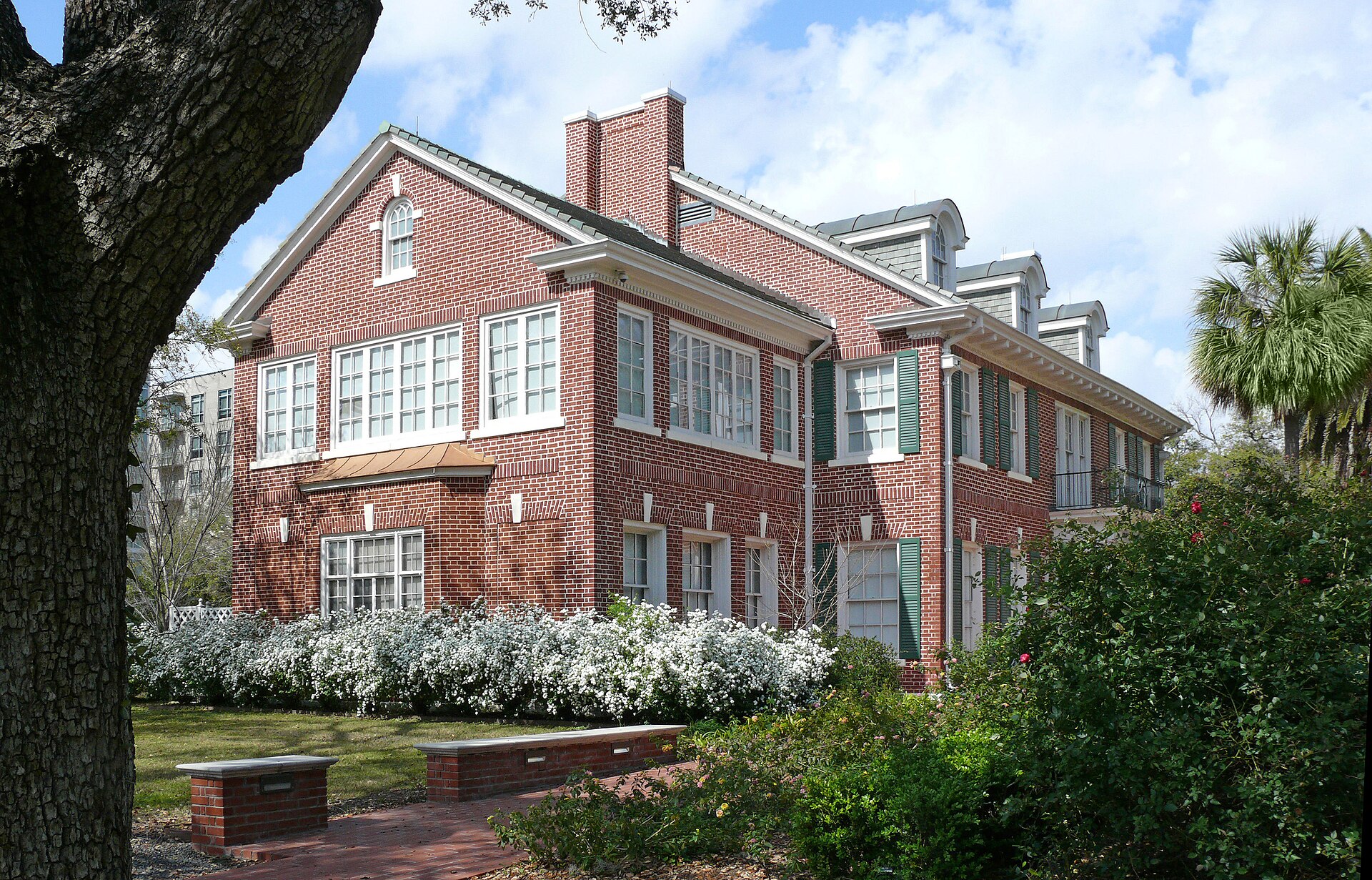
William L. Clayton House
5300 Caroline St, Houston, TX
- Protected
- Recorded Texas Historic Landmark
- Neighborhood
- Museum District
- Year built
- 1917
- Style
- Georgian Revival
- Era
- Early 20th Century
- Architect
- Birdsall P. Briscoe
- Designations
- Recorded Texas Historic Landmark (1988) · City of Houston Landmark and Protected Landmark (2009)
Significance
The William L. Clayton House was built in 1916 and 1917 for William Lockhart Clayton, co-founder of Anderson, Clayton and Company, one of the world's largest cotton brokerage firms and a business that helped make Houston the regional capital of the cotton trade. Clayton later served on the Committee of Cotton Distribution of the War Industries Board during World War I and was a principal architect of the Marshall Plan for Europe's economic recovery after World War II. Houston architect Birdsall P. Briscoe designed the two-story brick house, which features Tuscan columns, paneled pilasters, an elliptical fanlight over the front door, and fanlit dormers. Austin master craftsman Peter Mansbendel carved its interior woodwork. The original garage and stable became a guest house in 1932, and a carriage house was added in 1936. The property now houses the Houston Public Library's Clayton Library Center for Genealogical Research.
Climate risks tracked
Click a risk to see what it means for this building.
The house stands in the Southmore area near Brays Bayou, where intense rain can overwhelm streets. Because it holds irreplaceable genealogical records, the most important resilience step is keeping collections, archives, and mechanical systems above likely flood levels and installing backflow protection, without altering the brick facade or raising the historic house itself. Humidity is the main daily threat to both the carved Mansbendel woodwork and the paper collections, so stable climate control, dehumidification, and backup power during storm outages protect the interiors. Houston's expansive clay can crack brick walls during drought and heavy rain cycles, so monitoring foundations and keeping soil moisture steady around the house and outbuildings help prevent damage.
Use the preservation assistant to talk through retrofit strategies for these specific threats.
Location
Nearby landmarks
Preservation Assistant
Grounded in William L. Clayton House
Suggested questions
Or ask your own question about William L. Clayton House below. I can cover its history, architecture, and climate-resilient retrofits.