Downtown Art Deco Skyline
Downtown
A focused loop through the interwar towers that defined Houston's first skyline, pairing the ornate Esperson tempietto with the setback Gulf Building and the streamlined limestone of City Hall.
4 stops · 0.9 mi
Live location (optional)
Walking the route? Turn this on for step by step directions to the next stop. Your location stays on your device.
- 1
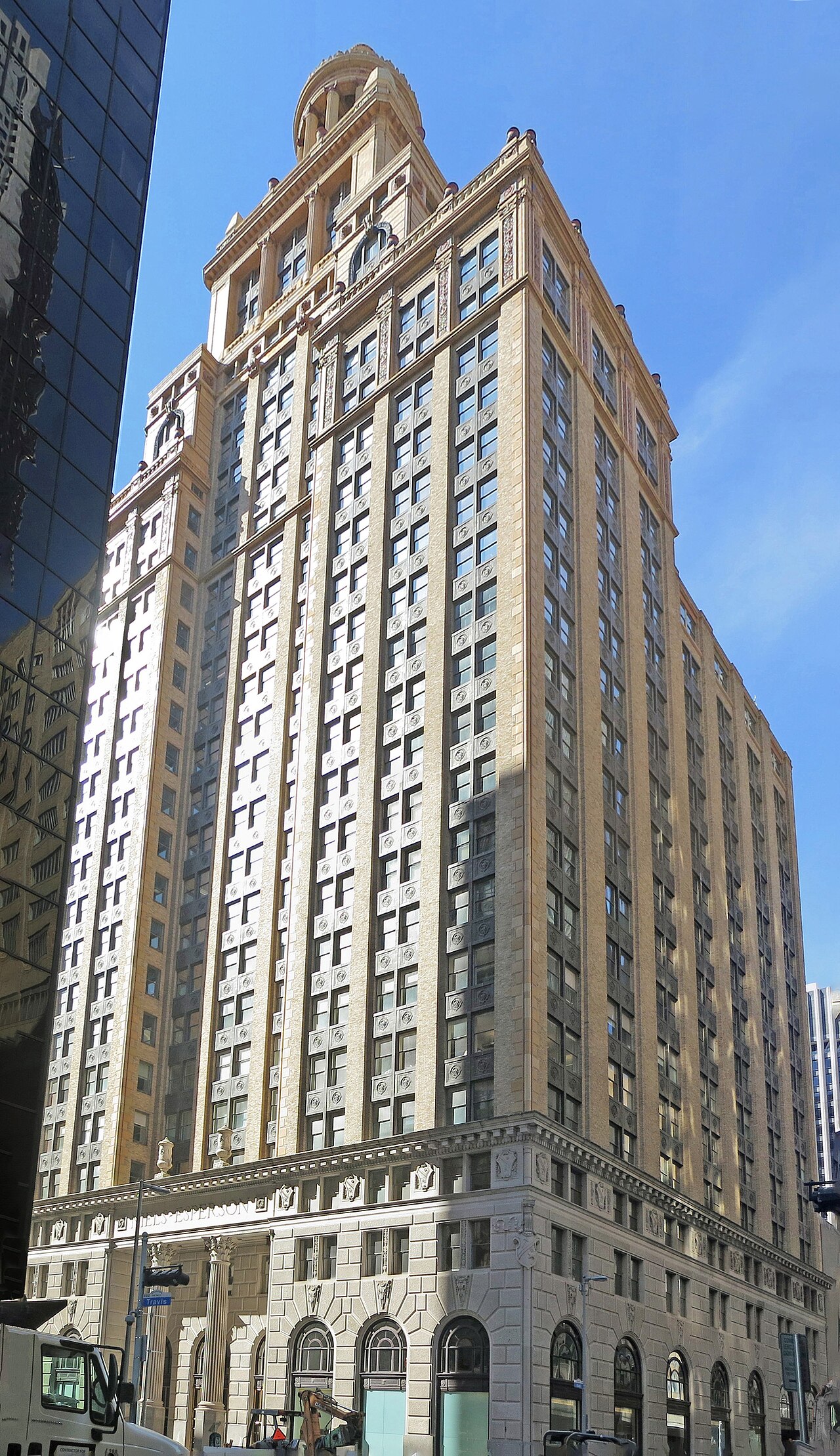
1927 · Italian Renaissance Revival
Niels Esperson Building
- NRHP
- City Landmark
Completed in 1927, the 32-story Niels Esperson Building was commissioned by oil and real estate magnate Mellie Esperson as a memorial to her late husband Niels Esperson, and was designed by architect John Eberson in the Italian Renaissance Revival style with a distinctive tempietto crown modeled on ancient Roman temples. At the time of its opening it was the tallest building in Texas and one of the tallest west of the Mississippi River, symbolizing Houston's ambitions as an emerging oil boom metropolis. A companion Mellie Esperson Building was added in 1941, and together they form a prominent Main Street landmark visible throughout downtown's skyline. The tower's terracotta ornamentation and ornate lobby remain largely intact, and it continues to operate as a Class B office building while holding both National Register and City of Houston Landmark protections.
Open profile & chat → - 2
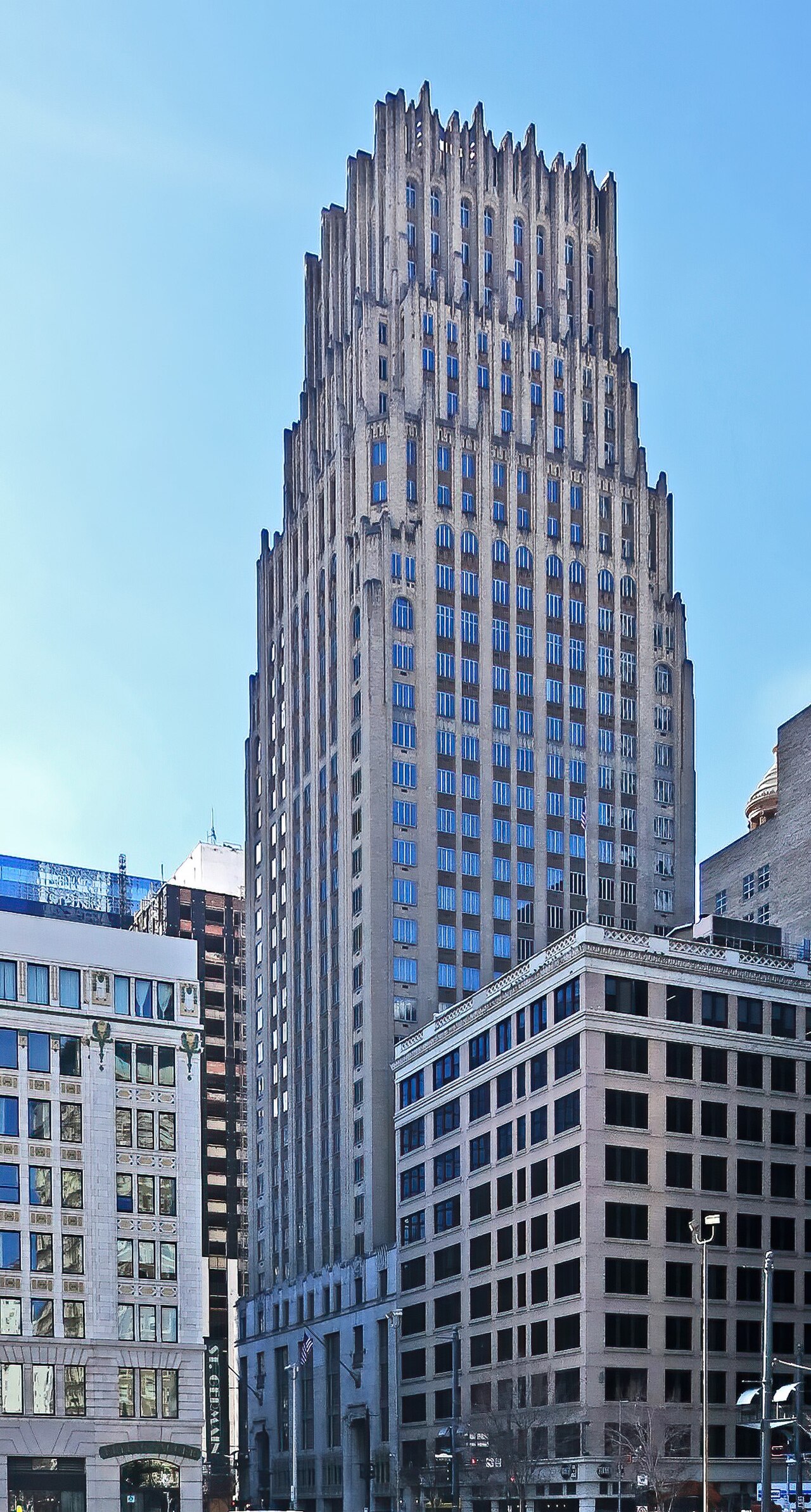
1929 · Art Deco
Gulf Building
- NRHP
- City Landmark
Completed in 1929, the 428-foot Gulf Building was designed by Alfred C. Finn with Kenneth Franzheim and J.E.R. Carpenter in the Art Deco style, drawing inspiration from Eliel Saarinen's celebrated entry in the 1922 Chicago Tribune Tower competition. Built for the Gulf Oil Corporation, it served as Houston's tallest skyscraper for more than three decades, symbolizing the city's rapid growth as an oil and finance capital during the late 1920s boom. Its ornate lobby features murals by artist Vincent Maragliotti depicting the history of transportation and commerce, along with elaborate metalwork and marble detailing typical of high style Art Deco skyscraper design. The tower later became a Chase Bank headquarters and remains one of downtown Houston's most architecturally significant early skyscrapers, listed on the National Register of Historic Places.
Open profile & chat → - 3
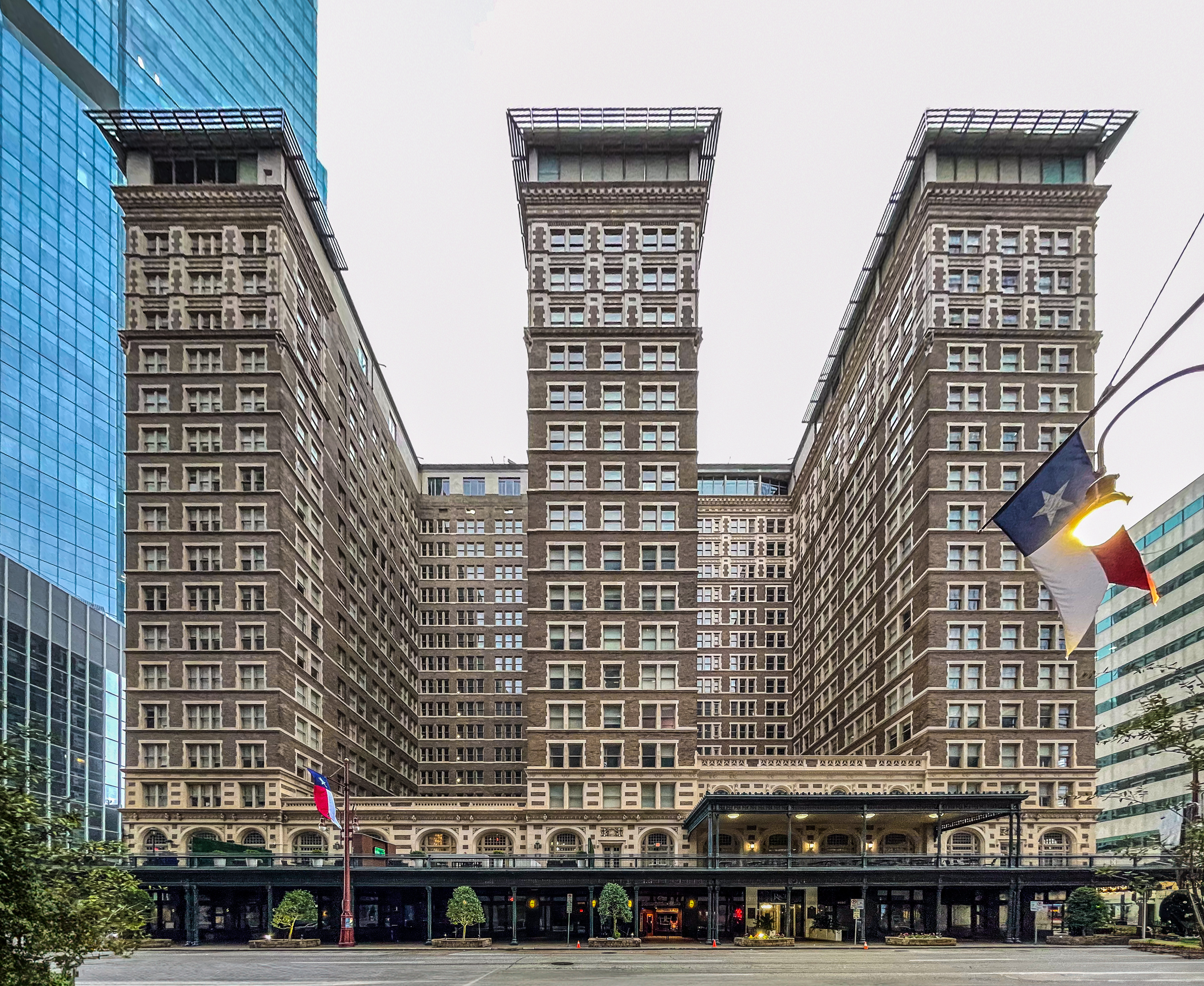
1913 · Beaux-Arts
Rice Hotel
- NRHP
- City Landmark
Built in 1913 on the site of the former Capitol of the Republic of Texas at Texas Avenue and Main Street, the 17-story Rice Hotel replaced an earlier 1881 hotel of the same name and became Houston's premier gathering place for business and society for half a century. Designed in the Beaux-Arts style by the St. Louis firm Mauran, Russell and Crowell, it featured a grand lobby, roof garden, and ballrooms that hosted political conventions, debutante balls, and touring dignitaries. Its most famous night came on November 21, 1963, when President John F. Kennedy addressed the Houston Pilots Association there, only hours before his assassination in Dallas the next day. The hotel closed in 1977 and stood vacant for two decades before a 1998 adaptive reuse converted it into loft apartments and ground floor retail, making it one of the earliest and most visible successes of downtown Houston's residential revitalization movement.
Open profile & chat → - 4
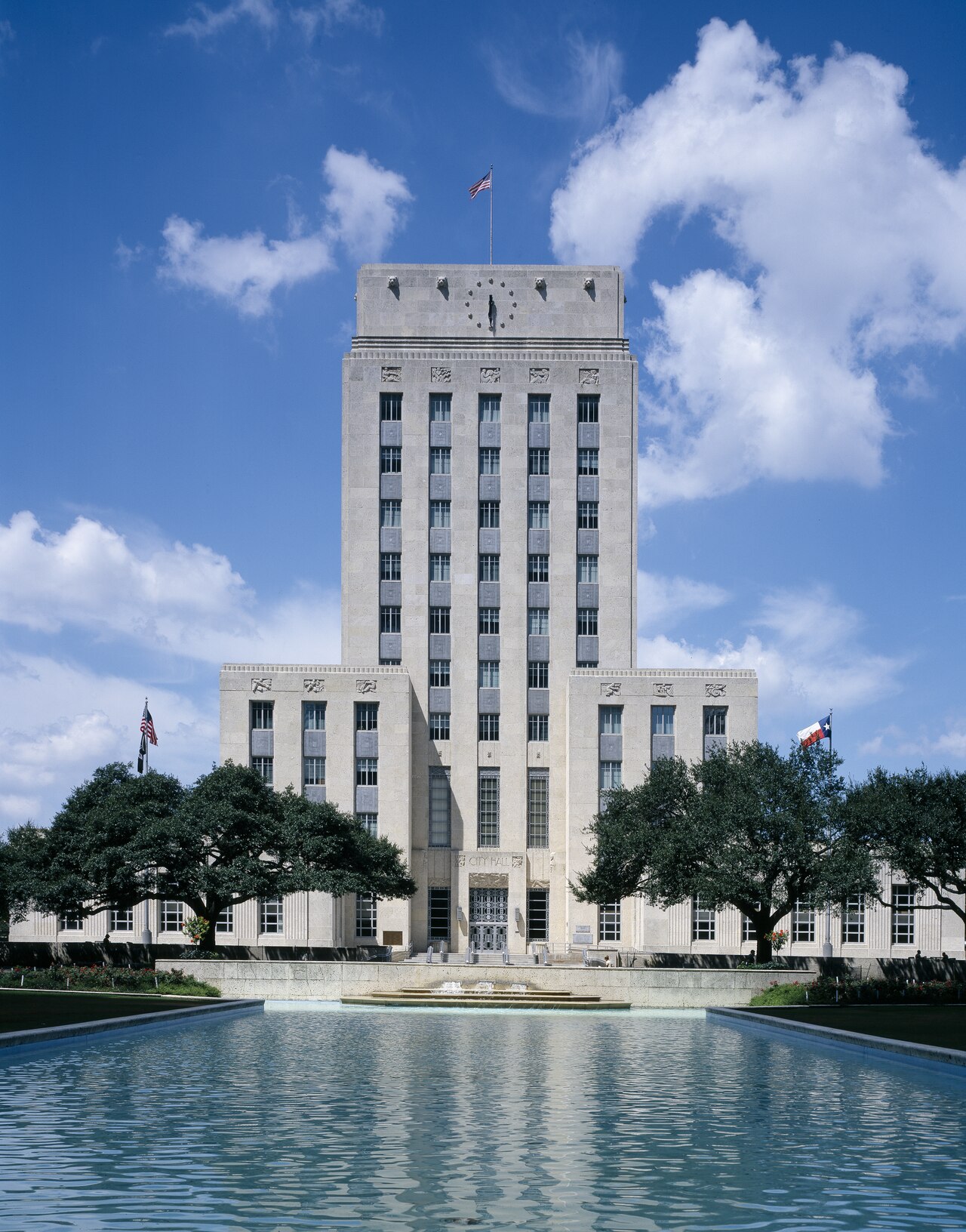
1939 · Art Moderne / PWA
Houston City Hall
- NRHP
Completed in 1939 with Public Works Administration funding during the New Deal era, Houston City Hall was designed by architect Joseph Finger in the Art Moderne style, combining streamlined limestone massing with bronze entrance doors that depict scenes from Texas history. The building replaced an earlier city hall and became the seat of Houston municipal government, housing the mayor's office and city council chambers for generations of civic decisions. It faces Hermann Square and its reflecting pool, one of downtown's oldest public gathering spaces, which has hosted rallies, holiday displays, and public demonstrations throughout the twentieth and twenty first centuries. The building's restrained Depression era civic architecture stands in contrast to the ornate commercial towers built during Houston's earlier 1920s oil boom, marking a distinct chapter in the city's architectural evolution.
Open profile & chat →