Downtown Founders Walk
Downtown
Trace Houston from its 1836 founding at Allen's Landing through the boom of Prohibition-era skyscrapers, passing the city's oldest church, the Cotton Exchange, and the Art Deco Gulf Building.
9 stops · 1.4 mi
Live location (optional)
Walking the route? Turn this on for step by step directions to the next stop. Your location stays on your device.
- 1
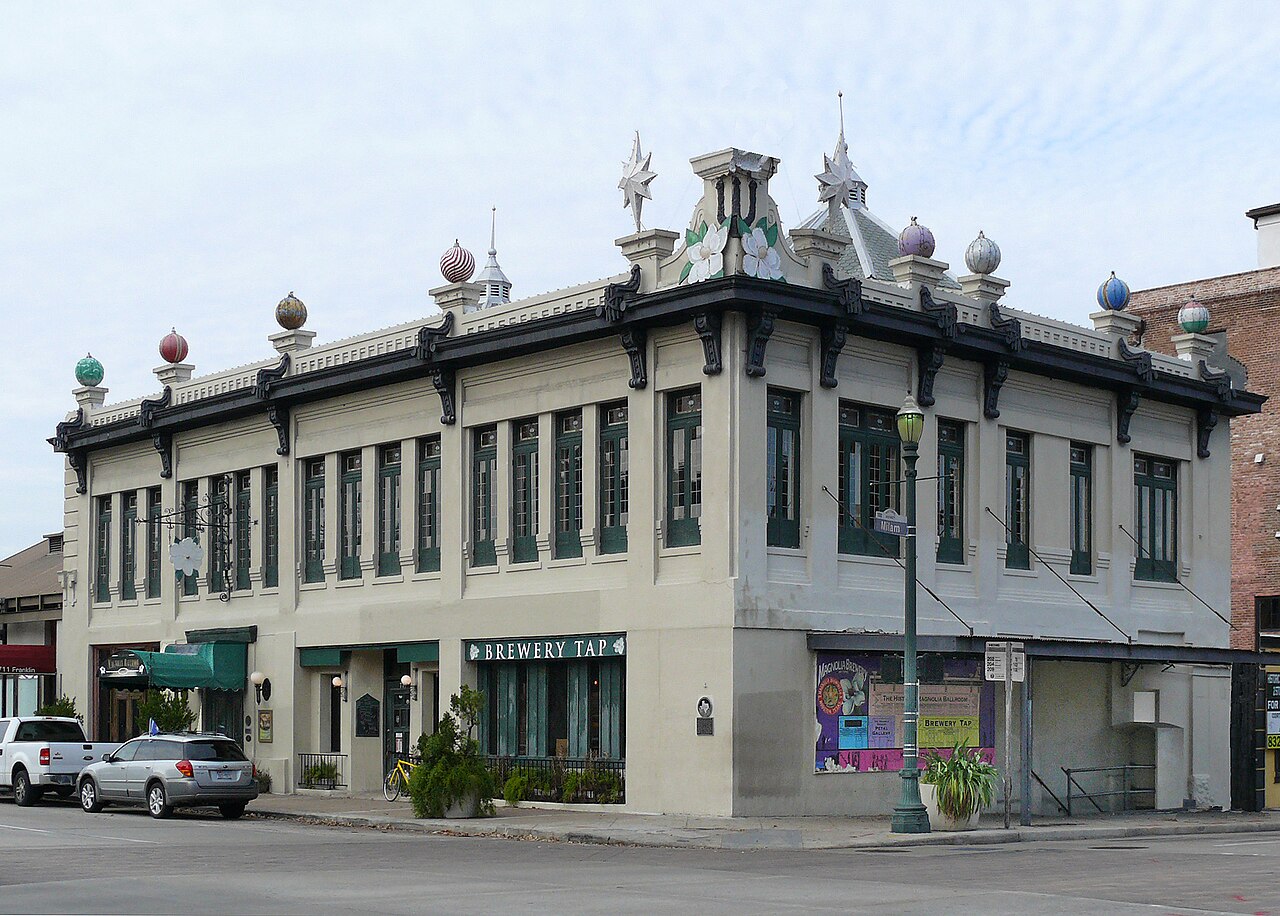
1912 · Commercial brick / Renaissance Revival
Magnolia Brewery Building
- NRHP
Built in 1912, the Magnolia Brewery Building is the last remaining structure of what was once the largest brewery complex in the American South, an industrial operation that reflected Houston's growing population and commercial diversification in the early twentieth century. Constructed of commercial brick in a Renaissance Revival influenced style, the building sits near Allen's Landing on Buffalo Bayou, the site where the Allen brothers founded Houston in 1836, linking the brewery's industrial history to the city's founding geography. Prohibition forced the original brewery operations to cease, and the surviving structure later found new uses as the surrounding Warehouse District evolved into a nightlife and entertainment area. Its survival offers a tangible connection to Houston's early industrial economy and to Buffalo Bayou's central role in the city's commercial development.
Open profile & chat → - 2
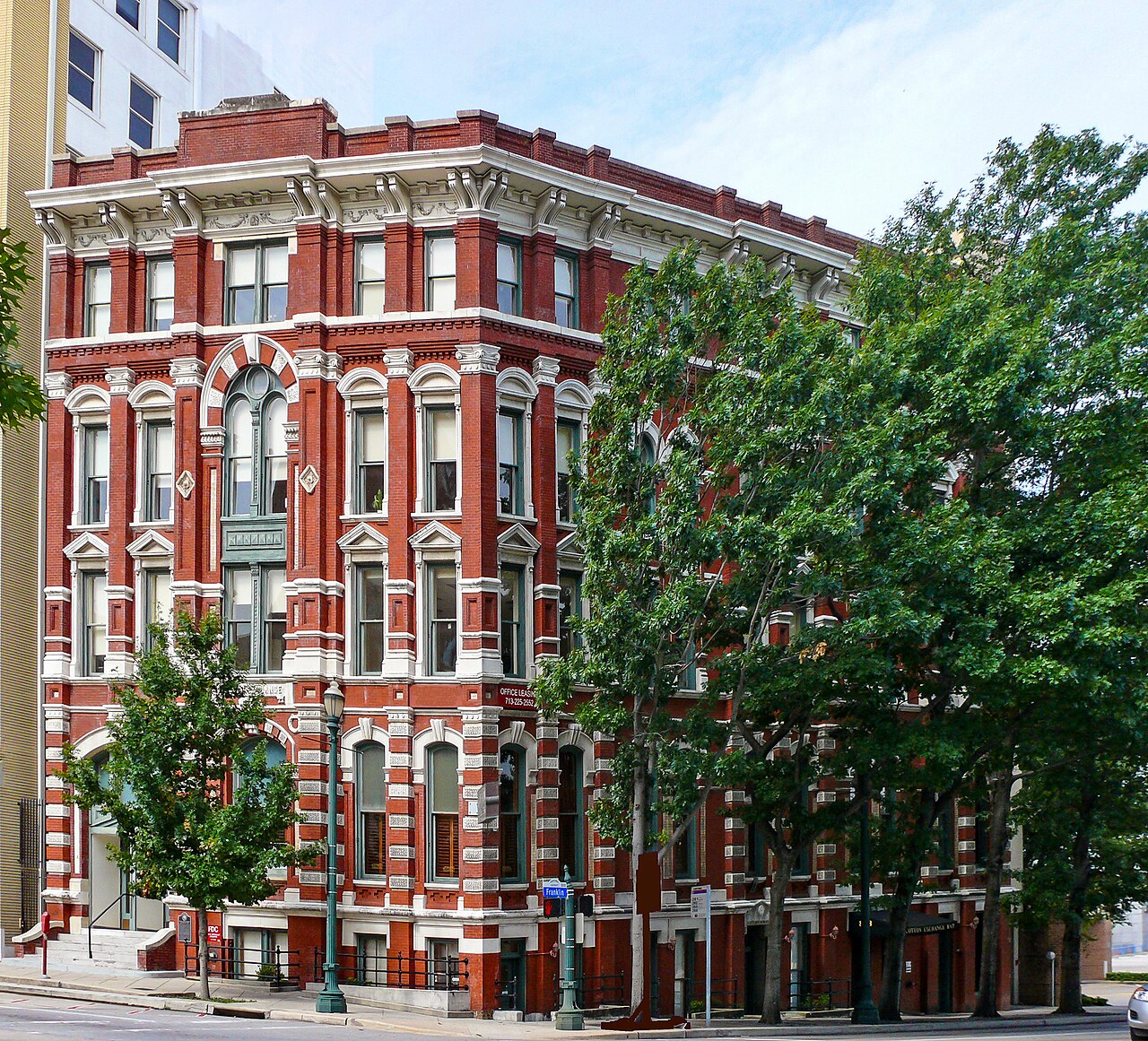
1884 · Second Empire / Italianate
Houston Cotton Exchange
- NRHP
- City Landmark
Completed in 1884 and designed by prominent Houston architect Eugene T. Heiner in the Second Empire and Italianate styles, the Houston Cotton Exchange building housed the trading floor that helped establish Houston as the largest spot cotton market in the world by the early twentieth century. The Exchange organized and regulated cotton grading, pricing, and shipment through the port of Houston and the Houston Ship Channel, cementing the city's role as an agricultural and commercial hub for the surrounding cotton growing regions of Texas. Its mansard roof, decorative ironwork, and patterned brickwork make it one of the last intact commercial buildings surviving from Houston's Victorian era downtown, most of which was demolished during twentieth century redevelopment. The building has been restored and adaptively reused while retaining its historic exterior character.
Open profile & chat → - 3
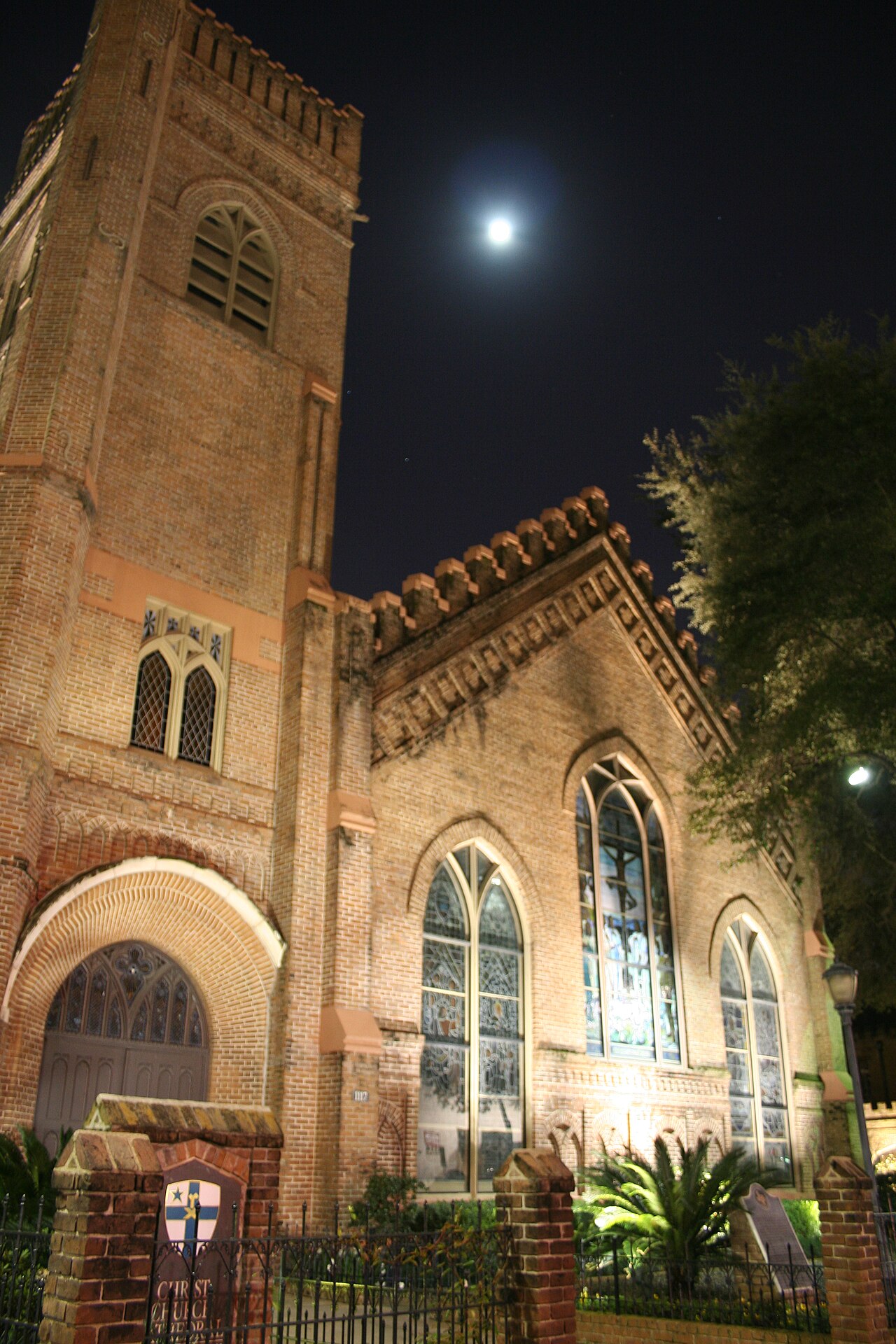
1893 · Gothic Revival
Christ Church Cathedral
- NRHP
- City Landmark
Consecrated in stages beginning in the 1890s, Christ Church Cathedral is the oldest continuously used religious structure in Houston and serves as the mother church, or seat, of the Episcopal Diocese of Texas. Designed by architect Silas McBee in the Gothic Revival style, it is built of sandstone and features stained glass windows by Tiffany Studios among its notable interior elements. The congregation itself dates to 1839, making it one of the earliest established churches in the Republic of Texas era city, and its full city block, known as the Cathedral Close, preserves an unusually intact ecclesiastical campus amid downtown's modern towers. The cathedral has hosted state funerals and civic memorial services throughout Houston's history and remains an active parish serving downtown residents and workers.
Open profile & chat → - 4
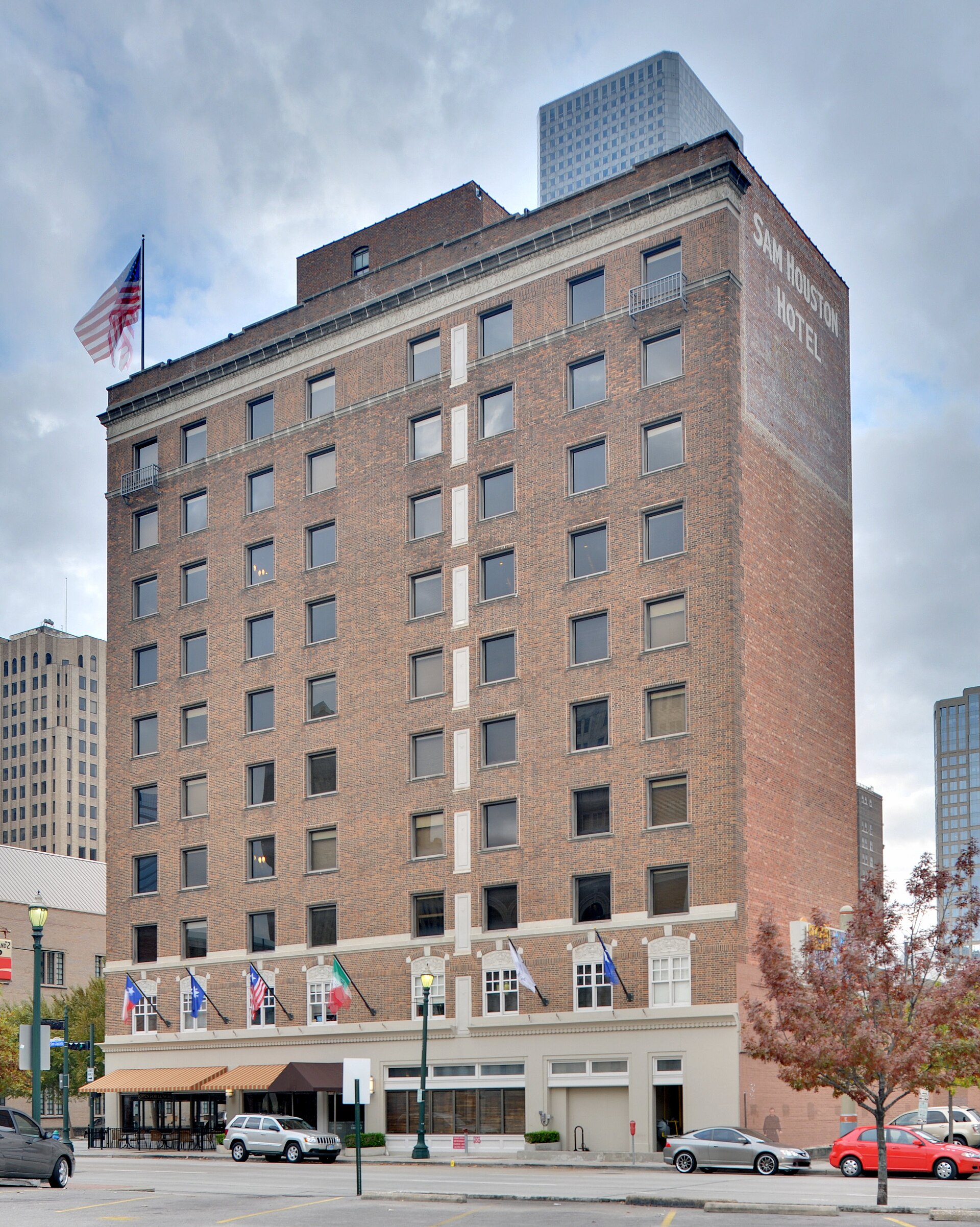
1924 · Commercial / Chicago School
Sam Houston Hotel
- NRHP
Built in 1924 as a Commercial and Chicago School style hotel, the Sam Houston Hotel is one of the few surviving early 20th century commercial hotels remaining in downtown Houston from the city's pre-Depression boom era. Its pressed brick facade and terracotta detailing reflect the material palette favored by downtown developers during the 1910s and 1920s, when Houston's population and commercial district expanded rapidly alongside the growth of the port and oil industries. The building fell into disuse for a period before undergoing a boutique hotel restoration in the early 2000s that preserved its historic exterior while modernizing guest room interiors. Today it serves as a functioning downtown hotel and stands as physical evidence of an era of Houston hospitality architecture largely lost to later demolition and redevelopment.
Open profile & chat → - 5
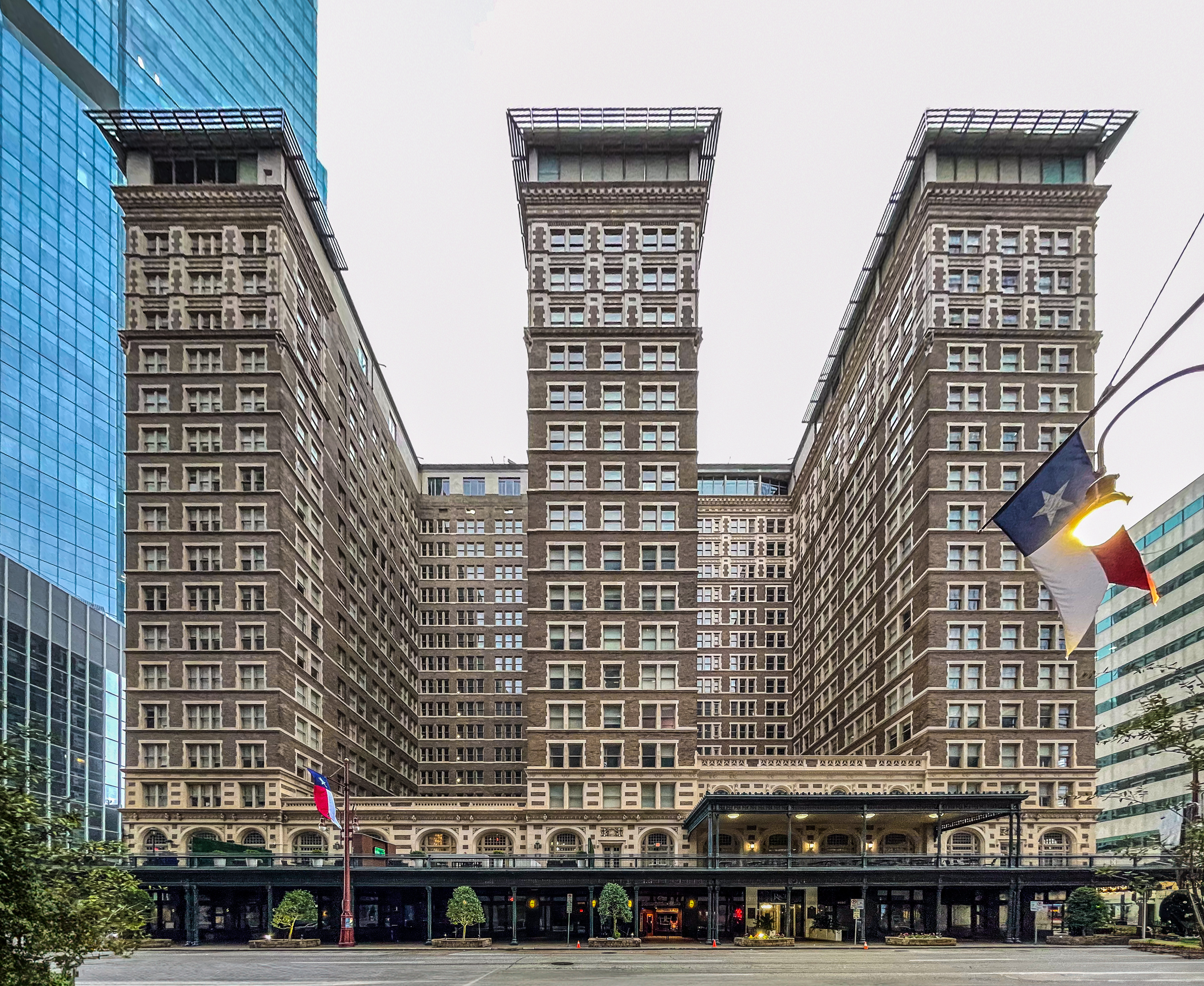
1913 · Beaux-Arts
Rice Hotel
- NRHP
- City Landmark
Built in 1913 on the site of the former Capitol of the Republic of Texas at Texas Avenue and Main Street, the 17-story Rice Hotel replaced an earlier 1881 hotel of the same name and became Houston's premier gathering place for business and society for half a century. Designed in the Beaux-Arts style by the St. Louis firm Mauran, Russell and Crowell, it featured a grand lobby, roof garden, and ballrooms that hosted political conventions, debutante balls, and touring dignitaries. Its most famous night came on November 21, 1963, when President John F. Kennedy addressed the Houston Pilots Association there, only hours before his assassination in Dallas the next day. The hotel closed in 1977 and stood vacant for two decades before a 1998 adaptive reuse converted it into loft apartments and ground floor retail, making it one of the earliest and most visible successes of downtown Houston's residential revitalization movement.
Open profile & chat → - 6
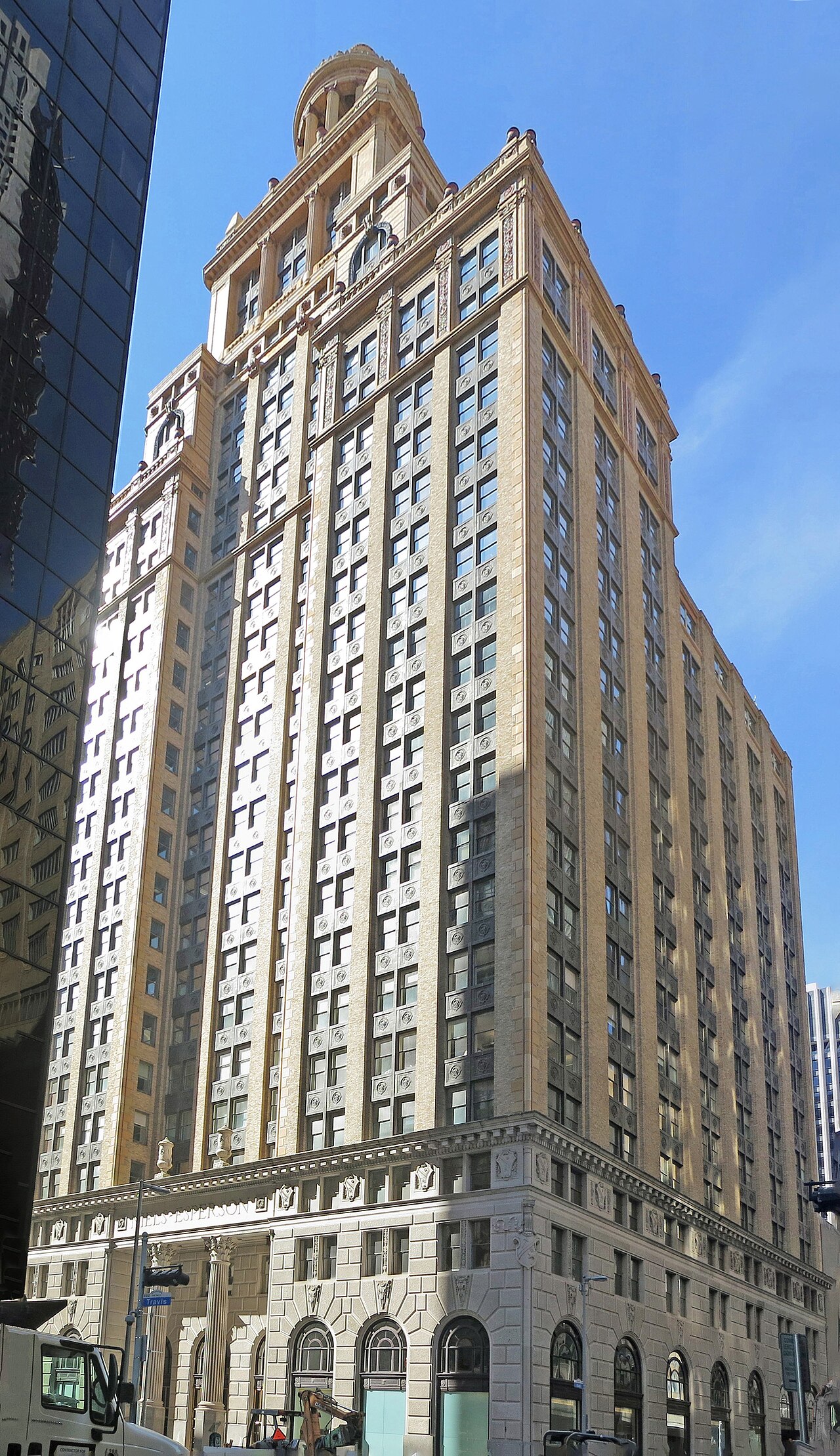
1927 · Italian Renaissance Revival
Niels Esperson Building
- NRHP
- City Landmark
Completed in 1927, the 32-story Niels Esperson Building was commissioned by oil and real estate magnate Mellie Esperson as a memorial to her late husband Niels Esperson, and was designed by architect John Eberson in the Italian Renaissance Revival style with a distinctive tempietto crown modeled on ancient Roman temples. At the time of its opening it was the tallest building in Texas and one of the tallest west of the Mississippi River, symbolizing Houston's ambitions as an emerging oil boom metropolis. A companion Mellie Esperson Building was added in 1941, and together they form a prominent Main Street landmark visible throughout downtown's skyline. The tower's terracotta ornamentation and ornate lobby remain largely intact, and it continues to operate as a Class B office building while holding both National Register and City of Houston Landmark protections.
Open profile & chat → - 7
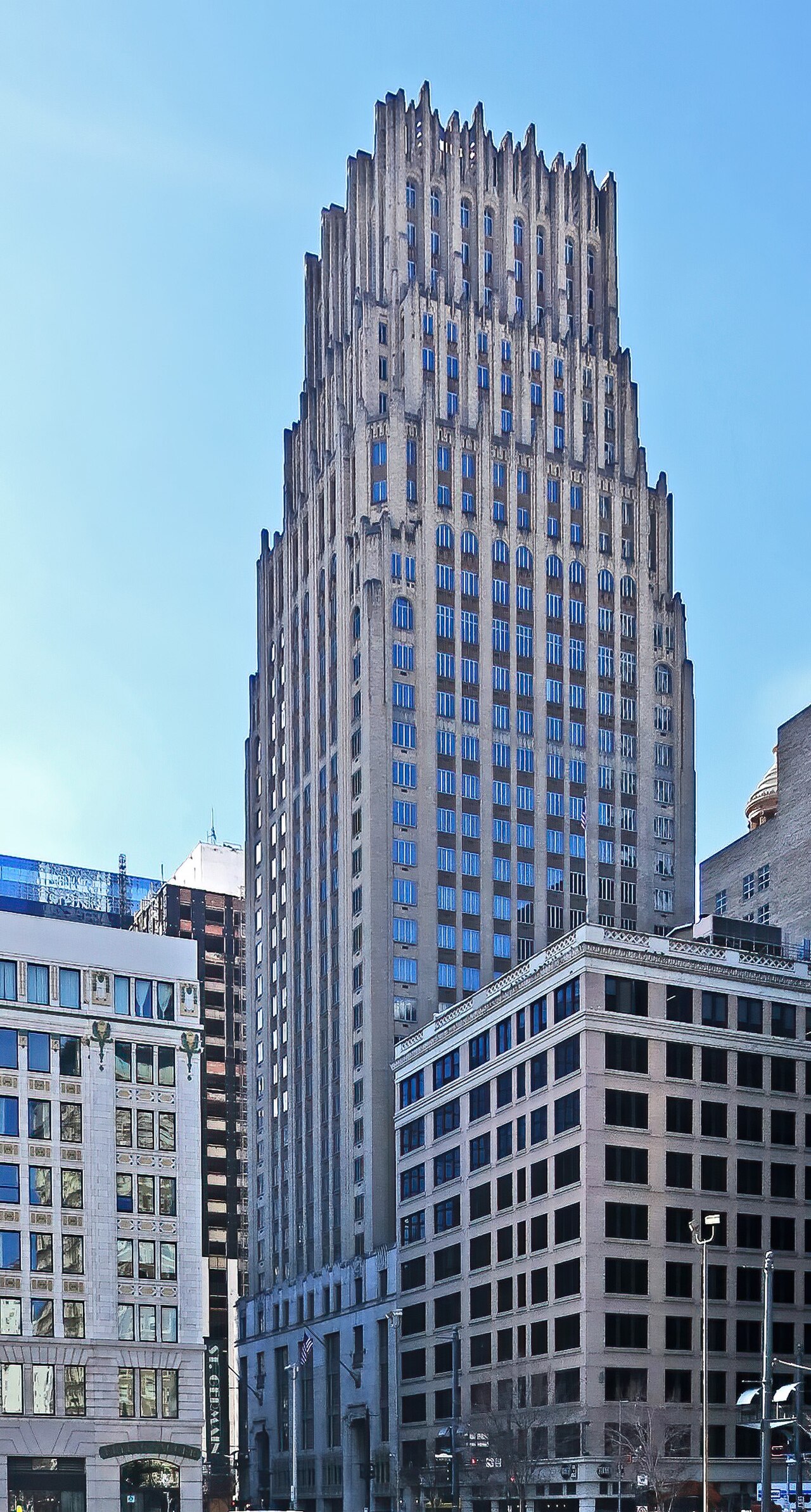
1929 · Art Deco
Gulf Building
- NRHP
- City Landmark
Completed in 1929, the 428-foot Gulf Building was designed by Alfred C. Finn with Kenneth Franzheim and J.E.R. Carpenter in the Art Deco style, drawing inspiration from Eliel Saarinen's celebrated entry in the 1922 Chicago Tribune Tower competition. Built for the Gulf Oil Corporation, it served as Houston's tallest skyscraper for more than three decades, symbolizing the city's rapid growth as an oil and finance capital during the late 1920s boom. Its ornate lobby features murals by artist Vincent Maragliotti depicting the history of transportation and commerce, along with elaborate metalwork and marble detailing typical of high style Art Deco skyscraper design. The tower later became a Chase Bank headquarters and remains one of downtown Houston's most architecturally significant early skyscrapers, listed on the National Register of Historic Places.
Open profile & chat → - 8
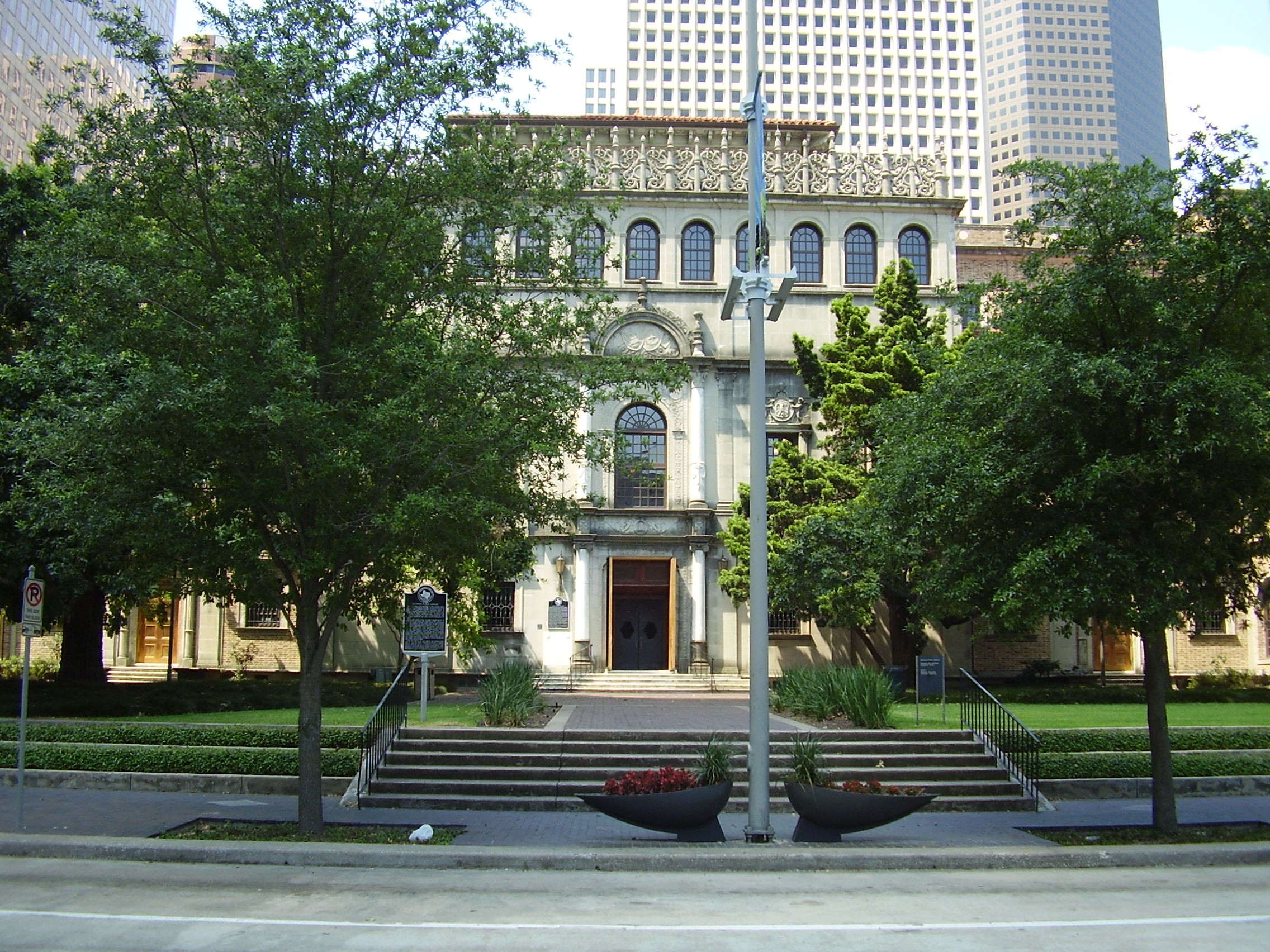
1926 · Spanish Renaissance Revival
Julia Ideson Building
- NRHP
Completed in 1926 as the original home of the Houston Public Library, the Julia Ideson Building is named for the city's first professional librarian, who led the library system for four decades and championed its Spanish Renaissance Revival design by the prestigious firm Cram, Goodhue and Ferguson with local architect William Ward Watkin. The building is celebrated for its arcaded loggia, wrought iron details, tiled stair towers, and hand carved reading rooms, and it houses the Texas Room and Julia Ideson Building murals painted during the Works Progress Administration by artists including Angela McDonnell Cronin depicting scenes from Texas history. A 2011 restoration and new annex secured its long term use as the Houston Metropolitan Research Center. It remains a centerpiece of the Houston Public Library's downtown campus and a rare intact example of 1920s civic Mediterranean Revival architecture in the city.
Open profile & chat → - 9
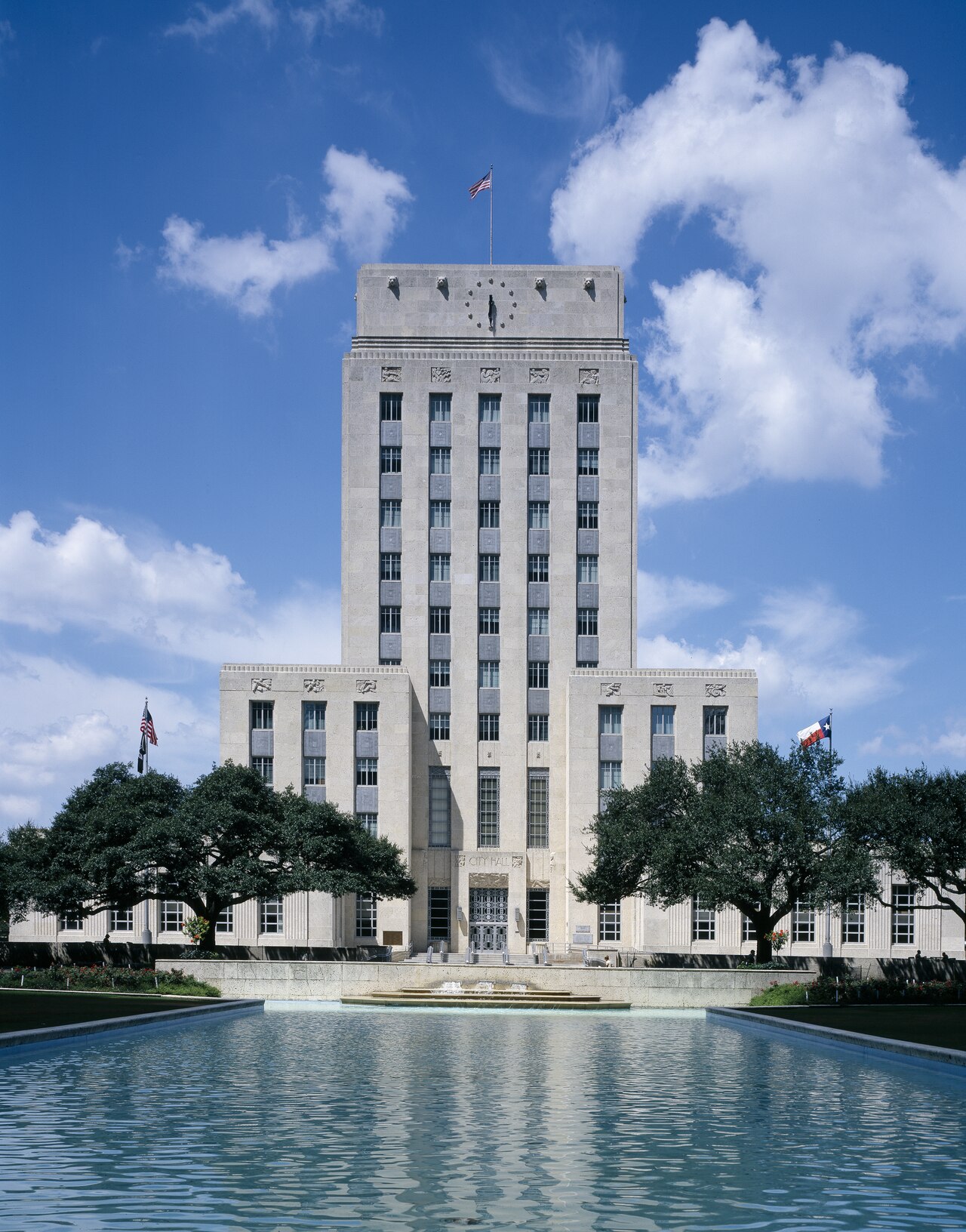
1939 · Art Moderne / PWA
Houston City Hall
- NRHP
Completed in 1939 with Public Works Administration funding during the New Deal era, Houston City Hall was designed by architect Joseph Finger in the Art Moderne style, combining streamlined limestone massing with bronze entrance doors that depict scenes from Texas history. The building replaced an earlier city hall and became the seat of Houston municipal government, housing the mayor's office and city council chambers for generations of civic decisions. It faces Hermann Square and its reflecting pool, one of downtown's oldest public gathering spaces, which has hosted rallies, holiday displays, and public demonstrations throughout the twentieth and twenty first centuries. The building's restrained Depression era civic architecture stands in contrast to the ornate commercial towers built during Houston's earlier 1920s oil boom, marking a distinct chapter in the city's architectural evolution.
Open profile & chat →