Museum District & Hermann Park
Museum District
Follow Main Street from St. Paul's and the Museum of Fine Arts to Mecom Fountain, the Sam Houston Monument, Miller Outdoor Theatre and the Pioneer Memorial, ending at Autry House and Lovett Hall.
8 stops · 1.4 mi
Live location (optional)
Walking the route? Turn this on for step by step directions to the next stop. Your location stays on your device.
- 1
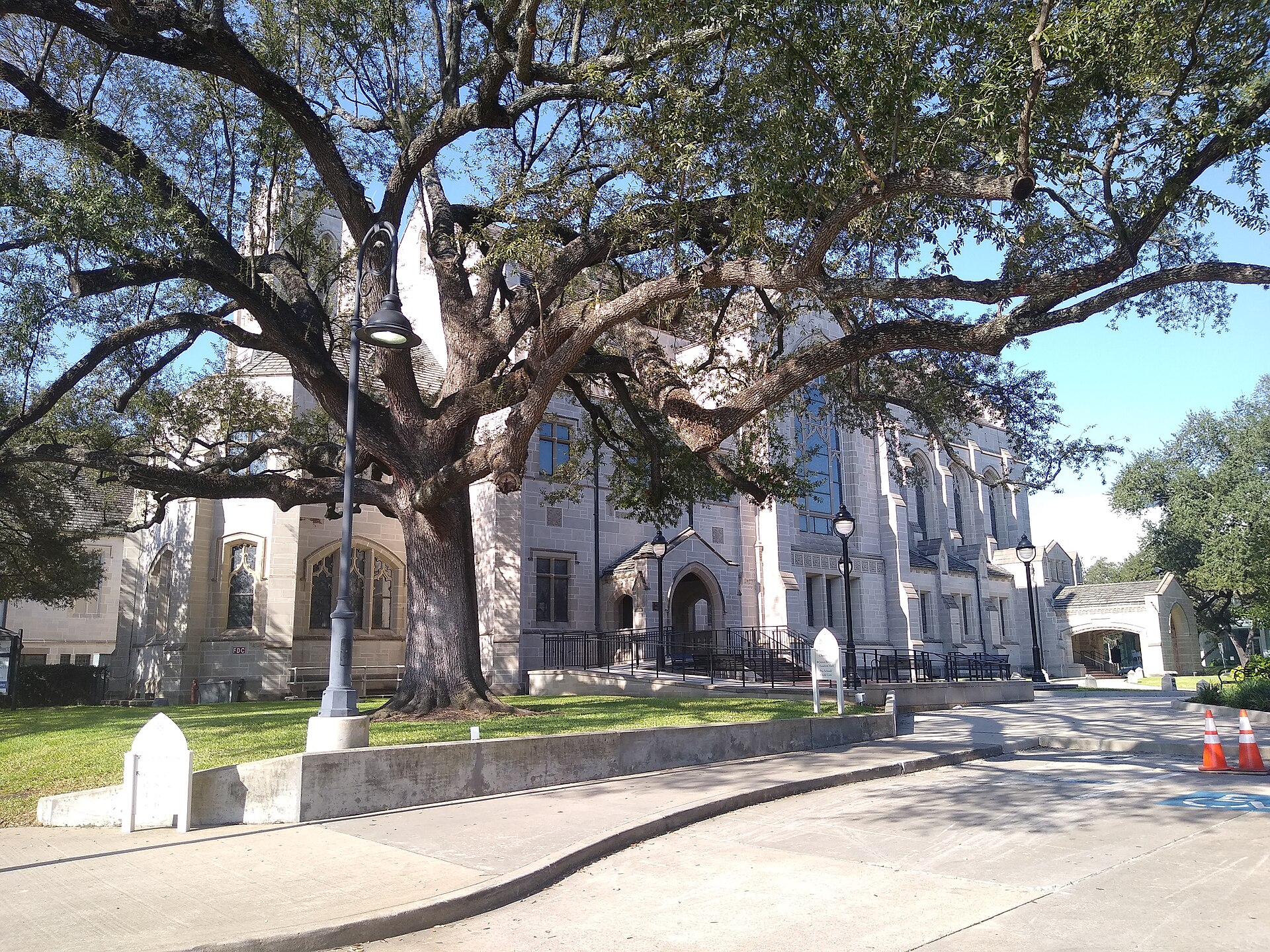
1930 · Gothic Revival
St. Paul's United Methodist Church
- Recorded Texas Historic Landmark
St. Paul's United Methodist Church on Main Street was completed in 1930 to designs by Houston architect Alfred C. Finn, one of the city's most important early 20th century architects, whose works include the Gulf Building and the San Jacinto Monument. The congregation, founded in 1906, built the Gothic Revival church as Houston grew rapidly southward along Main Street. The church is built of stone with a prominent tower, pointed arch windows and traceried openings characteristic of the Gothic Revival style favored for American churches of the period. It anchors the northern end of the Museum District and remains an active congregation. The building is a Recorded Texas Historic Landmark.
Open profile & chat → - 2
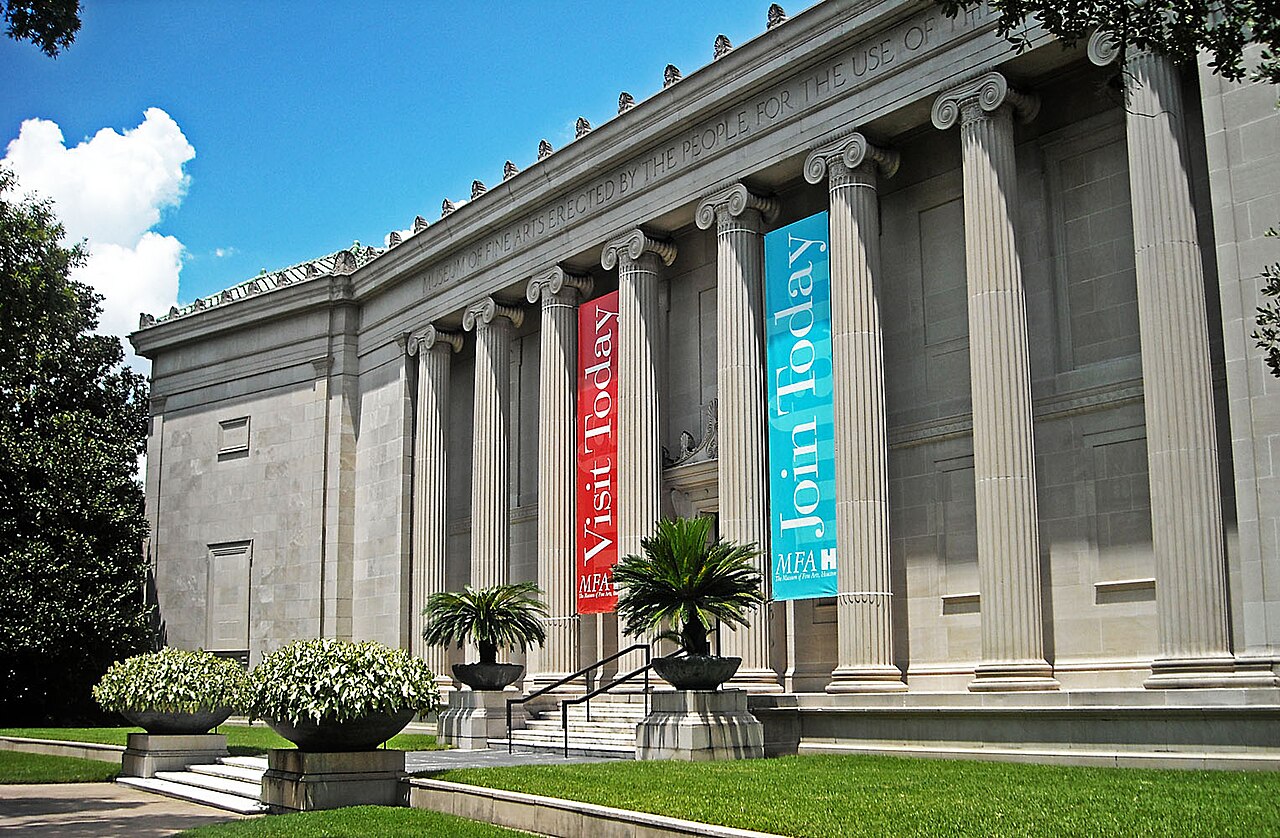
1924 · Neoclassical with Modernist additions
MFAH: Caroline Wiess Law Building
- Locally Recognized
Opened in 1924 as the oldest art museum in Texas, the Caroline Wiess Law Building began with a neoclassical facade designed by architect William Ward Watkin and later gained international architectural significance when Ludwig Mies van der Rohe designed the Cullinan Hall addition in 1958 and the Brown Pavilion in 1974. These additions made the Museum of Fine Arts, Houston one of only two institutions in North America to contain a museum building designed by Mies, placing Houston within a small circle of cities shaped by his modernist vision. The museum has grown into one of the largest art museums in the United States, with encyclopedic collections spanning ancient to contemporary art, and its Watkin and Mies buildings together illustrate nearly a century of evolving architectural taste within a single institution. The complex remains a centerpiece of the Museum District, one of Houston's most culturally significant urban areas.
Open profile & chat → - 3
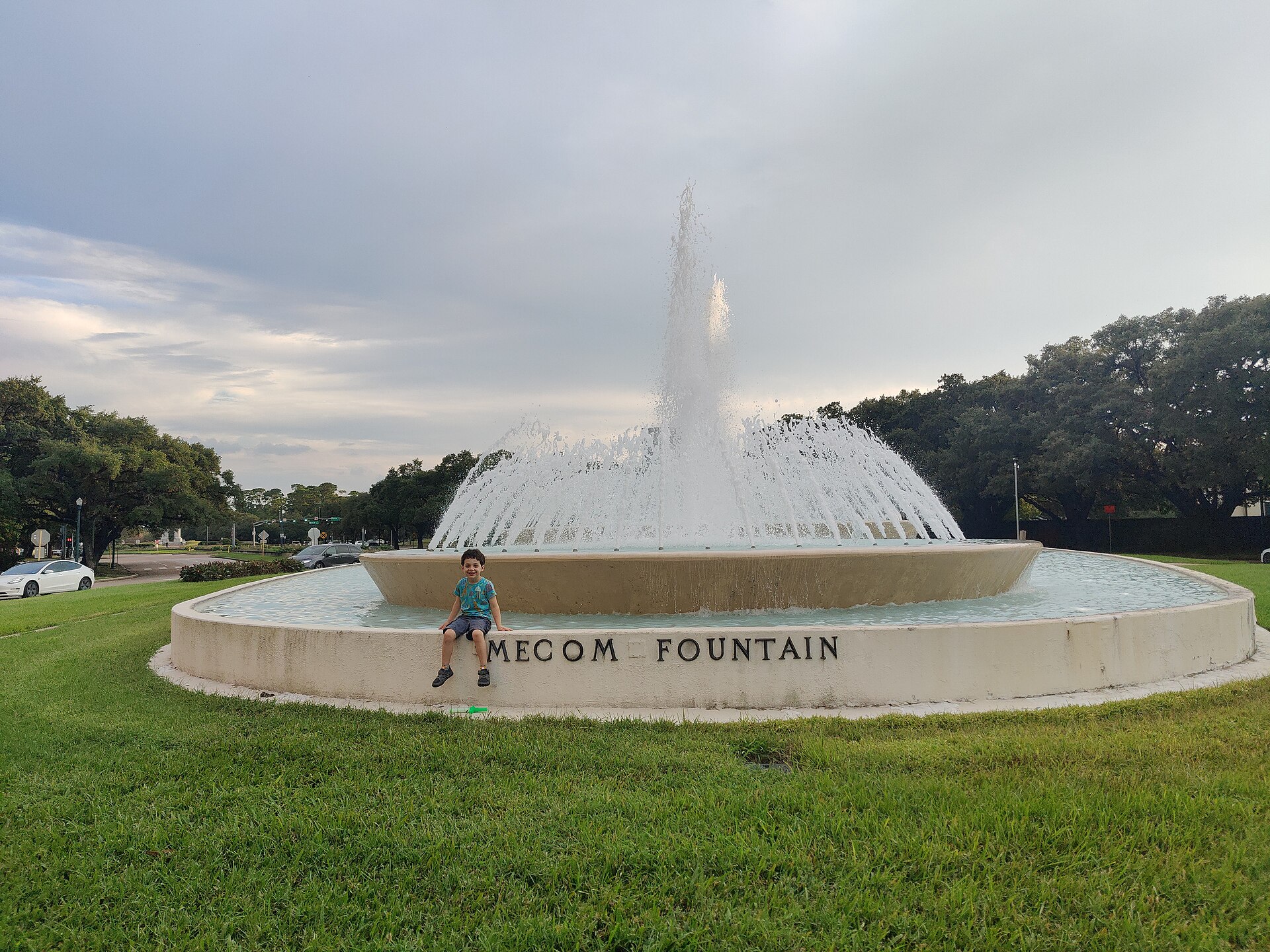
1964 · Modernist fountain
Mecom Fountain
- Protected
Mecom Fountain marks the entrance to Hermann Park at the traffic circle where Main Street meets Montrose Boulevard. In September 1963 oil businessman John W. Mecom Sr. and his wife, Mary Elizabeth, gave the fountain to the City of Houston. Mecom had bought the Warwick Hotel across the street in 1962. Designed by architect Eugene Werlin, the fountain was installed in 1964 on the site of George Kessler's old sunken garden, keeping the oval shape of the earlier landscaped median. The fountain has three raised concrete bowls, each with a central jet, set inside a low oval pool wall. It was the largest fountain in Houston when it was built, and its clean design makes it a statement of modernist civic art. Werlin also designed the 1968 Miller Outdoor Theatre elsewhere in Hermann Park.
Open profile & chat → - 4
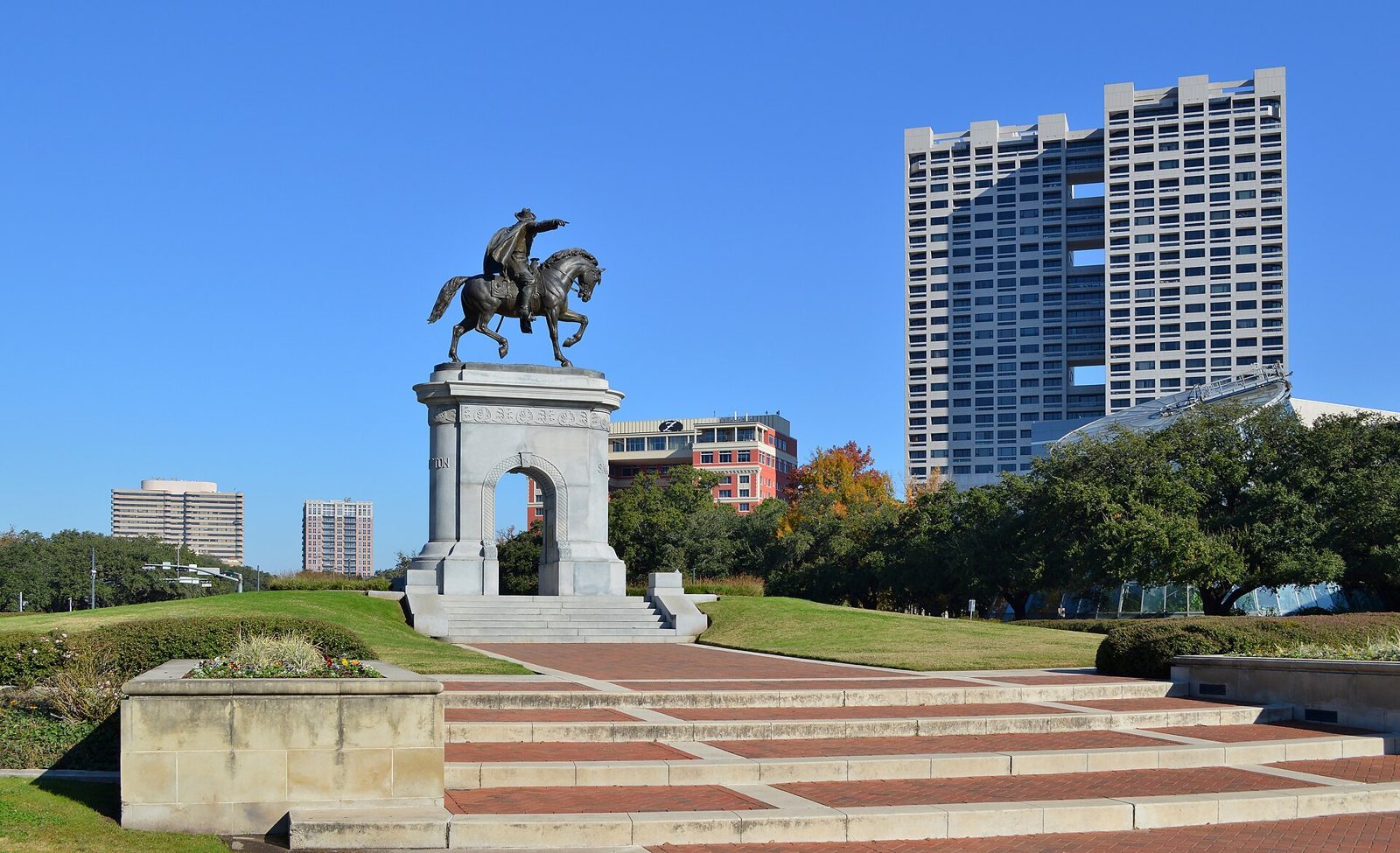
1925 · Beaux-Arts equestrian monument
Sam Houston Monument
- No Designation
The bronze equestrian statue of General Sam Houston is one of the city's most recognizable works of civic art. After a March 1917 newspaper article called for a monument to the founder, first president, and first governor of Texas, the Women's City Club led fundraising, joined by city and state money. Italian born Houston sculptor Enrico Filiberto Cerracchio created the statue in 1924, and it was unveiled on August 16, 1925, in the traffic circle at the entrance to Hermann Park, a location proposed in George Kessler's 1916 plan for the park. Houston rides his horse Saracen and points toward the plains by the San Jacinto River, where he defeated Santa Anna's army. The statue stands on a gray Texas granite arch built by German born stonecutter Frank Teich, with a Lone Star on its keystone, bronze plaques and ceramic tile inside the arch, and a plaza paved with broken marble. The Houston Municipal Art Commission restored the monument in 1996.
Open profile & chat → - 5
1968 · Modernist open-air theater
Miller Outdoor Theatre
- No Designation
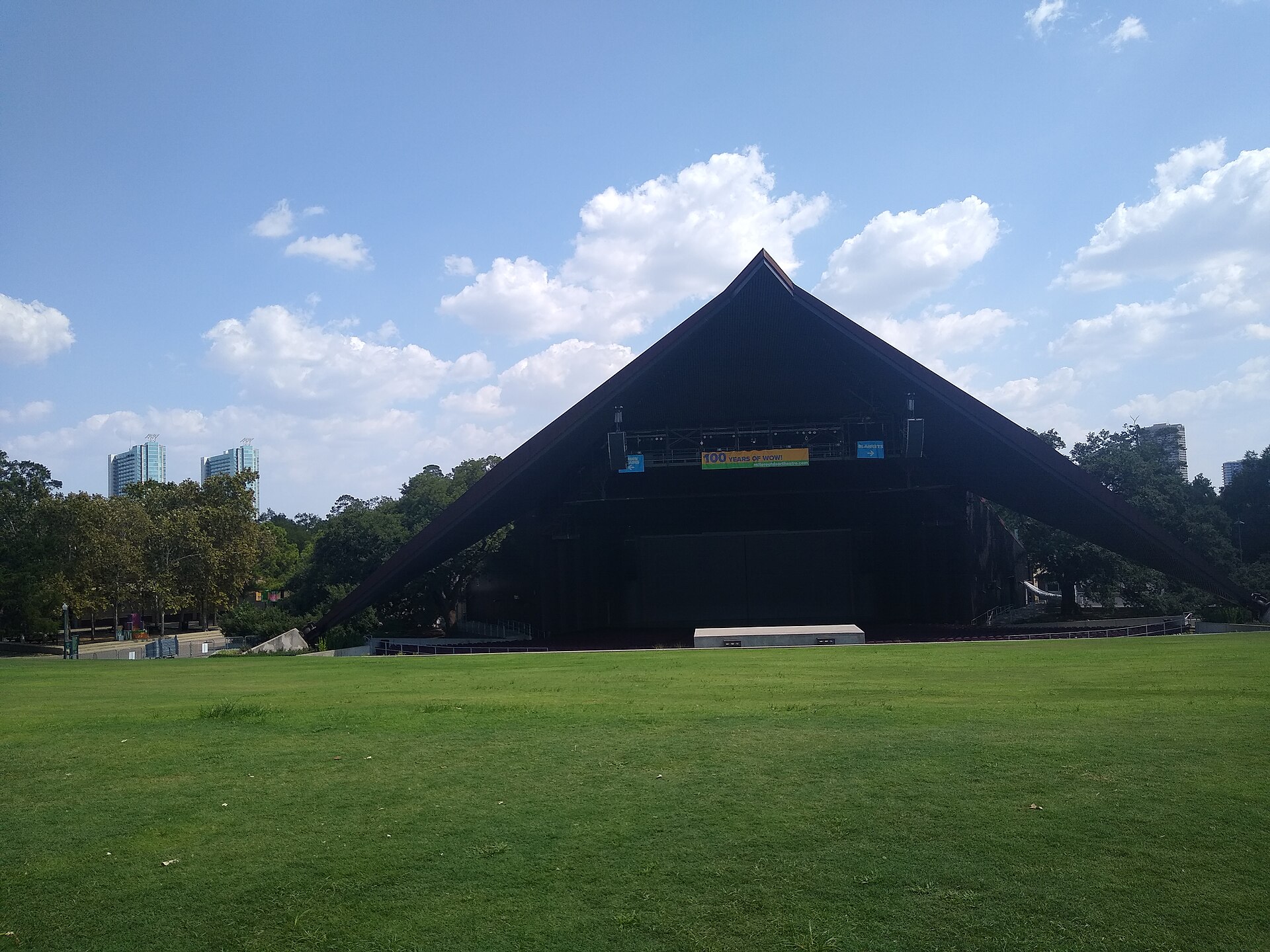
Miller Outdoor Theatre in Hermann Park offers professional performances that are always free to the public, the largest program of its kind in the United States. Its story began in 1919, when the estate of cotton broker and mining engineer Jesse Wright Miller left property to the City of Houston. The city sold it to Miller's sister for $50,000 and used the money for a concert pavilion. The original Miller Memorial Theatre, designed by William Ward Watkin with limestone columns, was dedicated on May 12, 1923, with a pageant of 2,500 performers. Between 1967 and 1969 a new theater designed by Eugene Werlin and Associates replaced the old proscenium. Its dramatic angular roof shelters a 64 by 41 foot stage, 1,705 seats, and an orchestra pit, while a sloping lawn built in 1948 holds about 4,500 more people. The original columns were saved and regrouped around a pool as the nearby Mecom Rockwell Colonnade.
Open profile & chat → - 6
1936 · Obelisk monument (Texas Centennial)
Pioneer Memorial Obelisk
- No Designation
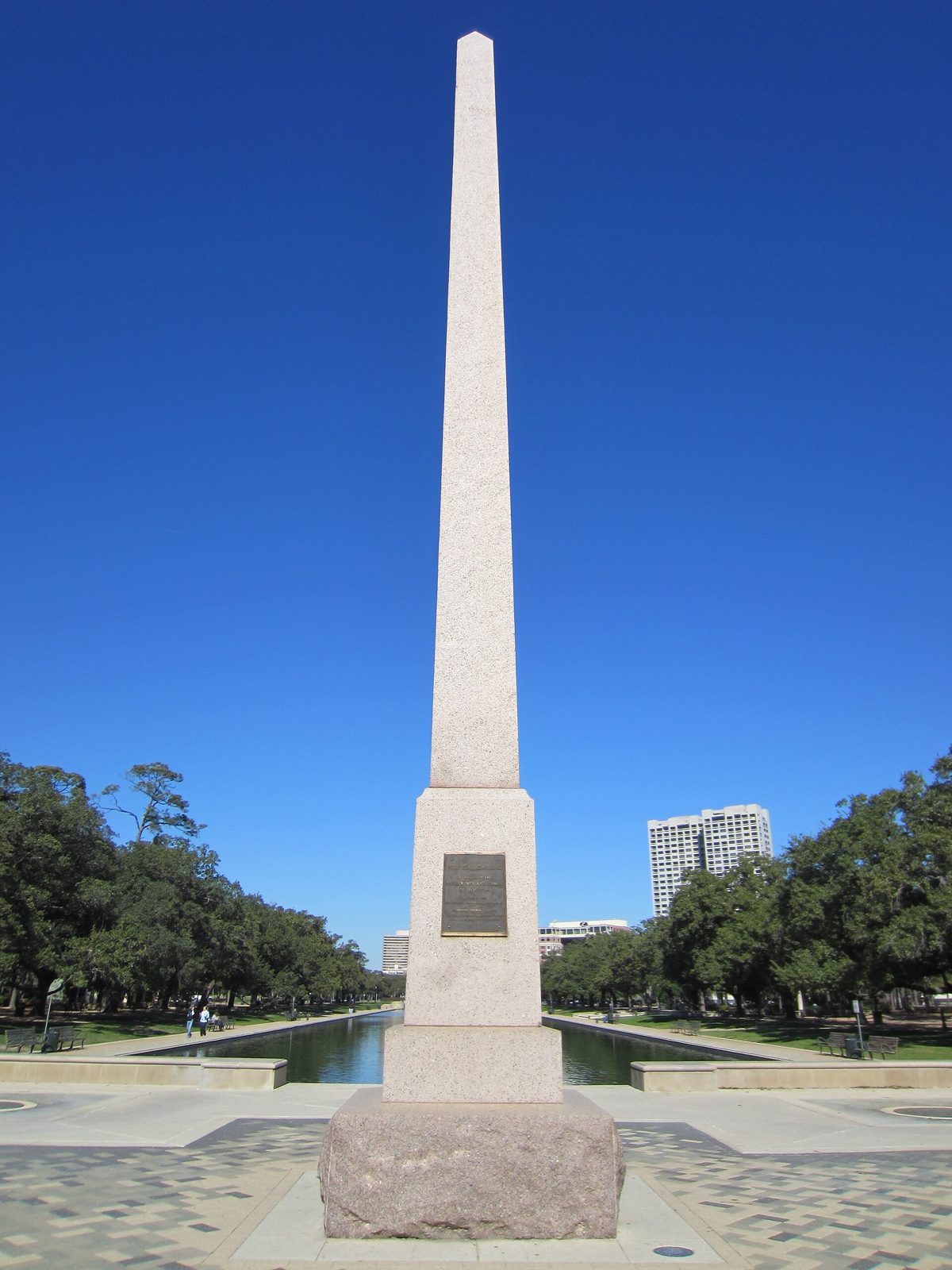
The Pioneer Memorial is a 45 foot red granite obelisk in Hermann Park honoring the pioneer men and women who founded Houston. It was made by Frank A. Teich, a sculptor and stonecutter born in Lobenstein, Germany, who immigrated to the United States in 1878 and became one of Texas's best known monument makers. Teich also built the granite arch beneath the nearby Sam Houston Monument. The obelisk was commissioned by the San Jacinto Centennial Association, chartered in 1935 to support the celebration of the centennial of Texas independence, an organization whose charter limited membership to white people, as was common at the time. Its bronze plaque records its dedication on August 30, 1936, the one hundredth anniversary of the founding of the City of Houston. It stands on Molly Ann Smith Plaza between the Jones Reflection Pool and McGovern Lake.
Open profile & chat → - 7
1921 · Mediterranean / Rice style
Autry House
- Locally Recognized
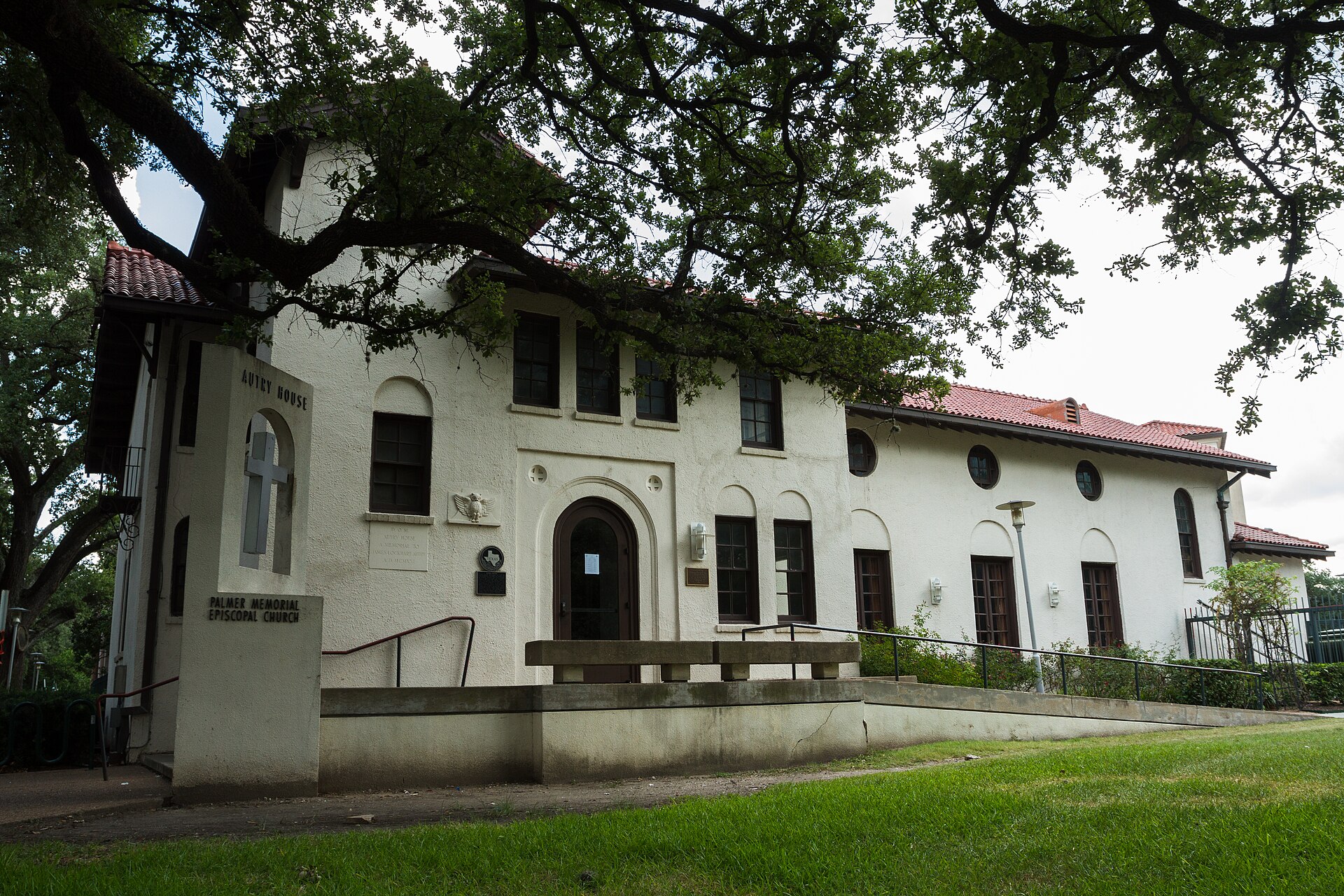
Built in 1921 and designed by architect William Ward Watkin, Autry House was given by the Autry family to serve as Houston's first community center, offering a shared gathering space adjacent to the Rice University campus for religious, educational, and social activities open to the broader community rather than exclusively university students. Its brick loggia and central courtyard extended the Mediterranean inspired Rice style architectural vocabulary, established by Watkin's earlier work on the Rice campus, into the surrounding neighborhood, creating visual and stylistic continuity between the university and its adjacent civic buildings. The building has continued to serve various community and institutional functions over the decades, remaining a notable example of how Rice's distinctive architectural language influenced building design beyond the university's own campus boundaries in the surrounding Museum District and Rice Village areas.
Open profile & chat → - 8
1912 · Byzantine-Mediterranean 'Rice style'
Lovett Hall, Rice University
- NRHP
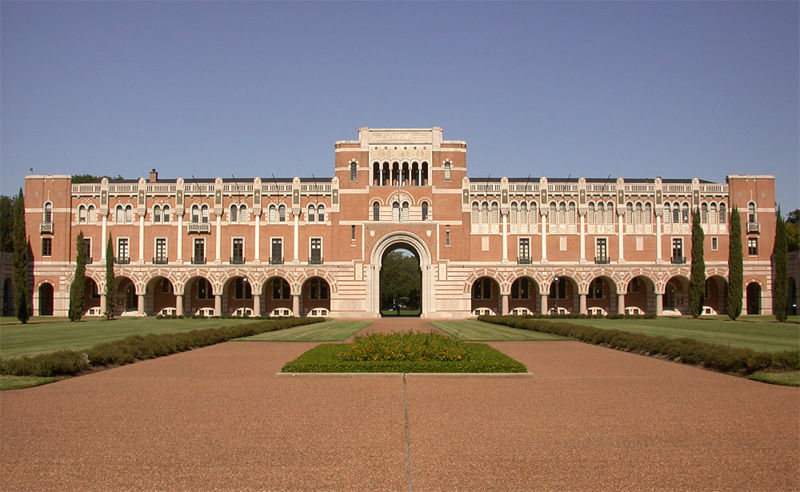
Completed in 1912, Lovett Hall was the first building constructed on the campus of Rice University, then known as the Rice Institute, and was designed by the firm Cram, Goodhue and Ferguson in a distinctive Byzantine-Mediterranean style that architectural historians often call the Rice style. Its rose and cream striped brickwork, marble columned arcades, and central Sallyport tower established an architectural template that has guided campus design at Rice for more than a century, ensuring visual cohesion even as the university expanded dramatically. The building originally housed nearly all of the fledgling institute's academic functions, including classrooms, offices, and a gymnasium, before later campus growth allowed it to be dedicated to administrative use and named for Rice's second president, Edgar Odell Lovett. It remains the ceremonial and symbolic heart of the Rice University campus.
Open profile & chat →