Main Street Skyline & Market Square
Downtown
Walk Houston's historic commercial spine, from the Tenneco Building and Antioch Church past the Kress lunch counter, the Esperson and Gulf towers, and the 1910 Courthouse to Market Square.
17 stops · 1.1 mi
Live location (optional)
Walking the route? Turn this on for step by step directions to the next stop. Your location stays on your device.
- 1
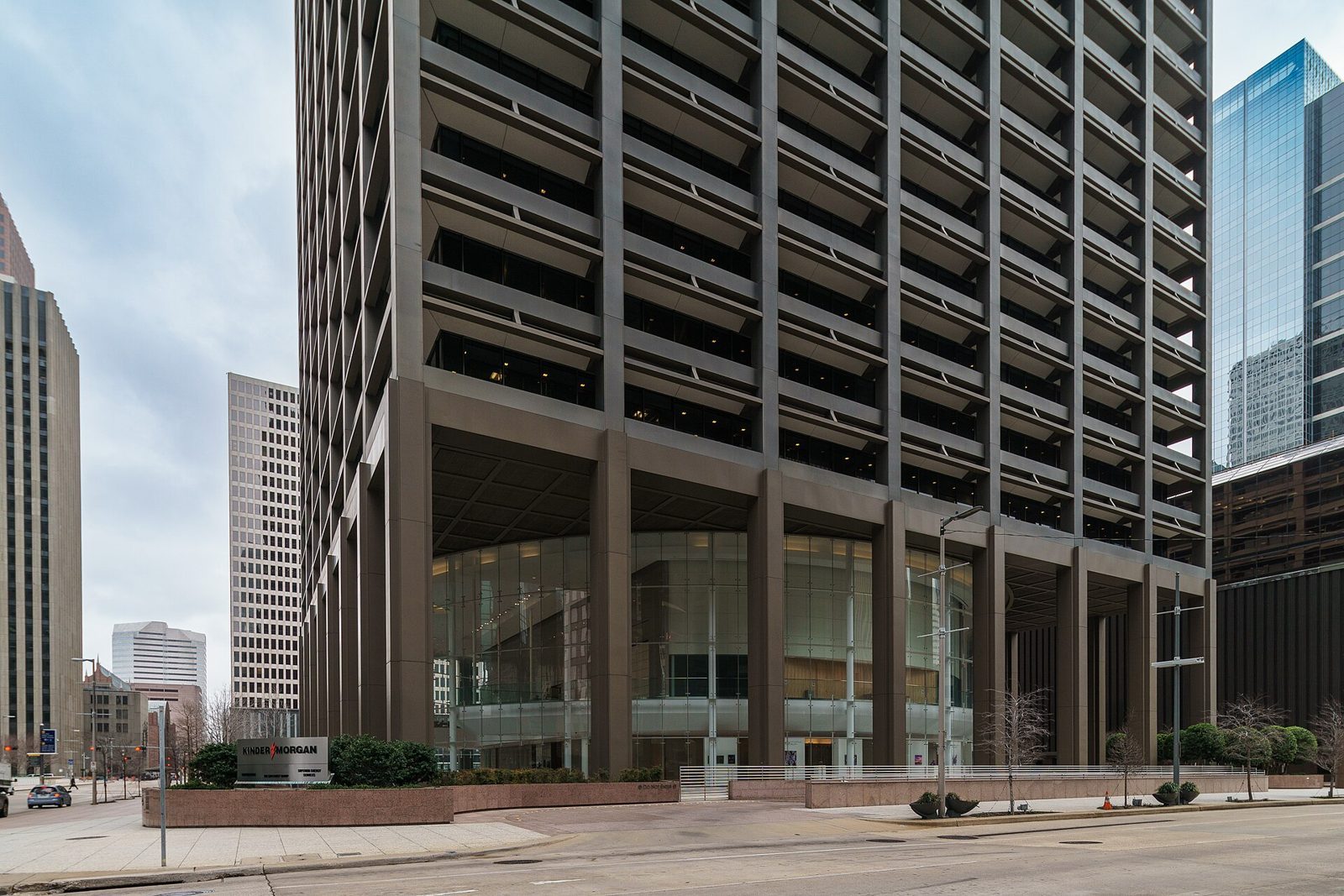
1963 · International Style / Late Modernist
Tenneco Building
- No Designation
The Tenneco Building was completed in 1963 as the Tennessee Building for the Tennessee Gas Transmission Company, founded in Houston in 1943 to deliver natural gas by pipeline to defense plants during World War II. The company was renamed Tenneco in 1966, and the building took the new name. It was later known as the El Paso Energy Building and the Kinder Morgan Building. The 33 story tower was designed by Edward C. Bassett of the San Francisco office of Skidmore, Owings & Merrill. It has a fifty foot colonnade at the base, a dark gray aluminum exterior with deeply recessed windows, and pink Texas granite paving on its plaza. It is considered a prominent example of late modernist architecture in Houston.
Open profile & chat → - 2
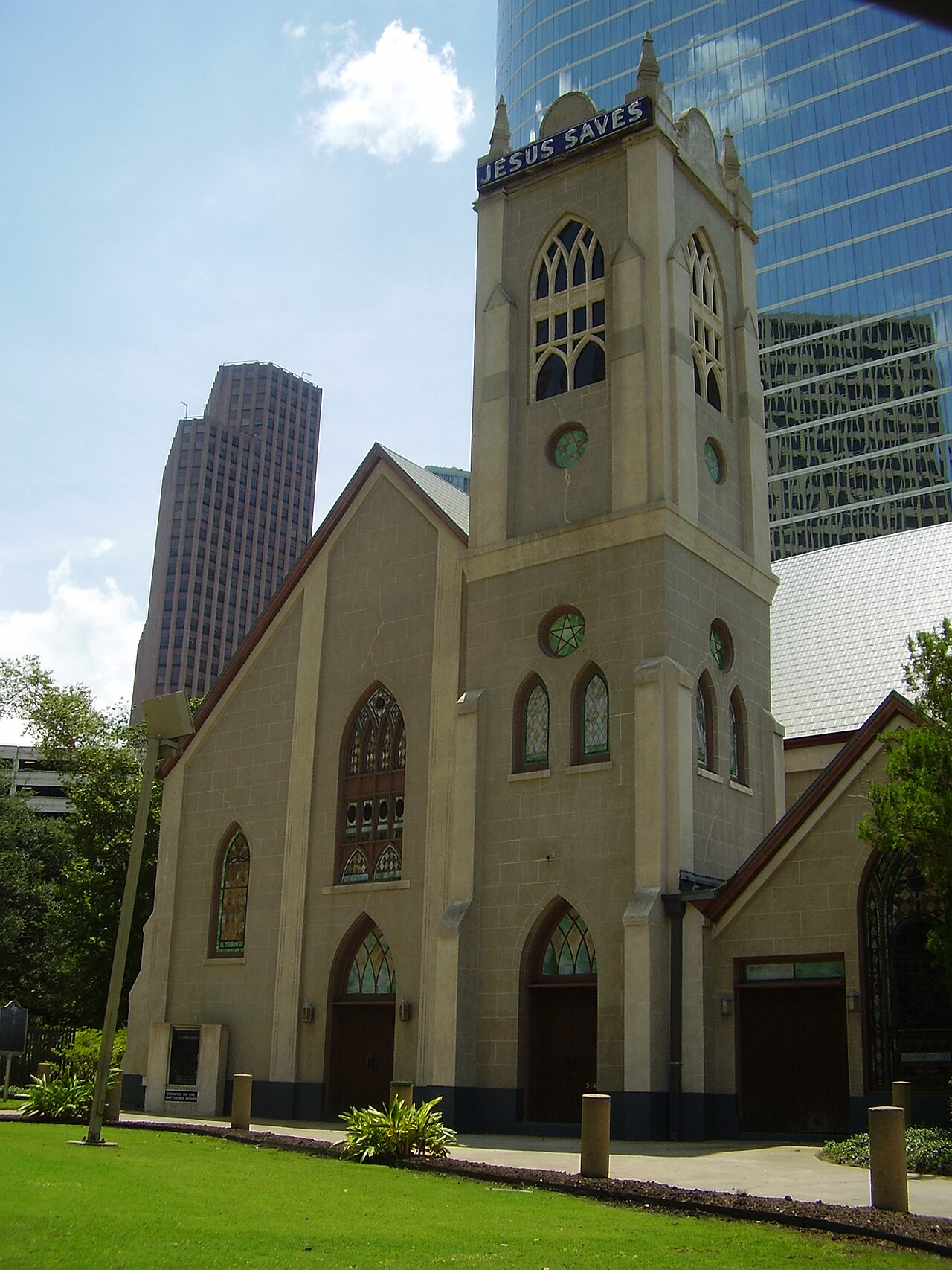
1879 · Late Victorian / Romanesque Revival
Antioch Missionary Baptist Church
- NRHP
- City Landmark
Constructed in 1879, Antioch Missionary Baptist Church is the oldest African American Baptist church building in Houston and was built largely through the efforts of Richard Allen, a formerly enslaved man who became a builder, minister, and one of the first Black members of the Texas Legislature during Reconstruction. Congregants raised funds for the Late Victorian and Romanesque Revival style sanctuary themselves, and the church became a cornerstone of Houston's Black community in the historic Fourth Ward, hosting religious, educational, and civic activities for generations of freedpeople and their descendants. Surrounded today by downtown high rises, the church remains an active congregation and one of the very few nineteenth century Black institutional buildings still standing in central Houston, a rare survivor amid decades of urban renewal and highway construction that displaced much of the surrounding Freedmen's Town community.
Open profile & chat → - 3
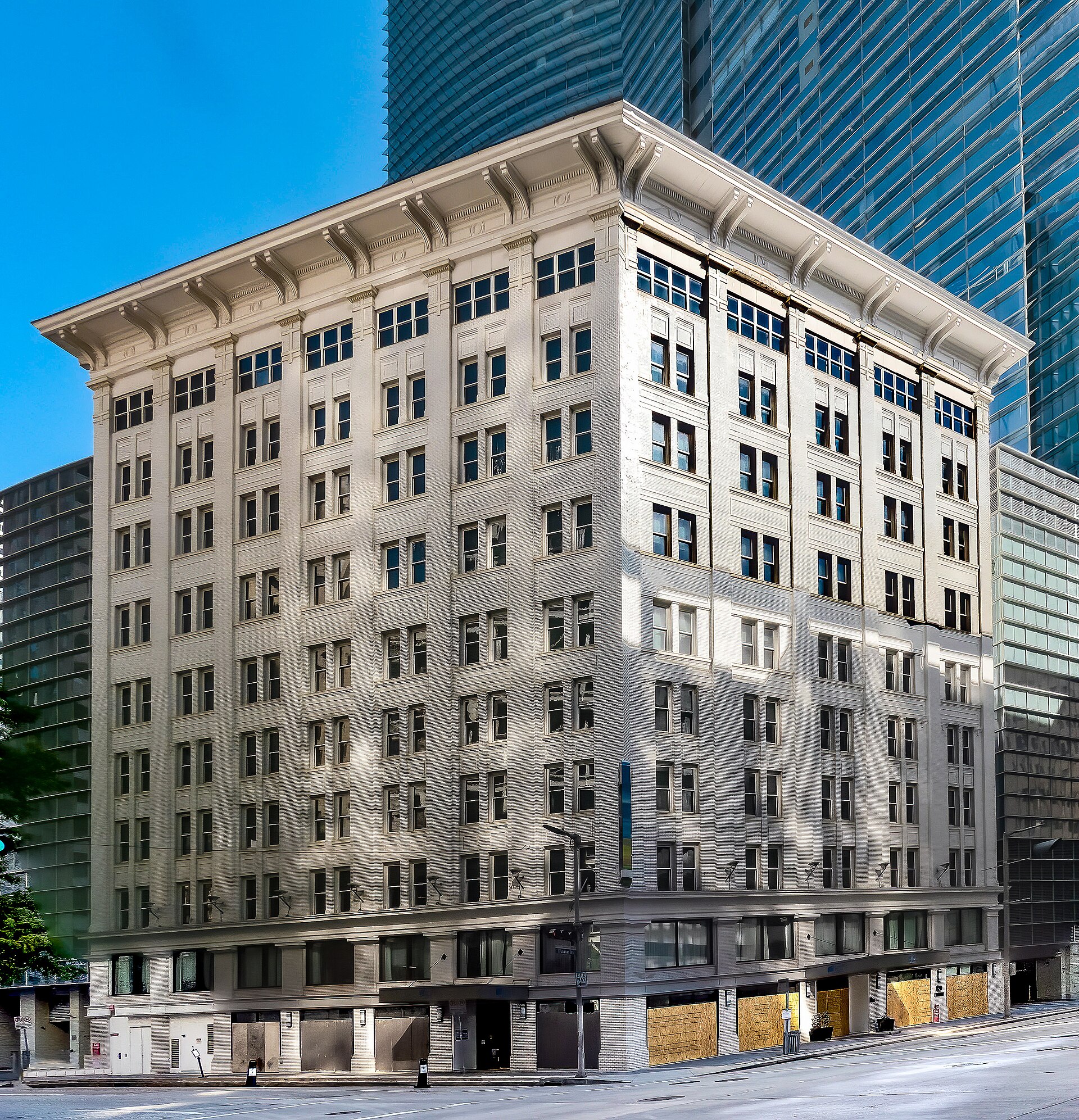
1913 · Chicago School / Sullivanesque
Stowers Building
- NRHP
The Stowers Building, completed in 1913 at 820 Fannin Street, was built for George A. Stowers's furniture company and designed by the Houston firm Green & Finger. Its ten stories are organized in the classic Chicago School tripartite composition, with a two story base, a grid of large windows in the shaft, and an ornate crowning cornice of pressed metal and terra cotta ornament. The building is one of downtown Houston's best surviving early skyscrapers and reflects the influence of Louis Sullivan's tall office building design on Texas commercial architecture. After years of decline it was restored and converted into the Aloft Houston Downtown hotel, which opened in 2014. It is listed on the National Register of Historic Places.
Open profile & chat → - 4
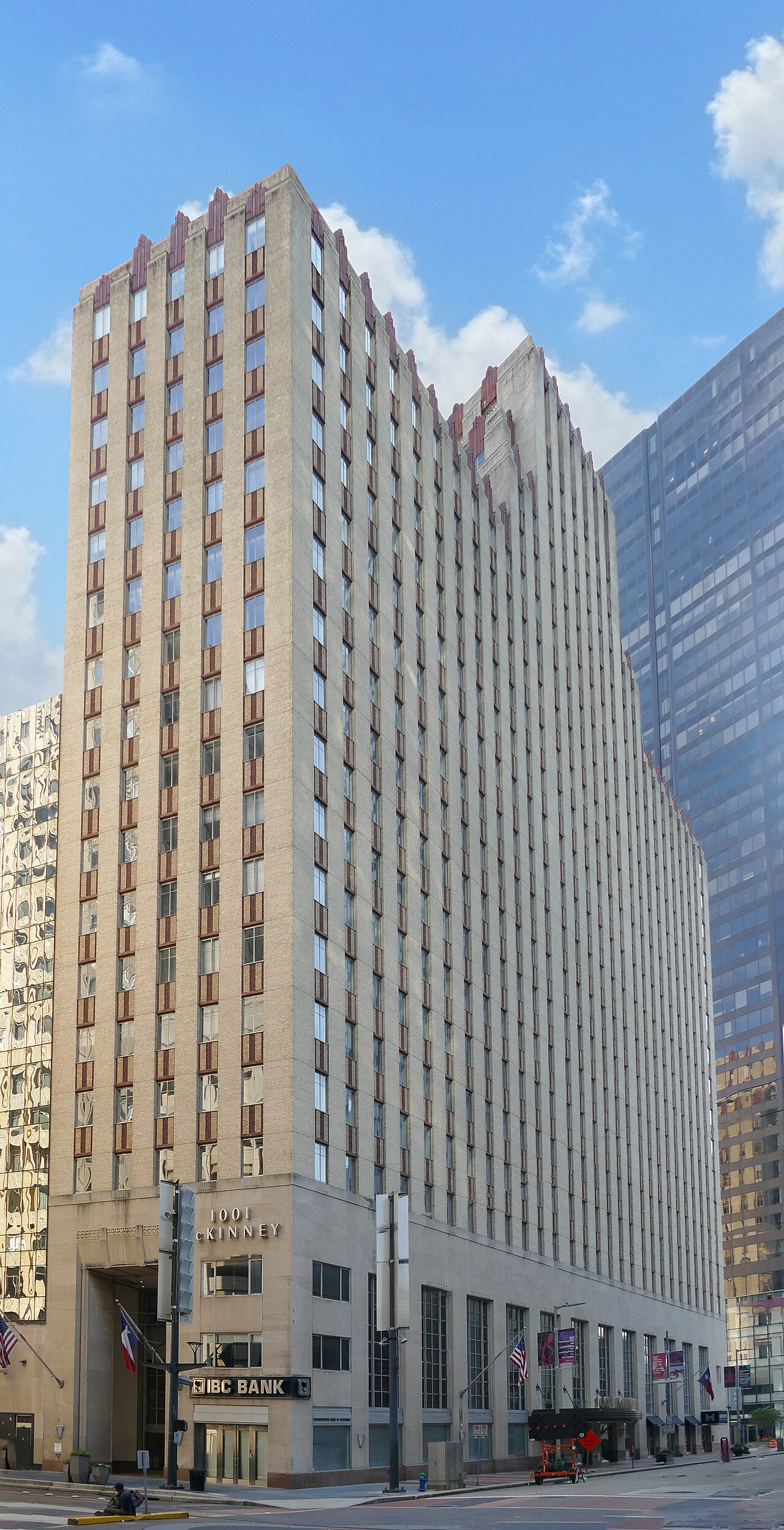
1947 · Moderne
City National Bank Building
- NRHP
- City Landmark
Designed by the firm of Alfred C. Finn for City National Bank, the bank descended from Guaranty Trust Company, founded by James Anderson Elkins Sr. in 1924, this tower opened just after World War II. Its stepped profile rises in tiers from a base covering the full block frontage on McKinney between Main and Fannin to a narrow top. The building was almost fully leased at opening, with tenants such as Braniff, DuPont, Humble Oil, Monsanto, and Phillips Petroleum, and radio station KPRC broadcast from the 23rd floor. It offered modern features for its day, including eight high speed elevators and flooring that concealed wiring. It marks the start of Houston's postwar office boom, and it is listed on the National Register and designated a City of Houston Landmark.
Open profile & chat → - 5
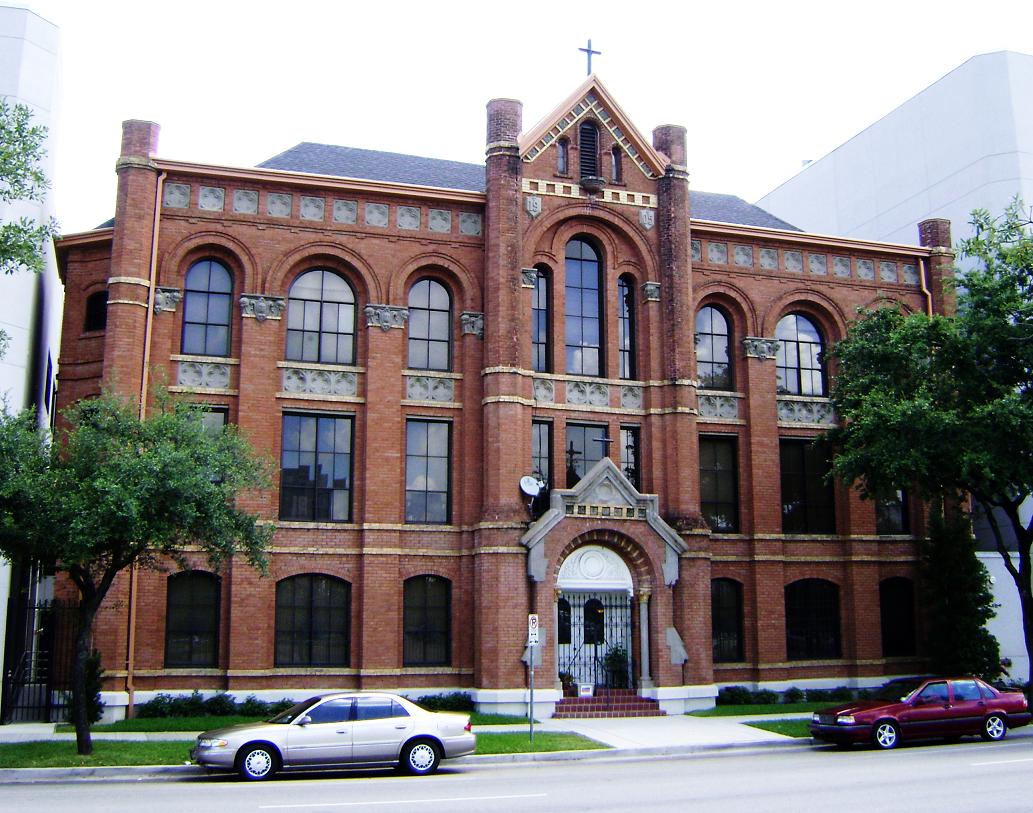
1905 · Romanesque Revival
Incarnate Word Academy
- Locally Recognized
Incarnate Word Academy was founded in 1873 by the Sisters of the Incarnate Word and Blessed Sacrament, making it the oldest Catholic school in Houston. Its red brick 1905 building on Crawford Street, designed by noted Galveston architect Nicholas J. Clayton, survives as the historic heart of the campus even as the school has grown around it. Clayton, whose work includes some of the finest Victorian buildings in Texas, gave the school a dignified Romanesque presence near the bayou. The academy has educated generations of Houston women and remains an operating college preparatory school. A Texas Historical Commission marker recognizing its history was erected in 1972.
Open profile & chat → - 6
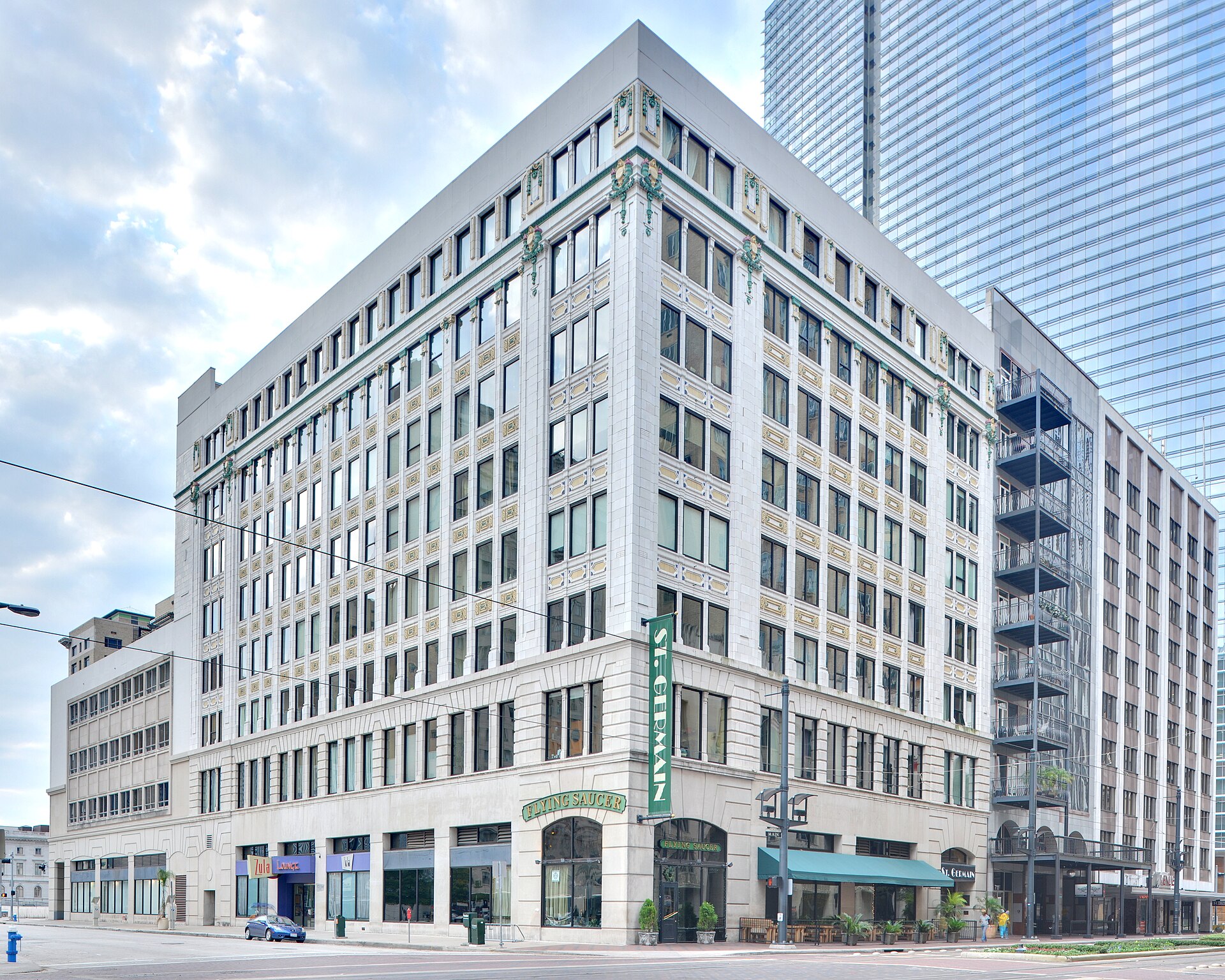
1939 · Art Deco / Streamline Moderne
S. H. Kress & Co. Building
- NRHP
- City Landmark
Built in 1939 as a Houston store of the S. H. Kress & Co. five and dime chain, this Main Street building was designed in the Art Deco style by Edward F. Sibbert, the company's in house architect, who designed hundreds of Kress stores nationwide. Kress stores were known for their distinctive architecture, and the company treated its buildings as advertisements for the chain. The Houston store is a well preserved example of the chain's later Art Deco and Streamline Moderne design, with stylized ornament and a strong vertical sign. Like other downtown five and dime stores, it was a site of lunch counter sit ins during the civil rights era, when Black Houstonians protested segregated service in 1960. The building is listed on the National Register of Historic Places and has been adaptively reused.
Open profile & chat → - 7
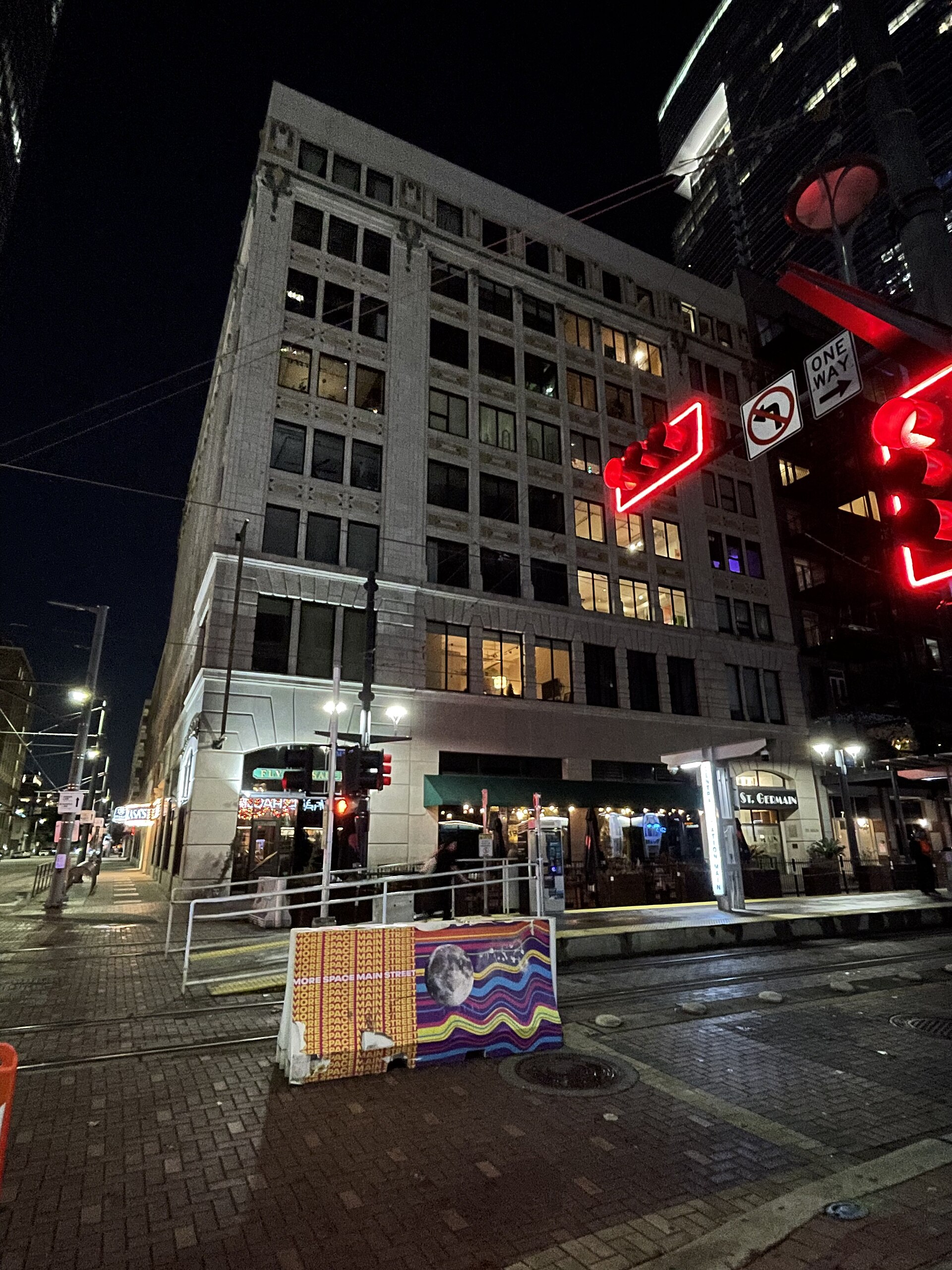
1908 · Early Skyscraper
Capitol Lofts (Former Southwestern Bell Capitol Exchange)
- Locally Recognized
Built in 1908 and designed by a young Alfred C. Finn, who would go on to shape much of downtown Houston, the ten story building at 711 Main was briefly the tallest building in Texas before being surpassed the following year. It later served for decades as a Southwestern Bell telephone exchange, its sturdy frame well suited to heavy switching equipment. In the 1980s its original facade was covered with granite and glass panels, and in the 1990s the building was converted to residential lofts as downtown began its transition back to a neighborhood. It survives as a contributing structure in the Main Street/Market Square Historic District, its layered exterior telling the story of Houston's changing tastes.
Open profile & chat → - 8
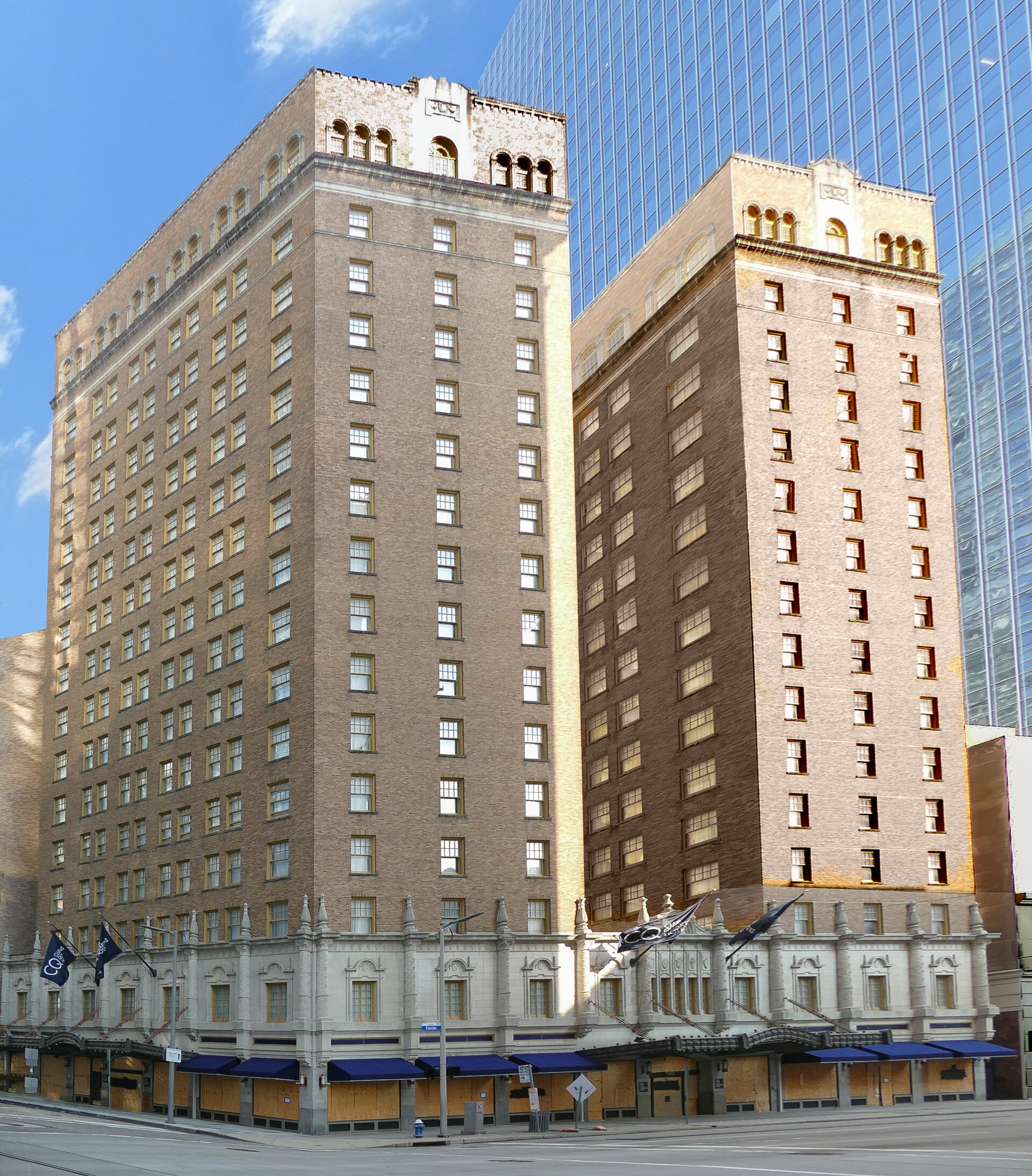
1929 · Art Deco / Renaissance Revival
Texas State Hotel
- NRHP
- City Landmark
The Texas State Hotel opened in 1929 on Fannin Street, designed by Joseph Finger, the Austrian born Houston architect who would later design Houston City Hall. The sixteen story hotel was one of several built downtown in the booming late 1920s to serve the city's growing business and rail traffic. The building combines Renaissance Revival massing with Art Deco detailing and retains its ornate two story base. After years as a hotel and later offices, it was renovated and now operates as a Club Quarters hotel. It is listed on the National Register of Historic Places as part of downtown Houston's surviving group of 1920s hotels.
Open profile & chat → - 9
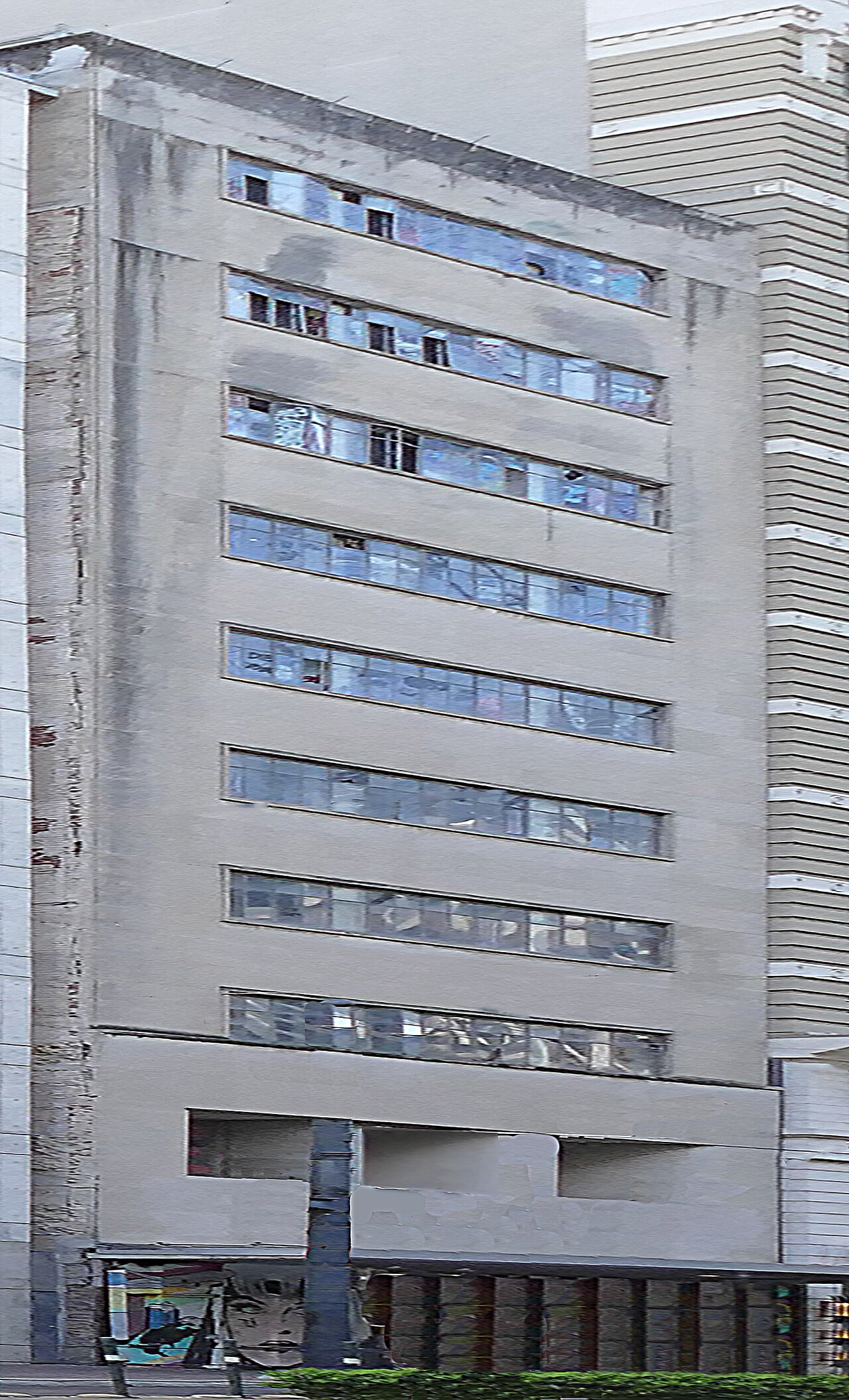
1950 · Modern
Battelstein's
- NRHP
Philip Battelstein arrived in Houston in 1897 as a Jewish immigrant from Lithuania and built a tailoring shop into one of the city's leading department stores. After fire destroyed his earlier location, he bought this Main Street site and opened a two story store here in 1924. As the business grew, architect Joseph Finger designed an expansion in 1934, three floors were added in 1937, and by 1950 Finger and George Rustay had carried the building to its present ten story Modern form. Battelstein's operated here until 1980. The building tells the story of Main Street's department store era and of an immigrant family business that grew alongside downtown, and it was added to the National Register in 2020.
Open profile & chat → - 10
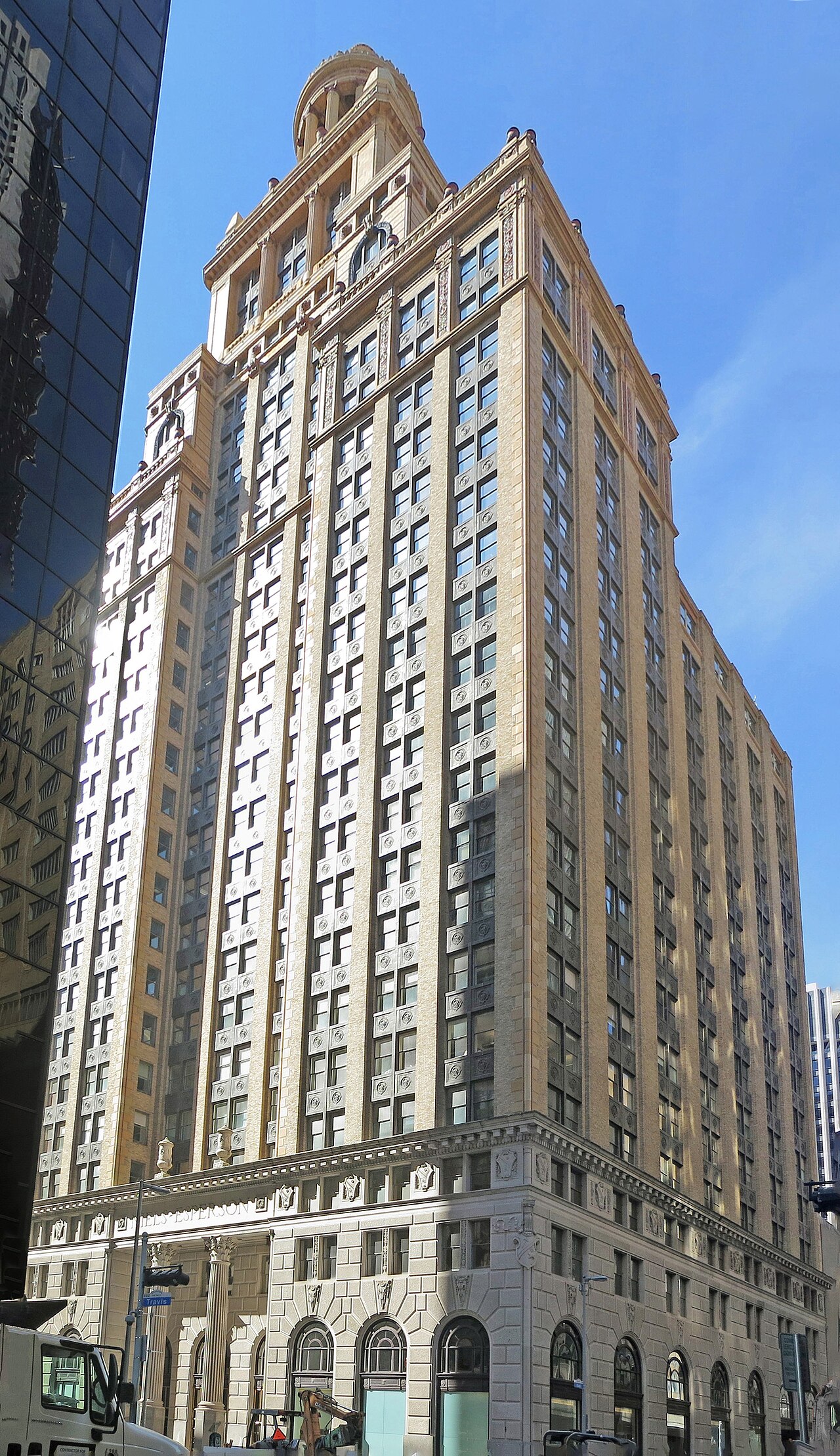
1927 · Italian Renaissance Revival
Niels Esperson Building
- NRHP
- City Landmark
Completed in 1927, the 32-story Niels Esperson Building was commissioned by oil and real estate magnate Mellie Esperson as a memorial to her late husband Niels Esperson, and was designed by architect John Eberson in the Italian Renaissance Revival style with a distinctive tempietto crown modeled on ancient Roman temples. At the time of its opening it was the tallest building in Texas and one of the tallest west of the Mississippi River, symbolizing Houston's ambitions as an emerging oil boom metropolis. A companion Mellie Esperson Building was added in 1941, and together they form a prominent Main Street landmark visible throughout downtown's skyline. The tower's terracotta ornamentation and ornate lobby remain largely intact, and it continues to operate as a Class B office building while holding both National Register and City of Houston Landmark protections.
Open profile & chat → - 11
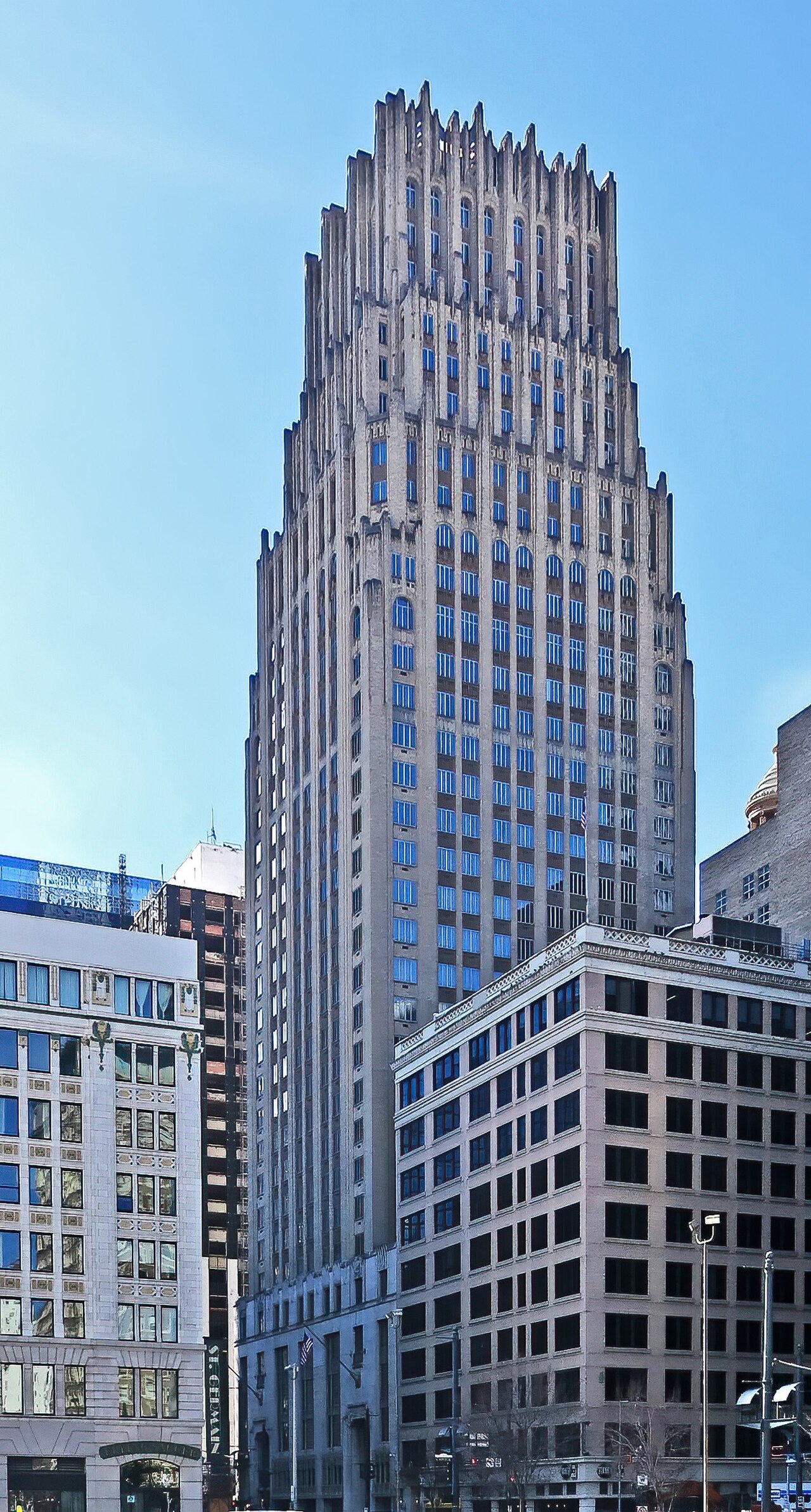
1929 · Art Deco
Gulf Building (JPMorgan Chase Building)
- NRHP
- City Landmark
Completed in 1929, the 428-foot Gulf Building was designed by Alfred C. Finn with Kenneth Franzheim and J.E.R. Carpenter in the Art Deco style, drawing inspiration from Eliel Saarinen's celebrated entry in the 1922 Chicago Tribune Tower competition. Built for the Gulf Oil Corporation, it served as Houston's tallest skyscraper for more than three decades, symbolizing the city's rapid growth as an oil and finance capital during the late 1920s boom. Its ornate lobby features murals by artist Vincent Maragliotti depicting the history of transportation and commerce, along with elaborate metalwork and marble detailing typical of high style Art Deco skyscraper design. The tower later became a Chase Bank headquarters and remains one of downtown Houston's most architecturally significant early skyscrapers, listed on the National Register of Historic Places.
Open profile & chat → - 12
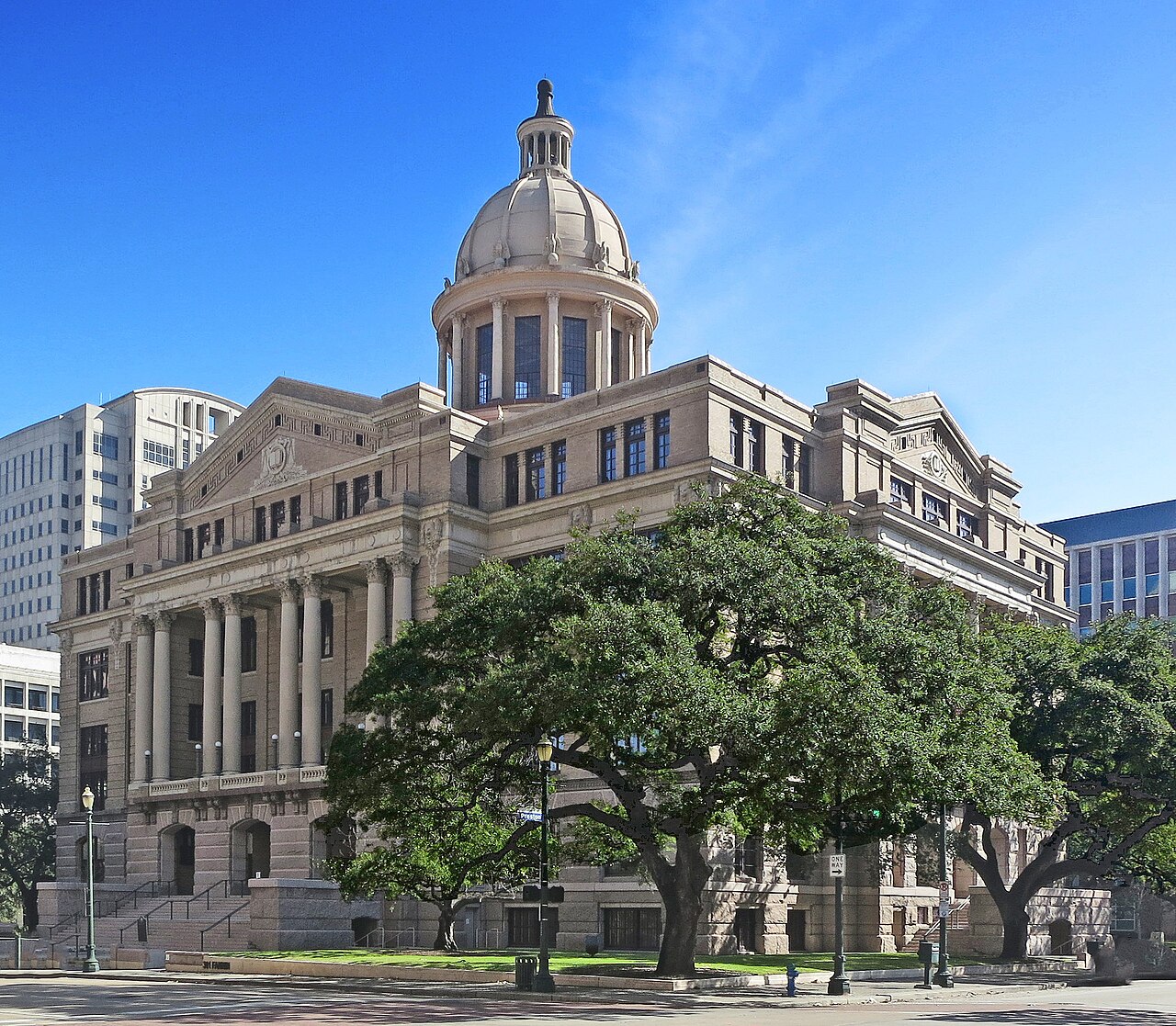
1910 · Classical Revival / Beaux-Arts
Harris County 1910 Courthouse
- NRHP
- Recorded Texas Historic Landmark
Completed in 1910 and designed by the Dallas firm Lang and Witchell in the Classical Revival and Beaux-Arts style, the Harris County 1910 Courthouse was built of pink Texas granite and brick topped by a copper dome, replacing an earlier courthouse on the same site at Courthouse Square. It served as the seat of county judicial proceedings for decades, hosting significant civil and criminal trials during a formative period of Harris County's growth, before later county government expansion led to its underuse and years of deferred maintenance. A major restoration completed in 2011 returned the courthouse to its original 1910 appearance, including the copper dome and grand rotunda, at a cost of tens of millions of dollars, making it a flagship achievement of Harris County's historic preservation efforts. It remains an active courthouse and a defining anchor of downtown Houston's historic Courthouse Square district.
Open profile & chat → - 13
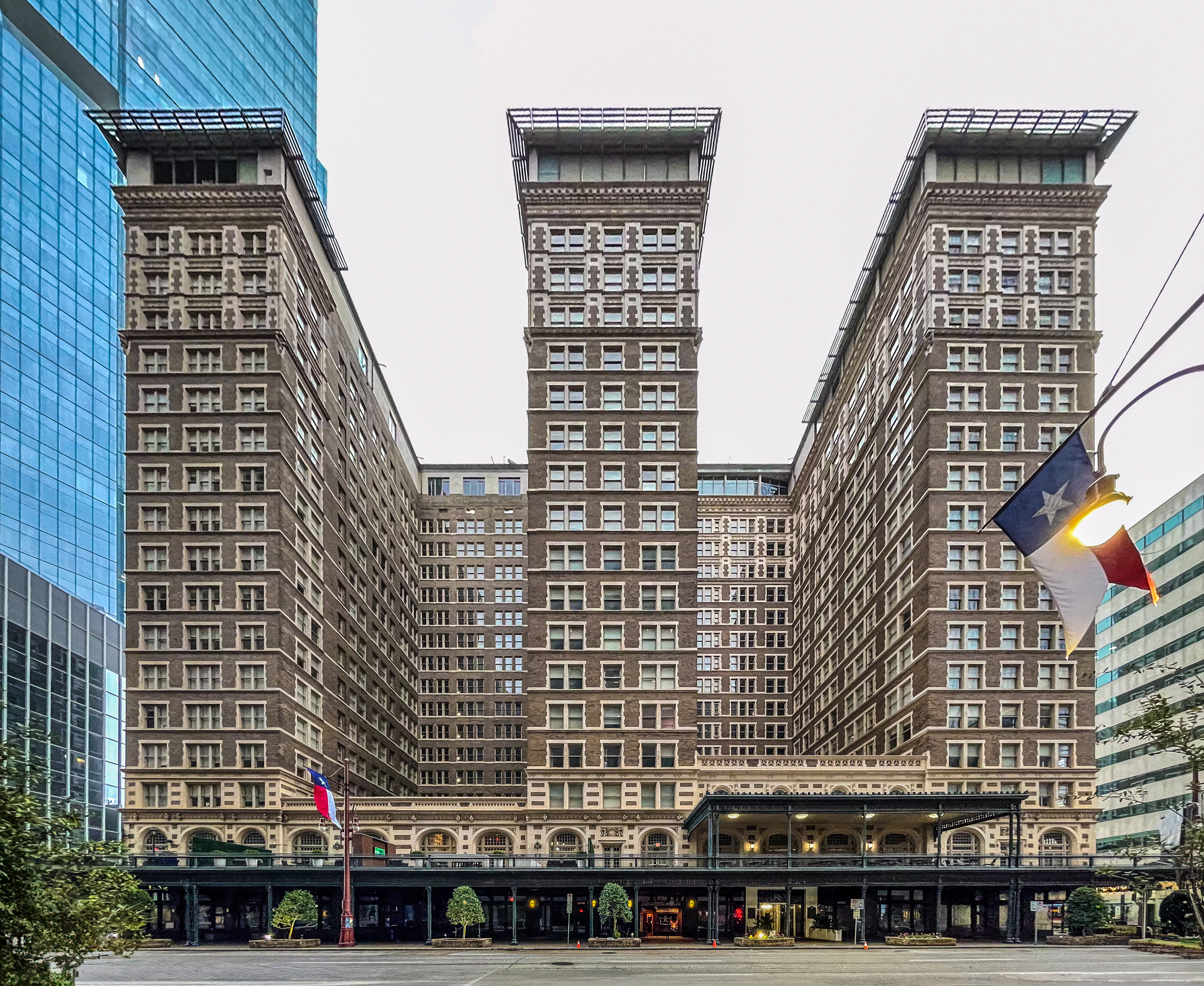
1913 · Beaux-Arts
Rice Hotel
- NRHP
- City Landmark
Built in 1913 on the site of the former Capitol of the Republic of Texas at Texas Avenue and Main Street, the 17-story Rice Hotel replaced an earlier 1881 hotel of the same name and became Houston's premier gathering place for business and society for half a century. Designed in the Beaux-Arts style by the St. Louis firm Mauran, Russell and Crowell, it featured a grand lobby, roof garden, and ballrooms that hosted political conventions, debutante balls, and touring dignitaries. Its most famous night came on November 21, 1963, when President John F. Kennedy addressed the Houston Pilots Association there, only hours before his assassination in Dallas the next day. The hotel closed in 1977 and stood vacant for two decades before a 1998 adaptive reuse converted it into loft apartments and ground floor retail, making it one of the earliest and most visible successes of downtown Houston's residential revitalization movement.
Open profile & chat → - 14
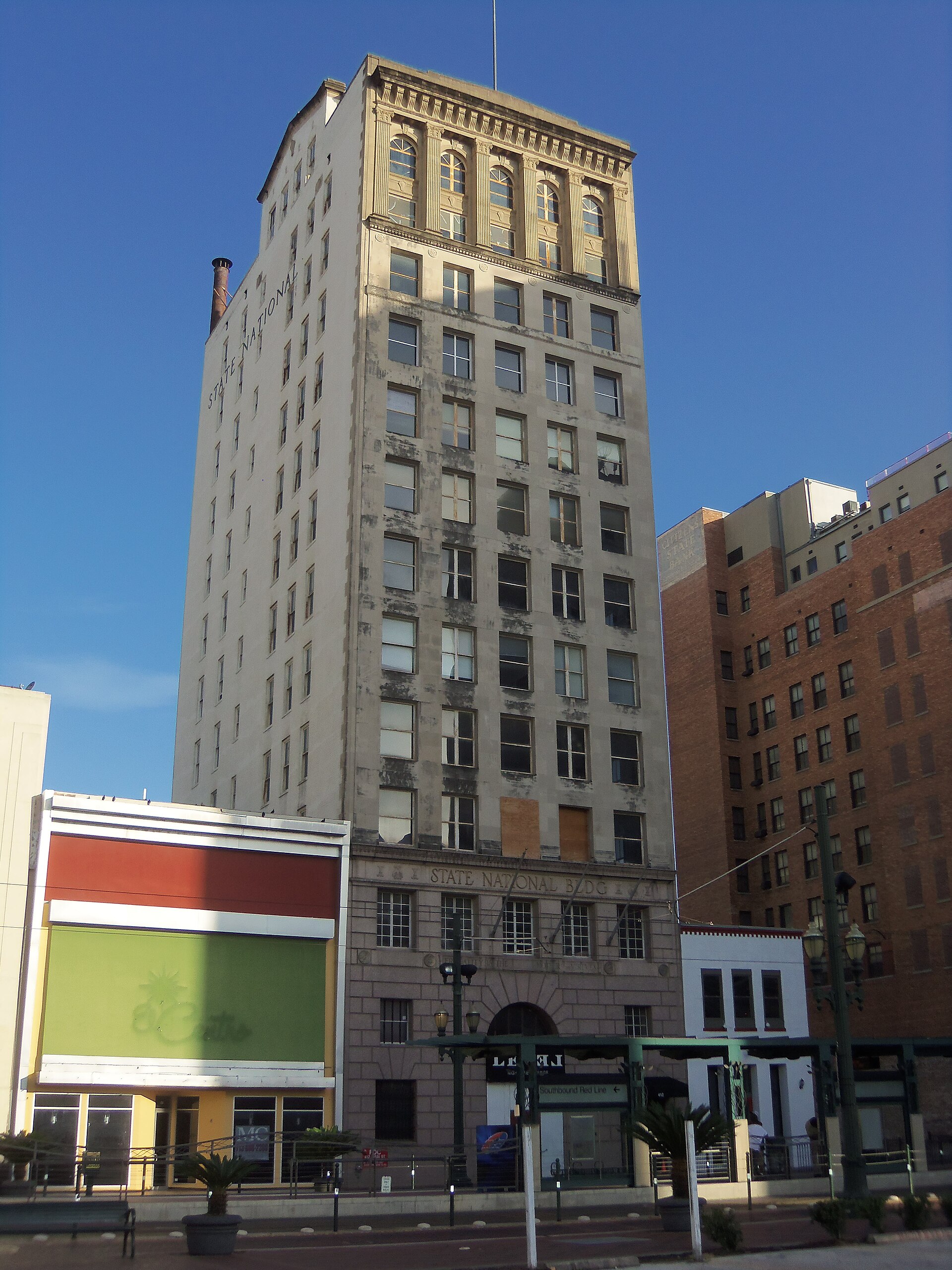
1923 · Neoclassical / Beaux-Arts
State National Bank Building
- NRHP
State National Bank grew from the State Bank and Trust Company, which opened in 1915 and took a national charter after joining the Federal Reserve. In 1922 it began this ten story skyscraper designed by Alfred C. Finn, the self trained architect who went on to shape much of Houston's skyline. It was completed in 1923 at a cost of about $500,000, with the motto "Frugality is the mother of all virtues" carved into its base. The bank left in 1946, and new owners replaced the rough granite base with polished Indiana limestone in 1948. After decades of neglect, the building was restored in the early 1980s and listed on the National Register in 1982 as one of the few surviving Neoclassical skyscrapers in Houston. It reopened in December 2023 as a Moxy hotel.
Open profile & chat → - 15
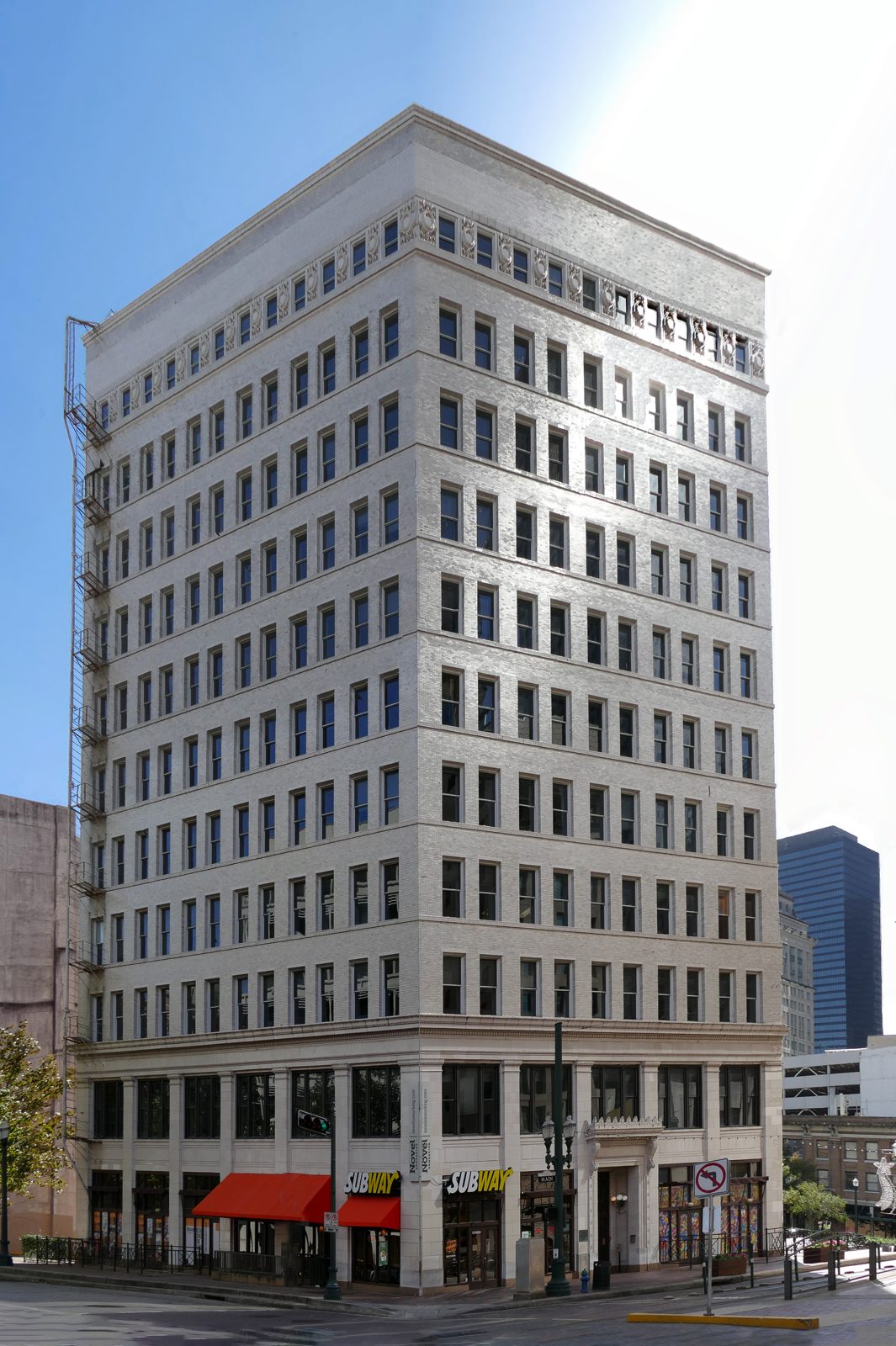
1909 · Chicago School
Scanlan Building
- NRHP
- City Landmark
The eleven story Scanlan Building was completed in 1909 at Main and Preston streets. It was envisioned by Thomas Howe Scanlan, a two-time mayor of Houston, and built after his death in 1906 by his seven daughters as a memorial to him. It stands on the site of the first official home of the president of the Republic of Texas. Designed by D. H. Burnham & Company of Chicago, it is the only known Houston office building by that nationally prominent firm and the first building of its size in the city designed by a major national architect. It was among the first in Houston to use a fireproof steel skeleton, and as the first building to rise above ten stories it set the pattern for the downtown skyscrapers that followed. It was listed on the National Register of Historic Places on May 23, 1980, and its interior was later renovated for coworking offices.
Open profile & chat → - 16
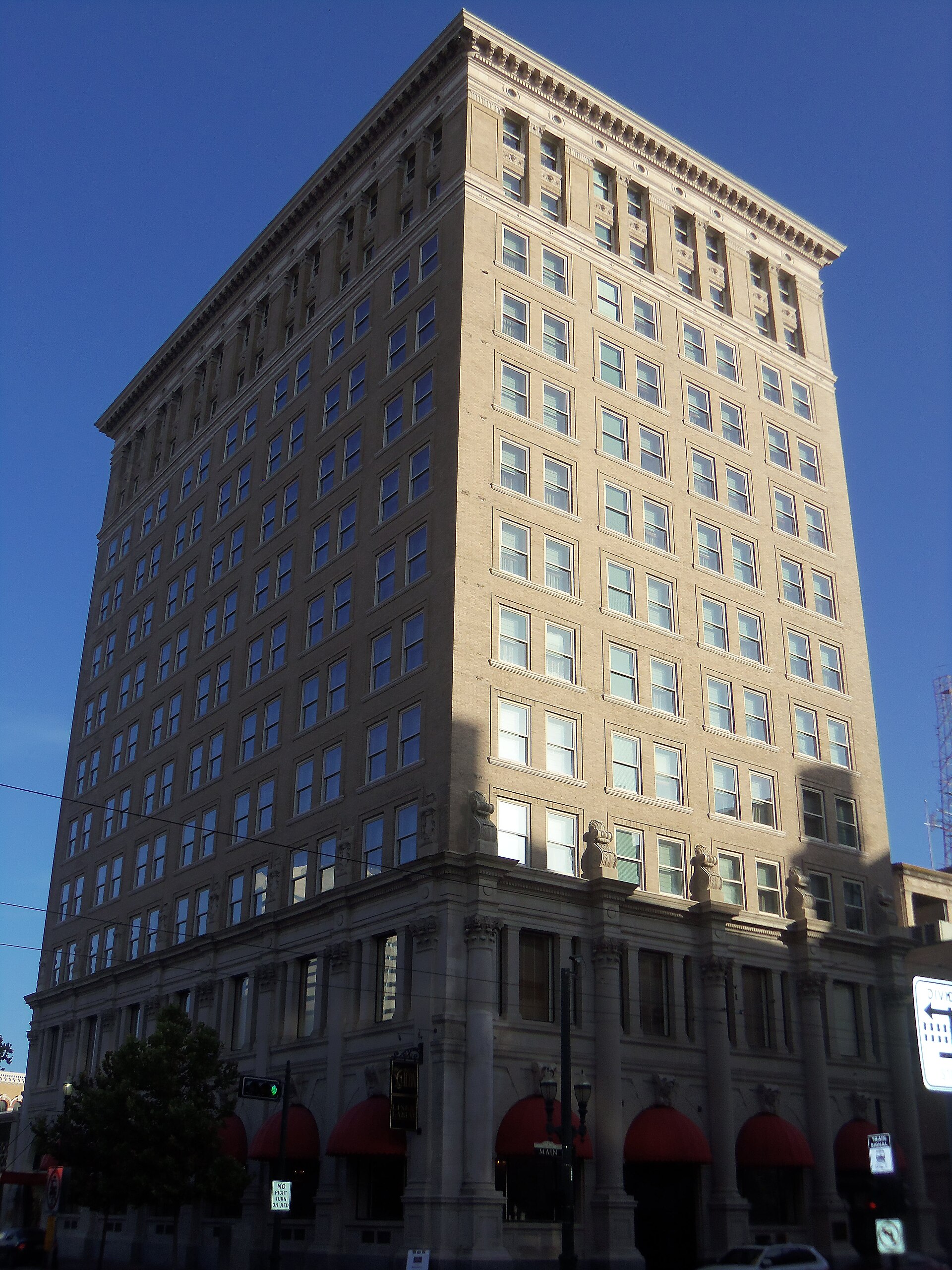
1912 · Neoclassical / Beaux-Arts
Hotel Icon (Union National Bank Building)
- NRHP
- City Landmark
Completed in 1912 as the Union National Bank Building, this twelve story tower was designed by the Texas firm Sanguinet & Staats, among the most prolific designers of the state's early skyscrapers. Banker and developer Jesse H. Jones was closely involved with the building and used it as a base for his growing business empire. At its completion it was among the tallest buildings in Houston. The building is faced in limestone and terra cotta in a Classical Revival composition typical of the firm's work. After decades of bank and office use, it was restored and reopened in 2004 as the Hotel Icon, a boutique hotel. The conversion preserved the banking hall and much of the original ornament, and the building is listed on the National Register of Historic Places.
Open profile & chat → - 17
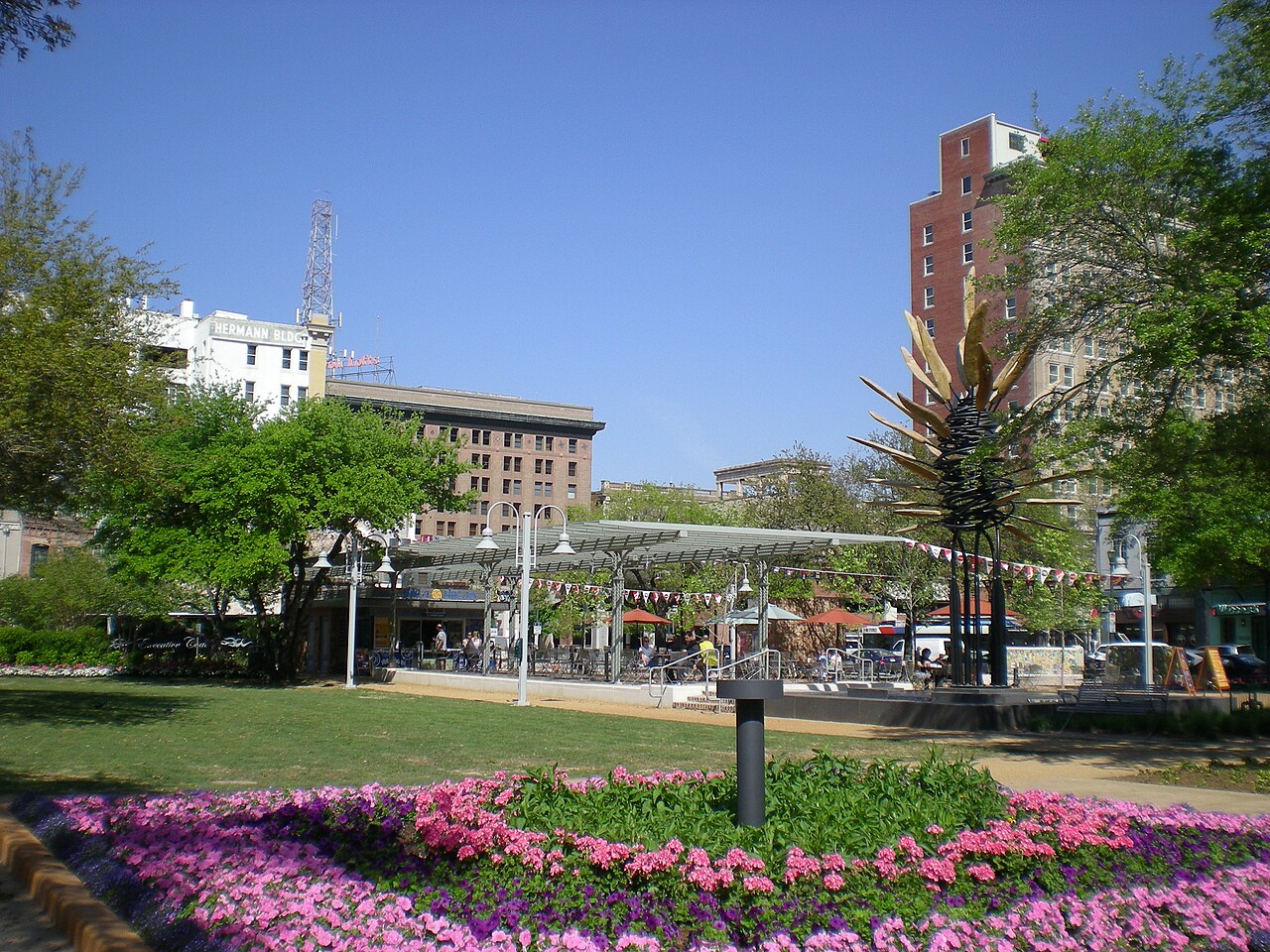
1858 · Victorian Commercial
Market Square Historic District
- NRHP
Dating to 1858, the Market Square Historic District marks the commercial heart of nineteenth century Houston, where the city's original markethouse and surrounding storefronts served as the hub of trade and civic life for decades. The district is ringed by surviving Victorian commercial buildings, including La Carafe, housed in the 1860 Kennedy Bakery building, which is considered one of the oldest continuously occupied commercial structures in Texas. Though much of the original market square area was lost to fires and redevelopment over the years, the surrounding historic buildings and the park itself, now landscaped as a public green space, continue to anchor downtown Houston's oldest commercial core. The district remains a symbolic starting point for understanding the city's earliest mercantile history along Buffalo Bayou.
Open profile & chat →